The Daughter They Decided Wasn’t Worth Saving: Abandoned During Cancer Treatment, She Returned as a Doctor
Her Parents Walked Away When Her Cancer Treatment Became Too Expensive. Fifteen Years Later, They Arrived at Her Graduation Expecting to Share in Her Success.
The auditorium was filled with applause, flowers, graduation gowns, and proud families when Emily Davidson noticed three familiar faces sitting in the reserved section.
They were the people she had spent years learning to live without.
Her biological mother, Karen Higgins, sat beside her father, Thomas, while her older sister, Megan, occupied the aisle seat. They had not been there for chemotherapy. They had not been there for remission appointments, difficult school years, college applications, or medical school.
But on graduation day, they had arrived.
And they apparently expected to be treated as though they had been there all along.
Emily sat in the front row with her white coat folded across her lap. Hidden beneath the fabric was an embroidered name that represented fifteen years of a life her biological family had never witnessed.
Dr. Emily Davidson.
Then she heard her mother whisper something that made the entire situation painfully clear.
“She owes us this moment after everything.”
Emily did not turn around.
Instead, she held the white coat a little tighter.
Because fifteen years earlier, when she was only 13 years old and fighting leukemia, her parents had made a decision that would permanently change the course of her life.
They had decided that saving her was too expensive.
And now, years later, they had returned just in time for the applause.
The Diagnosis That Changed Everything
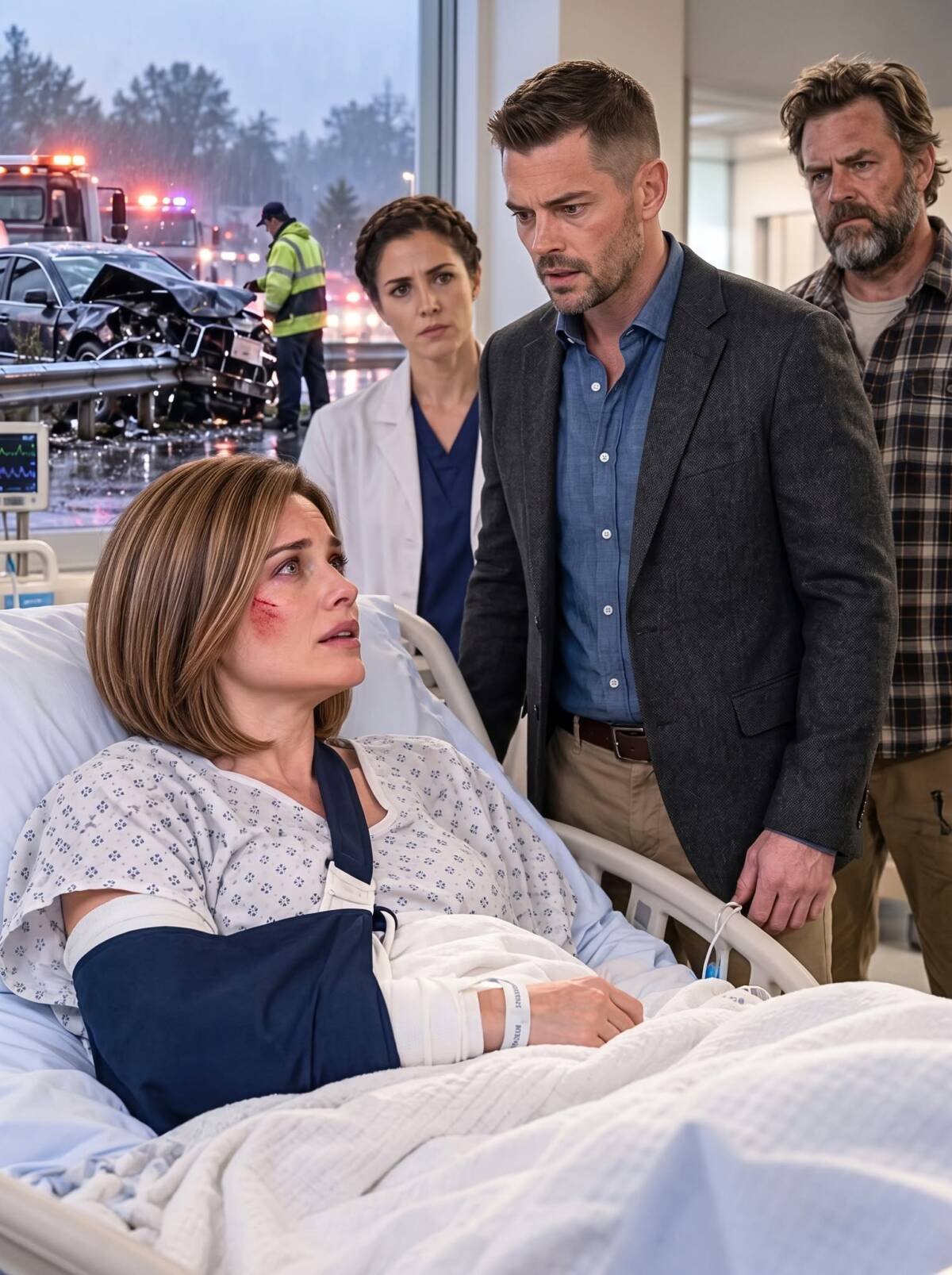
Fifteen years earlier, Emily was a 13-year-old girl sitting in Room 314 at St. Jude’s Medical Center.
She had expected to hear something frightening.
She had not expected to hear words that would divide her childhood into two completely different lives.
Dr. Robert Lawson sat across from Emily and her parents with a tablet in his hands. After reviewing her test results, he delivered the diagnosis.
Emily had acute lymphoblastic leukemia.
The diagnosis was terrifying, but the doctors also had encouraging news.
The cancer was treatable.
With aggressive chemotherapy, Emily had a strong chance of survival.
For a frightened 13-year-old, those words should have meant hope.
Instead, the first question her father asked was about money.
“How much?”
The treatment would be extensive. It could continue for two or three years, and although insurance would cover much of the cost, the family could still face substantial expenses.
There were assistance programs. There were payment options. There were resources available to help families in exactly this situation.
But Emily’s father was not focused on those possibilities.
He was thinking about the money they had already saved for his other daughter.
Megan was 16 years old and preparing to apply to elite universities.
According to her father, she had a future that could not be sacrificed.
“We’ve saved since she was born,” Thomas reportedly said, referring to Megan’s college fund. “We have $180,000 in her college fund.”
He did not want that money used for Emily’s medical treatment.
The discussion became even more disturbing when Thomas questioned whether the family could surrender responsibility for Emily so that public assistance could cover her treatment.
Emily sat silently as the adults around her discussed the financial value of her life.
Then came the sentence she would remember for the rest of her life.
“Megan has potential,” her father said. “She is brilliant, focused, extraordinary. You have always been average, Emily.”
The meaning was impossible to misunderstand.
One daughter was considered an investment.
The other was considered an expense.
Emily looked at her parents and made the plea no child should ever have to make.
“I’m your daughter too.”
The room went silent.
Dr. Lawson was reportedly so disturbed by the conversation that he asked Emily’s parents to leave.
When they refused, he made his position clear.
“Leave, or I will call security and social services.”
They eventually left.
They did not hug Emily.
They did not hold her hand.
They did not promise to return.
And they did not stay beside their daughter as she began the fight of her life.
The Night a Stranger Became Her Family
That first night in pediatric oncology, Emily lay beneath hospital lights surrounded by machines and medical equipment.
She was terrified.
But her greatest fear was no longer simply cancer.
She wondered whether her parents would feel relieved if she died.
Then a nurse named Laura Davidson entered her room.
Laura was 34 years old, with dark curly hair, blue scrubs, worn sneakers, and a personality very different from the overly cheerful adults Emily had encountered throughout the day.
She did not tell Emily that everything happened for a reason.
She did not tell her to be brave.
She simply sat beside her.
“I heard what happened today,” Laura told her. “And I am so sorry.”
That was enough.
Emily began to cry.
Laura stayed.
Later, she returned with crackers and a deck of cards. The two played together late into the night. Laura talked about her cat, Waffles, and told Emily that her younger brother had survived leukemia years earlier.
The connection was immediate.
But more importantly, Laura kept coming back.
The following day.
The following week.
Through chemotherapy.
Through exhaustion.
Through nausea.
Through the loss of Emily’s hair.
Through the fear.
Through every appointment.
While Emily’s biological parents disappeared from her life, Laura became a constant presence.
Then, 28 days after Emily’s diagnosis, everything changed again.
A social worker named Susan Myers told Emily that a foster placement had been found.
Laura happened to be nearby.
She had not been scheduled to work that day.
But she heard the conversation.
And she made a decision.
“I want to take her.”
Susan looked at her.
Laura repeated herself.
“I want to foster Emily. I’m already state-approved, and I know exactly what her medical needs are.”
There would be paperwork.
Medical appointments.
School arrangements.
Medication schedules.
Emergency situations.
Court proceedings.
And the enormous responsibility of caring for a child undergoing cancer treatment.
Laura listened to all of it.
Then she looked at Emily.
“Only if you want to come home with me.”
Emily had spent the previous weeks learning that adults could walk away.
This time, an adult was asking whether she wanted to be chosen.
Emily whispered one word.
“Yes.”
The Woman Who Gave Her a Home
Laura’s house was small.
It had a front porch, a slightly crooked mailbox, and a little American flag near the entrance.
It was not a mansion.
It was not the kind of home Emily’s biological parents had imagined when they talked about money and status.
But it was safe.
And for Emily, that meant everything.
Even Laura’s cat, Waffles, eventually accepted her.
Laura reorganized her entire life around Emily’s treatment.
She set alarms for medication.
She tracked appointments.
She drove Emily to chemotherapy.
She helped her return to school.....