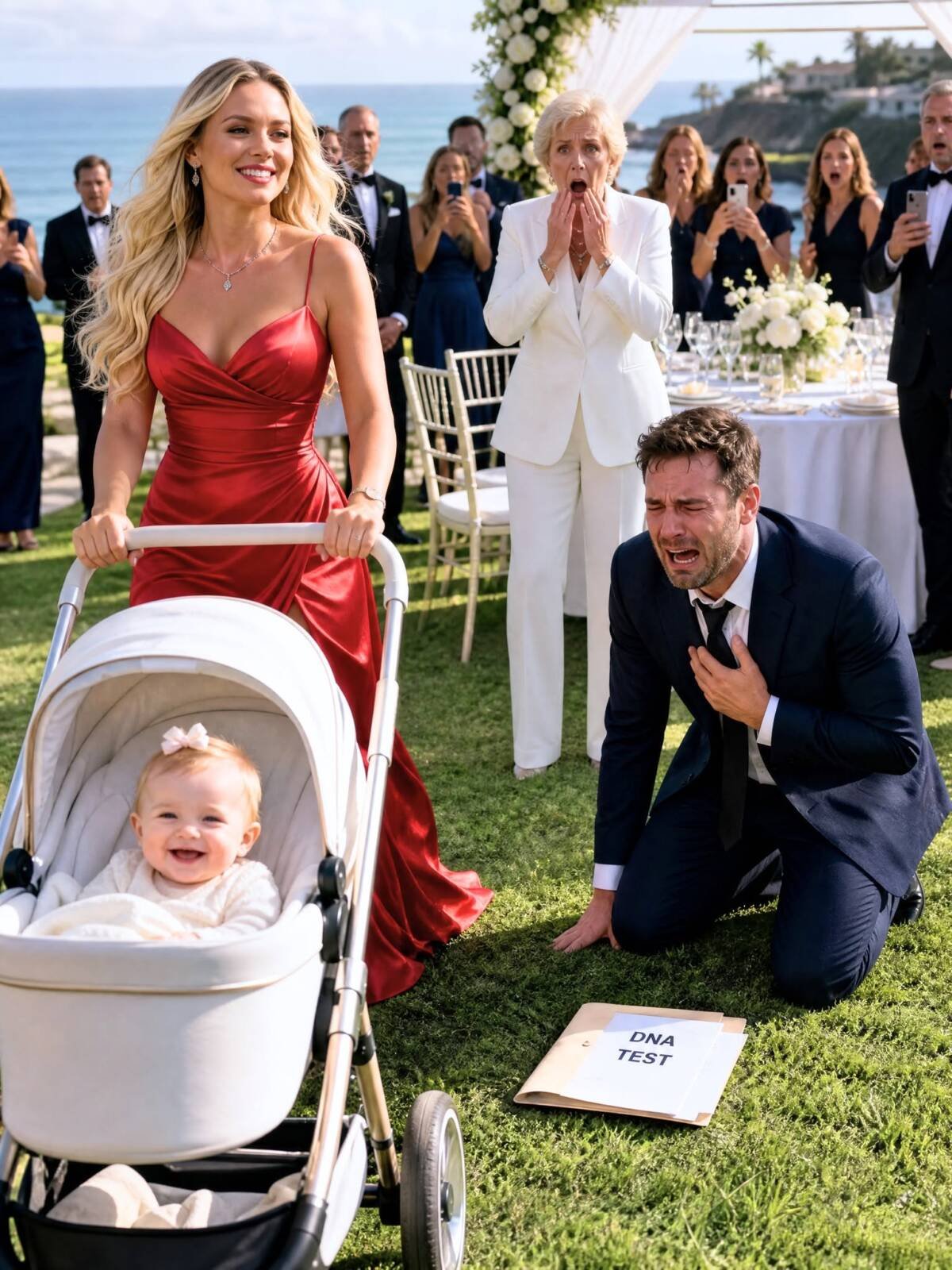
When Charles Whitmore raised his glass at his son’s lavish wedding, everyone expected a warm toast. Instead, he singled out the bride’s older sister and called her a “charity case” in front of hundreds of guests. He thought he knew exactly who she was. He was wrong.
The Sister I Refused to Abandon
My name is Rebecca Hayes, and I was only 21 years old when I became the closest thing my little sister had to a parent.
People often hear stories like that and imagine courage.
They imagine sacrifice.
They imagine some extraordinary act of strength that changes everything.
But when I think back to those years, the word that comes to mind first is much simpler.
Exhaustion.
I was exhausted almost all the time.
I was tired from working.
Tired from worrying.
Tired from pretending I knew what I was doing.
And most of all, I was tired of wondering whether the two of us would ever have the kind of ordinary life other families seemed to take for granted.
Our parents didn’t disappear overnight.
In some ways, that would have been easier.
Instead, they disappeared gradually.
First, they became emotionally distant. Then they stopped contributing consistently to the household. Eventually, they stopped showing up at all.
There was always an explanation.
My father said he had an opportunity to pursue a business venture. He promised it would only be temporary.
My mother eventually became involved in another relationship and began building a life that seemed to have less and less room for her daughters.
Every explanation sounded temporary.
Every promise suggested that things would eventually return to normal.
They never did.
And while the adults around us were making decisions about their own lives, my little sister, Lily, was still only eight years old.
She didn’t understand abandonment.
She only understood that the people who were supposed to come home weren’t coming home.
She would ask questions I couldn’t answer.
“When is Dad coming back?”
“Is Mom mad at us?”
“Did we do something wrong?”
Those questions were harder than any bill I ever had to pay.
Because I didn’t have the heart to tell an eight-year-old that sometimes adults simply choose themselves.
So I did what I could.
I stayed.
Learning to Be a Parent at 21
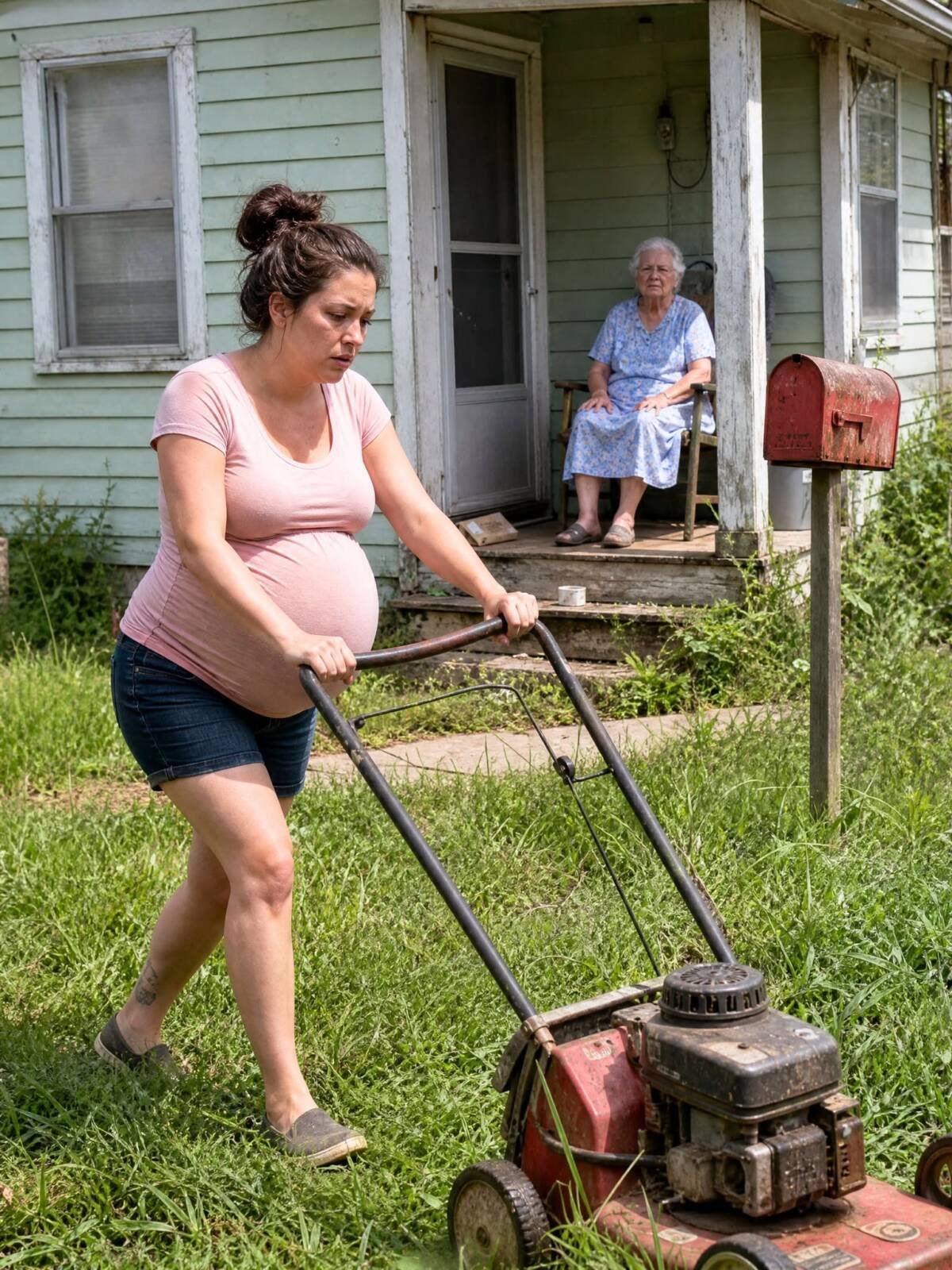
I found work wherever I could.
Most weeks, that meant long shifts at a diner, sometimes back-to-back, while I attended night classes whenever my schedule allowed.
There were nights when I came home so tired that I could barely take my shoes off.
But Lily still needed dinner.
She still had homework.
She still needed someone to sign school forms.
She still needed clean clothes, doctor appointments, birthday presents and someone sitting beside her when she was afraid.
So I learned.
I learned how to stretch a paycheck.
I learned which bills could wait and which couldn’t.
I learned how to cook meals that were cheap enough to make repeatedly without making Lily feel like we were struggling.
And, somewhat embarrassingly, I learned how to braid hair by watching online tutorials.
My first attempts were terrible.
Lily would sit patiently while I struggled with her hair before school, pretending not to notice that I had no idea what I was doing.
Eventually, I got better.
There were no grandparents waiting in the wings.
No wealthy relatives offering to pay the rent.
No family safety net.
There was no one who could step in when I was sick or exhausted.
It was just Lily and me.
For years, that was our entire world.
Birthdays were small.
Christmas was carefully planned.
School events were important because I knew how much it meant to Lily to see someone in the audience.
Whenever she looked toward the crowd, I wanted her to know I would be there.
Always.
I attended parent meetings even though I was barely old enough to feel comfortable sitting among parents twice my age.
I went to school plays.
I took her to medical appointments.
I helped with homework.
I listened to her talk about friendships, teachers, crushes, disappointments and dreams.
Sometimes she would fall asleep on the couch while we were watching television.
I would cover her with a blanket and sit there for a few extra minutes.
Those moments were ordinary.
At the time, I didn’t realize they were becoming the foundation of her entire childhood.
The Choice I Never Regretted
There were plenty of moments when I wondered whether I had made the right decision.
I could have focused entirely on myself.
I could have moved away.
I could have pursued a different career.
I could have told myself that Lily was not my responsibility.
Legally, perhaps she wasn’t.
Morally, emotionally and personally, I couldn’t see it that way.
She was my little sister.
And she needed someone.
So I stayed.
Years passed.
Something remarkable happened along the way.
Lily didn’t become bitter.
She didn’t allow our childhood to convince her that the world was against her.
Instead, she became kind.
She became hardworking.
She became thoughtful.
She developed a quiet strength of her own.
By the time she graduated high school, I was overwhelmed with pride.
I looked at her in her graduation gown and remembered the little eight-year-old who used to ask whether her parents were coming home.
Now she was an adult with plans of her own.
She had survived.
And more importantly, she had learned how to hope.
I had no idea then that another chapter of our lives was about to begin.
Then Lily Met Andrew Whitmore
At first, Andrew was simply the young man who made my sister smile.
That was enough for me.
I didn’t care about his family.
I didn’t care about his money.
I didn’t care about his last name.
I cared about the way he treated Lily.
Over time, I learned that Andrew came from a family whose wealth was on an entirely different level from anything I had ever experienced.
The Whitmores were old money.
Their name opened doors.
They were accustomed to private events, exclusive clubs, luxury properties and social circles where people often knew one another by family history as much as by personal achievement.
I had never lived in that world.
And I had no desire to pretend that I had.
What mattered to me was simple.
Andrew respected my sister.
He listened to her.
He supported her ambitions.
He made her feel safe.
Most importantly, he never made her feel ashamed of where she came from.
That was more valuable to me than his family’s money could ever be.
As their relationship became serious, I continued helping Lily however I could.
I helped with college expenses.
I listened to late-night phone calls.
I reassured her whenever old insecurities resurfaced.
Because even though she had grown into a confident woman, part of that little girl was still there.
The girl who had once wondered whether people would leave.
Then Andrew proposed.
When Lily called me to tell me, I cried.
She cried too.
Not because we were sad.
Because I knew exactly what the moment represented.
The little girl who had once feared being abandoned had finally found someone who wanted to build a future with her.
For the first time, I allowed myself to believe that perhaps everything we had endured had led somewhere.
A Wedding Surrounded by Wealth
The wedding was held at an exclusive country club outside Boston.
It was the kind of venue I had previously only seen in photographs.
Crystal chandeliers hung above the ballroom.
White orchids decorated the tables.
The staff moved quietly and efficiently through the room.
Guests arrived in designer clothing and expensive cars.
Everything was polished.
Everything was carefully planned.
Everything appeared perfect.
And for most of the day, it was.
I watched Lily walk down the aisle and felt something I couldn’t fully describe.
Pride.
Relief.
Love.
Maybe all three.
After everything she had experienced, she deserved that moment.
She deserved to look around the room and see people celebrating her.
I certainly wasn’t thinking about myself.
Unfortunately, someone else was.
Andrew’s father, Charles Whitmore.
From the moment the guests began arriving, Charles made it clear that he noticed social distinctions other people might have ignored.
He carried himself like a man accustomed to being the most important person in the room.
He knew who everyone was.
He knew what they owned.
He knew which families belonged to which circles.
And, apparently, he had already decided what kind of person I was.
I noticed the looks.
The brief pauses in conversation.
The polite smiles that didn’t reach his eyes.
The occasional comment about my background.
Nothing was direct enough to cause a scene.
Not yet.
I ignored it.
It was Lily’s wedding.
I wasn’t going to let anyone take that away from her.
Then came the reception toast.
The Toast That Changed the Entire Room
Charles stood at the front of the ballroom with a champagne glass in his hand.
Everyone turned toward him.
He began exactly as expected.
He praised his son.
He welcomed Lily into the family.
He thanked the guests.
He spoke about tradition, family and the future.
People smiled.
Glasses were raised.
For several minutes, everything sounded perfectly appropriate.
Then his attention shifted.
Toward me.
I felt it before he said my name.
Something in his tone changed.
He began discussing family backgrounds.
He talked about privilege.
He mentioned how fortunate his son was.
Then, somehow, the speech became about Lily’s upbringing.
And eventually, it became about me.
The room grew quieter.
I could feel people listening.
Charles continued.
He described my role in Lily’s life in a way that reduced years of sacrifice to something almost insulting.
Then he smiled.
That was when I knew exactly what he intended.
He raised his glass.
And called me a “charity case.”
The words traveled through the ballroom.
Then came silence.
Complete silence.
Hundreds of people turned toward me.
Some looked shocked.
Others looked embarrassed.
A few looked down at their plates.
Lily froze.
I could see the color disappear from her face.
Andrew looked furious.
But I didn’t react immediately.
I simply folded my napkin.
Placed it beside my plate.
And stood.
For a moment, Charles looked satisfied.
Perhaps he expected me to become emotional.
Perhaps he expected me to leave.
Perhaps he expected me to feel small.
Years earlier, those words might have destroyed me.
But I wasn’t 21 anymore.
I had spent years learning that other people’s opinions could not define the value of what you had done.
I looked directly at Charles.
Then I asked him one question.
“Do you even know who I am?”
The Secret Charles Never Bothered to Learn
For the first time that evening, Charles looked uncertain.
He opened his mouth but didn’t answer.
The ballroom remained silent.
Then movement near the back of the room caught everyone’s attention.
The country club manager was approaching.
He looked nervous.
He walked directly toward our table.
“Ms. Hayes,” he said, “is everything all right?”
Charles immediately frowned.
The question clearly confused him.
Why would the manager be concerned about me?
I didn’t answer immediately.
Neither did Charles.
The manager glanced around the room before speaking again.
“Perhaps there’s been a misunderstanding.”
Charles crossed his arms.
“What exactly are you talking about?”
The manager took a breath.
Then he said something that changed the atmosphere completely.
“Ms. Hayes owns this property.”
For a moment, nobody moved.
A fork slipped from someone’s hand.
Someone at a nearby table whispered, “What?”
Charles stared at the manager.
Then he laughed.
It wasn’t a confident laugh.
It was the nervous laugh of someone who had just heard something he desperately wanted to believe wasn’t true.
“That’s impossible.”
The manager remained calm.
“Hayes Hospitality Group acquired the club last year.”
He paused.
Then looked directly at me.
“Ms. Rebecca Hayes is the principal owner.”
The room erupted into whispers.
People looked at me.
Then at Charles.
Then back at me.
Charles’s expression changed.
He adjusted his jacket.
His confidence had disappeared.
I could have humiliated him.
I could have reminded him that the woman he had just called a charity case owned the very property where he was standing.
But that wasn’t what I wanted.
Because there was something more important than proving him wrong.
I wanted him to understand something.
Money wasn’t the point.
What Charles Didn’t Know About My Past
Hayes Hospitality Group had not appeared overnight.
It didn’t begin with a huge inheritance.
It didn’t begin with a wealthy family.
It didn’t begin with connections.
It began with a tiny café.
And a young woman who had a little sister depending on her.
Every dollar I earned in those early years had a purpose.
Rent.
Food.
School supplies.
Utilities.
Medical expenses.
Tuition.
There wasn’t much left.
But when there was, I saved it.
When an opportunity appeared, I studied it.
When I made a mistake, I learned from it.
Eventually, the small business grew.
Then another opportunity appeared.
Then another.
One property became two.
Two became several.
Eventually, the business expanded into hospitality and real estate.
There were failures.
There were deals I regretted.
There were nights when I wondered whether I had made a terrible mistake.
But I kept going.
Not because I wanted to impress people.
Because I wanted something I had never had growing up.
Security.
I wanted Lily to know that if life suddenly became difficult, she would never again have to wonder whether someone would stay.
That was the real reason behind everything.
The money was never the goal.
It was the tool.
“You Don’t Get to Disrespect Her”
Across the ballroom, I saw Lily crying.
I immediately wished the confrontation had never happened.
Her wedding was supposed to be about her.
Not me.
Not Charles.
Not money.
Not status.
I turned toward her.
“I’m sorry,” I said.
She shook her head.
“No.”
Her voice trembled.
“You didn’t do anything wrong.”
Then Andrew stood.
He walked to Lily’s side and looked at his father.
For the first time that evening, he wasn’t simply Charles Whitmore’s son.
He was Lily’s husband.
“Dad,” he said, “you embarrassed Lily.”
Charles stared at him.
Andrew continued.
“You embarrassed her family.”
Charles’s face hardened.
“Andrew, sit down.”
Andrew didn’t move.
“No.”
The room became even quieter.
“You don’t get to disrespect Rebecca,” Andrew said.
Charles looked around the ballroom as if expecting someone to defend him.
Nobody did.
Then Lily stood.
Her hands were shaking.
But her voice was steady.
“Rebecca spent her whole life protecting me.”
She looked directly at Charles.
“You don’t get to decide what she is worth.”
The words landed harder than anything I could have said.
The Woman Who Finally Spoke
Then something unexpected happened.
Margaret Whitmore, Andrew’s mother, slowly stood.
Until that moment, she had remained mostly silent.
Now every guest turned toward her.
She looked at Lily.
Then Andrew.
Then me.
Finally, she turned toward her husband.
“Rebecca deserves an apology.”
Charles stared at her.
Margaret continued.
“You insulted a woman who spent her entire adult life raising her sister.”
Her voice remained calm.
“You judged her without knowing anything about her.”
Charles looked uncomfortable.
For perhaps the first time that evening, he had no easy response.
Margaret wasn’t attacking him.
She was simply stating what everyone in the room had already witnessed.
The man who had spent the evening judging someone else’s worth had never bothered to learn her story.
“You Never Missed Anything”
Then Lily walked toward me.
She stopped directly in front of me.
For several seconds, neither of us spoke.
Finally, she reached for my hand.
“You never missed my birthday.”
I swallowed.
She smiled through tears.
“You never missed anything.”
Suddenly, years of memories came rushing back.
School plays.
Parent meetings.
Doctor appointments.
Graduations.
Christmas mornings.
Late-night conversations.
The nights when we had worried about money.
The mornings when I had gone to work exhausted.
The moments when she had been afraid and needed someone to tell her everything would be okay.
“You didn’t have to raise me,” Lily whispered.
I squeezed her hand.
“Yes, I did.”
“Why?”
The answer had always been simple.
Because she was my sister.
“Because you’re my family.”
She started crying.
So did I.
And for a few seconds, the ballroom disappeared.
There was no country club.
No billionaire family.
No social status.
No humiliation.
There were only two sisters who had survived something difficult together.
The Apology
Eventually, Charles approached us.
The room noticed.
His pride was obvious.
So was his discomfort.
He stopped in front of me.
“I was wrong,” he said.
It wasn’t a long apology.
It wasn’t eloquent.
It didn’t erase what had happened.
But it was an acknowledgment.
I nodded.
I didn’t need to humiliate him in return.
I had already learned something important long before that night.
You don’t have to destroy someone who tried to make you feel small.
Sometimes the strongest response is simply refusing to become the person they expected you to be.
I accepted his apology.
But I didn’t pretend that the words he had spoken hadn’t mattered.
They did.
Because they reminded me how easily people can judge a life they know nothing about.
The Wedding Continued
After that, the atmosphere gradually changed.
People began talking again.
The music resumed.
Guests returned to the dance floor.
The wedding became a wedding again.
People laughed.
Photographs were taken.
Lily smiled.
And for the first time all evening, I stopped thinking about Charles.
Near the end of the reception, Lily pulled me onto the dance floor.
We weren’t particularly good dancers.
Neither of us cared.
The music played softly around us.
She rested her head against my shoulder for a moment.
It reminded me of when she was a child.
When she had nightmares.
When she was sick.
When she didn’t understand why our parents weren’t coming home.
“I love you,” she whispered.
My throat tightened.
“I love you too.”
Those were simple words.
But behind them was an entire lifetime.
What I Remember Most
People talked about that wedding for months afterward.
Some remembered the moment Charles called me a “charity case.”
Others remembered the revelation that I owned the country club.
Some remembered Andrew standing up to his father.
Others remembered Margaret challenging her husband.
But those aren’t the moments I remember most.
I don’t remember the whispers.
I don’t remember the shocked expressions.
I don’t remember the applause.
And I certainly don’t remember the money.
I remember Lily walking toward her future.
Confident.
Loved.
Safe.
I remember looking at the little girl I had once worried would never understand why her parents left and seeing a grown woman who had built a beautiful life of her own.
That was enough.
Because everything I had done had always been about one thing.
Making sure she knew she wasn’t alone.
Family Is About Who Stays
For years, I thought raising Lily meant that I had sacrificed my own life for hers.
Eventually, I realized that wasn’t the whole truth.
She had given me something too.
She had given my life purpose during a period when everything else felt uncertain.
She had taught me that family isn’t necessarily defined by biology.
It isn’t determined by wealth.
It isn’t measured by a last name.
And it certainly isn’t decided by who has the most money in the room.
Family is the person who answers the phone.
The person who shows up.
The person who stays when staying is difficult.
The person who makes sacrifices without keeping score.
The person who believes in you before you know how to believe in yourself.
I never raised Lily because I thought I was extraordinary.
I raised her because she needed me.
And because she was worth fighting for.
Years later, that remains the part of the story I am most proud of.
Not the business.
Not the properties.
Not the money.
Not the moment I proved Charles Whitmore wrong.
It was the simple fact that when everyone else left, I stayed.
And sometimes, staying is the greatest thing one person can do for another.
A Final Thought
We don’t always know what someone has survived before we meet them.
The person sitting quietly at the table may have spent years carrying responsibilities no one else could see. The person without a famous last name may have built an entire future through hard work. And the person someone dismisses as a “charity case” may be the very person who helped another human being survive.
Rebecca didn’t need Charles Whitmore’s approval.
She never did.
What mattered was that Lily knew the truth.
Her sister had stayed.
And on a day that was supposed to celebrate a new family, that truth became impossible for everyone in the room to ignore.
If this story touched you, share it with someone who believes family is defined by love, loyalty, and the people who never walk away.