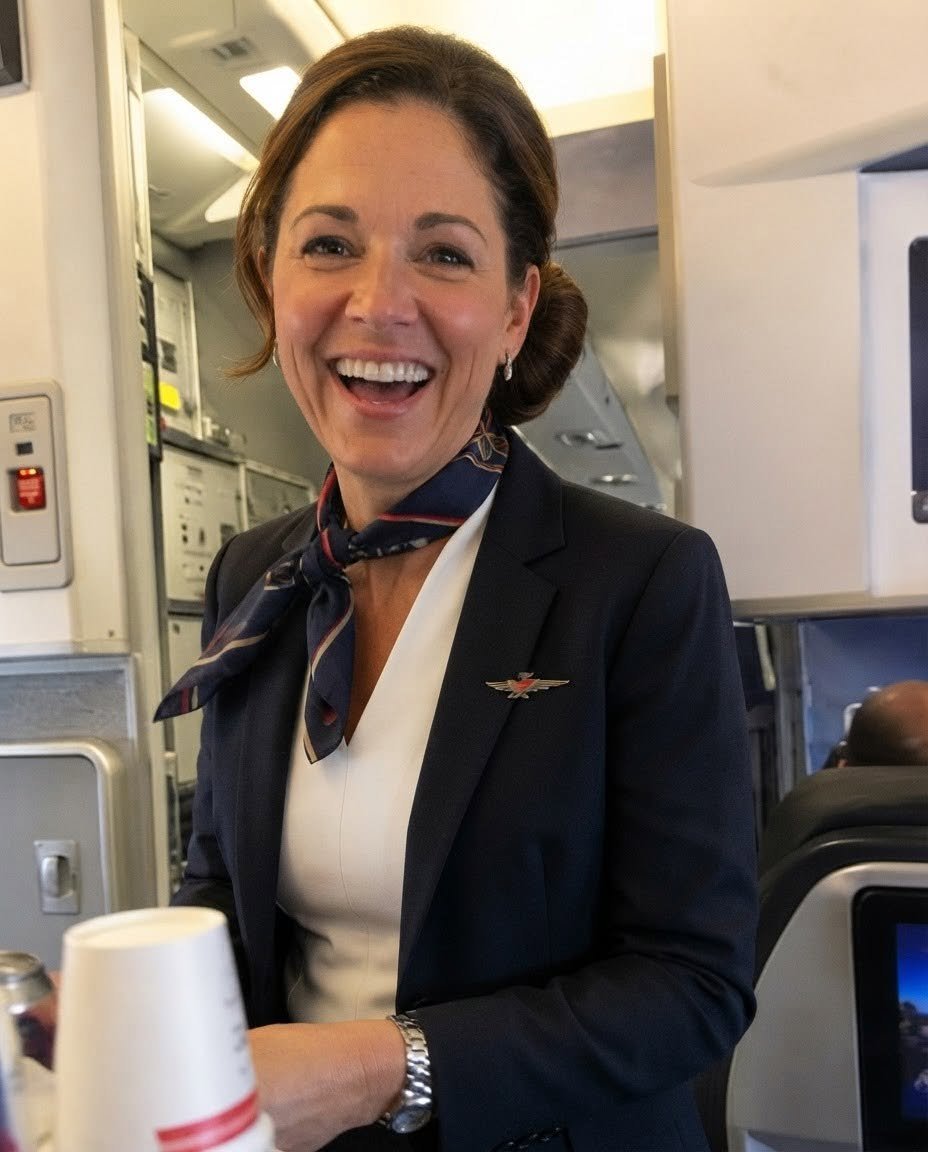
A stranger slipped a folded note into my hand on a southbound bus and whispered five words I could not ignore: “Do not sign those papers.”
He told me that if I signed the documents waiting for me in coastal Georgia, my ten-year-old son would lose control of the fortune his father had left him.
At first, I thought the warning was nothing more than a bizarre encounter with a stranger.
By the end of the day, I discovered that my late husband’s death might not have been an accident, that his family had brought my son to their estate for reasons far more sinister than a family reunion, and that the company at the center of the mystery was hiding decades of corruption.
What I uncovered would eventually lead to a criminal investigation, the collapse of a powerful family business, and a fight to protect my son’s inheritance from the very people who were supposed to protect it.
The Stranger on the Southbound Bus
The warning came so quietly that, for a moment, I wondered whether I had imagined it.
Our southbound bus had stopped at a rainy rest area outside Savannah. Passengers stepped outside to stretch their legs before the final part of the journey, while my ten-year-old son, Caleb, slept against my shoulder.
I had spent the previous hour trying not to notice the man sitting several rows away.
He looked ordinary enough—middle-aged, quiet, and deliberately keeping to himself.
As he passed my seat, however, he slipped a gray handkerchief into my hand.
“If you sign the papers they put in front of you,” he whispered, “you will lose control of everything your husband left behind.”
I stared at him.
Before I could ask what he meant, he leaned closer.
“Pretend your son feels sick. Get off at the next stop. And do not trust anyone waiting for you in St. Marys.”
Then he disappeared into the crowd.
My name is Laura Whitaker. I was forty years old, worked as a senior financial analyst in Atlanta, and had spent the previous eighteen months trying to rebuild my life after my husband, Jonathan, died in what investigators had described as a tragic highway accident.
His truck had crashed through a guardrail during a storm outside Brunswick.
The official explanation was a loss of control in dangerous weather.
But the investigation had never completely answered all the questions surrounding his death.
Eventually, everyone around me accepted that some mysteries would never be solved.
I tried to do the same.
My entire world became Caleb.
Between school, therapy appointments, mortgage payments, and the endless conversations about the father he had barely had enough time to know, I had learned how to survive without expecting life to ever feel normal again.
Then my mother-in-law, Margaret, called me in tears.
“He keeps asking for Caleb,” she said. “Laura, whatever happened between the adults, please don’t punish a dying man.”
She was referring to Harrison Whitaker, Jonathan’s father.
According to Margaret, Harrison had suffered another serious heart episode and feared he might never see his grandson again.
Jonathan’s family had kept their distance since the funeral. They contacted me occasionally during holidays or whenever paperwork involving Whitaker Coastal Transport required my signature.
But Margaret’s desperate plea made refusing her difficult.
So I agreed to take Caleb to coastal Georgia.
I had no idea I was walking into a trap.
When I unfolded the handkerchief the stranger had given me, my heart began pounding.
Three sentences were written on the fabric:
Do not appoint another trustee.
Do not surrender Caleb’s voting rights.
Jonathan’s death was not an accident.
I looked toward the front of the bus.
A broad-shouldered man was standing near the door, quietly speaking into his phone.
“Yes, Mr. Whitaker,” he said. “They’re still on the bus. Mrs. Whitaker hasn’t spoken to anyone.”
He never said which Mr. Whitaker he meant.
But something about the conversation made my stomach tighten.
Someone had been watching us.
And they had been watching us for longer than I realized.
Why Everyone Suddenly Wanted Caleb
Jonathan’s younger brother, Preston, had taken control of Whitaker Coastal Transport after Jonathan’s death.
The company was a major family-owned transportation business with extensive operations along the southeastern coast.
Jonathan, however, had structured his estate very differently from what Preston wanted.
Nearly 46 percent of the company’s voting shares had been placed in a trust for Caleb.
Jonathan had named me as the sole trustee until our son reached adulthood.
That meant Preston could manage the company’s daily operations, but he could not make certain major decisions involving Caleb’s shares without my approval.
From the beginning, that arrangement had frustrated him.
More than once, I had refused to sign documents after discovering unexplained discrepancies in financial reports.
I had assumed Preston was simply angry about losing control.
After the stranger’s warning, I began wondering whether there was something much larger at stake.
When our bus finally reached St. Marys, Preston was waiting beside a polished blue SUV.
He greeted us with a broad smile and lifted Caleb into a warm embrace beneath an oversized umbrella.
“There’s my favorite nephew,” he said. “Granddad has been counting every hour.”
During the drive to the Whitaker estate, Preston described Harrison as weak, confused, and close to death.
But when we entered the house, I immediately realized something was wrong.
Harrison was sitting upright in the library.
He had a cup of coffee in front of him and was surrounded by attorneys, corporate board members, and several relatives.
He looked tired.
He did not look like a dying man.
The first lie had already fallen apart.
Everyone welcomed Caleb with an enthusiasm that felt strangely excessive.
Relatives commented on how much he looked like Jonathan.
They talked about his future.
They talked about what he would inherit.
And somehow, nearly every conversation eventually returned to Whitaker Coastal Transport.
At dinner, Margaret reached across the table and gently placed her hand over mine.
“You’re still young, Laura,” she said. “No one would blame you for starting over someday. But Caleb’s inheritance has to remain protected from people who don’t understand this family.”
“His inheritance is already protected by Jonathan’s trust.”
Across the table, Preston smiled.
“Only if the current arrangement remains practical.”
That sentence stayed with me.
Later that night, after Caleb fell asleep in Jonathan’s childhood bedroom, I walked past the study.
I stopped when I heard voices behind the closed door.
“She has to sign tomorrow,” Preston said. “Without a co-trustee, we can’t access the reserve account or consolidate the shares.”
Harrison answered, his voice strained.
“Those shares belong to Caleb, and Jonathan chose Laura for a reason.”
Margaret began crying.
“We can’t survive another investigation. If the old records ever surface, the company will collapse.”
A loud bang followed.
“The company collapses if Laura keeps blocking every decision,” Preston snapped. “Caleb’s shares are the difference between control and bankruptcy.”
I stepped backward before anyone realized I was standing outside.
The stranger on the bus had not exaggerated.
My son had not been brought to Georgia simply because his grandfather wanted to see him.
He had been brought there because someone desperately wanted access to what legally belonged to him.
The Papers That Could Have Changed Everything
The next morning, Preston gathered the family in the formal dining room.
A thick stack of legal documents sat beside a silver pen engraved with the Whitaker company logo.
The family attorney calmly explained that the paperwork would appoint Preston as Caleb’s co-trustee if I became “temporarily impaired” because of grief, illness, remarriage, or geographic distance.
On the surface, the proposal sounded reasonable.
It was anything but.
I read the documents carefully.
Buried beneath polished legal language was the real objective.
Preston would gain significant authority over Caleb’s voting shares, trust distributions, and other protections Jonathan had established in his estate plan.
Signing those documents would effectively hand control of my son’s inheritance to the same man who had spent the previous eighteen months trying to obtain it.
“This arrangement protects Caleb from uncertainty,” the attorney said. “You live hundreds of miles away and have limited knowledge of maritime logistics.”
“I know enough about financial reporting to recognize missing liabilities.”
Preston’s smile became noticeably thinner.
“Those are operational matters, Laura. They aren’t evidence of wrongdoing.”
Before anyone could respond, Harrison entered the room carrying a worn leather folder.
His hands were shaking.
He placed several documents on the table.
Jonathan’s original will.
The trust agreement.
And a notarized memorandum.
Together, they confirmed what I already knew.
Jonathan had intentionally named me as Caleb’s sole trustee.
He had also specifically restricted company executives from replacing me without approval from an independent court.
For the first time, I watched Preston lose control of his expression.
He leaned toward me.
“Paper cannot protect you indefinitely,” he said quietly. “Eventually, everyone chooses between cooperation and consequences.”
That was when I realized this was no longer a family disagreement.
It was a battle over control.
And someone was willing to intimidate me to win it.
What Jonathan Left Behind
That evening, Harrison asked me to meet him inside Jonathan’s old office.
After locking the door, he walked toward a bookcase and opened a hidden compartment.
From inside, he removed a small steel box.
It looked as though it had not been touched since Jonathan died.
“I should have given this to you months ago,” Harrison said. “Jonathan left it with me three weeks before the crash.”
Inside were three notebooks, a flash drive, and an envelope with my name written across the front.
My hands shook as I connected the drive to Jonathan’s old computer.
A video appeared.
Jonathan was sitting in front of the camera.
He looked exhausted.
He looked frightened.
And he looked like a man who knew he might not live long enough to finish what he had started.
“Laura,” he said, “if you’re watching this, then something prevented me from finishing what I started.”
I felt the room becoming smaller.
Jonathan explained that he had uncovered disturbing information about Whitaker Coastal Transport.
Decades earlier, the company had allegedly accepted illegal chemical shipments.
One incident had resulted in a deadly accident.
One business partner had died.
Another innocent man had been imprisoned.
A third had disappeared after receiving threats against his family.
Jonathan believed the Whitaker family had spent years suppressing evidence and shifting ownership to protect the company.
But that was only the beginning.
In the years before his death, Jonathan had discovered shell companies, falsified maintenance reports, suspicious financial transfers, and evidence suggesting that someone had tampered with his truck.
He believed someone had discovered his investigation.
He no longer trusted the people closest to him.
Then he looked directly into the camera.
“If you must choose between peace and truth, choose truth. Peace built on fear never lasts.”
The recording ended.
I sat in silence.
My husband had not simply been investigating financial irregularities.
He had been investigating his own family.
And he believed the investigation could cost him his life.
The Stranger Had a Name
Among the notebooks, I found a phone number next to the initials B.R.
The following morning, I called from a prepaid phone.
The man who answered was the stranger from the bus.
His name was Julian Reyes.
He was the son of Benjamin Reyes, one of the company’s original founders.
Julian drove me to a secluded cottage near the marshes.
There, I met Benjamin.
The elderly man immediately recognized Jonathan’s notebooks.
He confirmed that Jonathan had found him months before his death.
Jonathan had promised to clear the name of Lawrence Cole, expose the truth surrounding the death of Samuel Ortega, and uncover the corruption that had allegedly spread through Whitaker Coastal Transport for decades.
“Did Preston kill Jonathan?” I asked.
Benjamin hesitated.
“I cannot prove he ordered it,” he said. “But Jonathan believed Preston had discovered the investigation.”
Benjamin then revealed something even more disturbing.
Two days before the crash, Jonathan had told him that someone had entered his garage.
Julian explained why he had approached me on the bus.
An employee still loyal to Jonathan had discovered that Preston intended to force my signature during the family visit.
They could not warn me openly because company phones were allegedly being monitored.
By the time I arrived in St. Marys, Preston’s plan was already underway.
For the first time, I understood the real stakes.
Preston was not trying to protect a family business.
He was trying to erase the evidence Jonathan had died trying to expose.
The Campaign Against Me
The next forty-eight hours proved how far Preston was willing to go.
Anonymous rumors suddenly appeared online accusing me of having an affair with Julian shortly after Jonathan’s death.
Then child protection services received allegations that I was neglecting Caleb, misusing his trust fund, and suffering from emotional instability.
Every accusation contained just enough truth to sound believable.
I realized Preston was not simply trying to defeat me in court.
He was trying to destroy my credibility as a mother.
Then the threat became personal.
A man wearing a Whitaker company jacket arrived at Caleb’s school.
He claimed I had been hospitalized and said Preston had authorized him to pick up my son.
Fortunately, school officials followed their security procedures and refused to release Caleb.
Police intercepted the vehicle minutes later.
Investigators eventually traced it to one of Whitaker Coastal Transport’s shell companies.
That night, I confronted Preston.
I secretly recorded the conversation.
“Did you send someone to take Caleb from his school?”
“I would never harm my nephew.”
“That is not what I asked.”
His smile never disappeared.
“You’re frightened, Laura. You’re inventing connections because strangers have filled your head with stories.”
“Leave Caleb out of whatever you’re trying to protect.”
For the first time, his expression changed.
“Caleb owns almost half the company,” he said. “You cannot ask me to treat him as though he is irrelevant.”
He had just admitted the central truth.
This had never been about family.
It had always been about control.
A Message From Caleb
Three days later, Harrison finally agreed to cooperate with investigators.
He admitted that Jonathan had been right.
But before he could tell me everything he knew, Preston entered carrying a cup of ginger tea.
Minutes after drinking it, Harrison collapsed beside his bed.
Doctors discovered that he had received a dangerous overdose of his heart medication.
After briefly regaining consciousness, Harrison used the last of his strength to write four words on a paper towel:
Preston killed Jonathan too.
That night, Julian introduced me to Miguel Santos, an accountant who had secretly handled Preston’s shell companies for years.
Miguel arrived carrying financial records, bank statements, insurance documents, and audio recordings.
The evidence was devastating.
One recording allegedly captured Preston instructing a mechanic to weaken Jonathan’s brakes.
Another revealed a $5 million insurance policy taken out shortly before Jonathan’s death, with a company controlled by Preston listed as the beneficiary.
Then I found a series of suspicious trust payments connected to an abandoned waterfront warehouse.
As I stared at the documents, my phone vibrated.
The message came from Caleb’s number.
Mom, come to Warehouse 18 alone. Bring Dad’s flash drive.
My blood ran cold.
Warehouse 18
I immediately called Caleb.
The call went straight to voicemail.
Seconds later, Preston called.
His voice was calm.
Almost amused.
“Do not create unnecessary panic,” he said. “Caleb is safe for now.”
“Let me hear his voice.”
After a pause, Caleb came on the line.
“Mom, I’m at an old warehouse. I’m okay, but please come quickly.”
He was trying to sound brave.
But I could hear the fear in his voice.
Preston took the phone back.
“Bring the original flash drive. No police. No Julian. No copies. If you cooperate, Caleb goes home.”
Then he added the threat he had been building toward all along.
“Otherwise, child services will receive evidence proving you abandoned him during an emotional breakdown.”
The call ended.
For several seconds, I stood completely still.
Then fear gave way to clarity.
Preston believed Jonathan had left only one copy of the evidence.
He was wrong.
Encrypted backups had already been secured.
More importantly, Miguel had already provided the financial records to federal investigators.
Julian refused to let me go alone.
“He doesn’t intend to negotiate,” he said. “Someone who sabotaged his own brother’s brakes will not suddenly show mercy.”
Instead of walking into the trap by ourselves, we contacted the Camden County Sheriff’s Office.
Local detectives coordinated with state investigators and federal agents who had already begun examining Whitaker Coastal Transport.
I agreed to wear a concealed recording device.
Every word Preston spoke could become evidence.
Before we left, Margaret arrived at the hotel.
When she learned Preston had taken Caleb, the denial she had clung to for years finally collapsed.
“He took my grandson?”
“Yes.”
She closed her eyes.
“Then I’m coming with you.”
The Confrontation
Rain poured over the abandoned waterfront when we reached Warehouse 18.
Rusting shipping containers surrounded the building, while broken dock equipment cast long shadows beneath the floodlights.
Inside, Caleb sat tied to a metal chair.
A security contractor guarded the entrance.
Preston stood beneath a hanging industrial lamp, waiting as though he had already won.
“Mom!”
I instinctively moved toward Caleb.
Preston raised one hand.
“The drive comes first.”
I held up the flash drive.
“Release my son.”
He laughed.
“Jonathan always said you were difficult to control.”
“Jonathan never described me that way.”
The smile disappeared.
“He wanted to destroy everything this family built,” Preston said. “He was willing to bankrupt the company, send our father to prison, and throw away generations of work because of some ridiculous moral crusade.”
“He wanted to stop criminal conduct.”
Preston finally lost his composure.
“I kept Whitaker Coastal alive while Jonathan ran away to Atlanta and played devoted husband. I handled the debts, the contracts, the unions, and Father’s mistakes.”
He pointed toward Caleb.
“Then he leaves nearly half the company to a child who doesn’t even understand what a share certificate is.”
“Caleb isn’t your enemy.”
“Anyone who controls this company is my enemy.”
Every word was being recorded.
Then Margaret stepped from the shadows.
“Preston.”
He spun around.
“Mother? Why are you here?”
“I came to save my grandson.”
“You should be standing with me.”
Tears filled her eyes.
“I stood with you every time I ignored what I saw. I defended you when Jonathan raised concerns. I blamed Laura because admitting the truth about my own son was unbearable.”
“You’re choosing an outsider over your own child.”
“Laura is Jonathan’s wife and Caleb’s mother. You turned this family into a business transaction and expected love to excuse everything you’ve done.”
Sirens suddenly echoed through the warehouse.
The security contractor looked toward his phone.
Then he slowly raised both hands.
“Sheriff’s Office! Show your hands!”
Realizing he had been trapped, Preston grabbed Caleb by the shoulder.
But Caleb remembered the safety lessons we had practiced together.
He threw his weight backward, knocked the chair into Preston’s legs, freed one hand, and ran toward me.
Within seconds, deputies stormed through the entrance.
Preston was forced onto the concrete floor and placed in handcuffs.
For the first time, the man who had spent months trying to control everyone else had no control over what happened next.
The Investigation That Brought Down the Whitaker Empire
The investigation that followed dismantled Whitaker Coastal Transport piece by piece.
Federal investigators uncovered evidence involving alleged insurance fraud, money laundering, tax crimes, concealed safety violations, financial conspiracies, and witness intimidation.
Investigators also uncovered records indicating that Jonathan’s brakes had been deliberately sabotaged.
Security footage, financial records, witness testimony, and Preston’s own recorded statements eventually formed the backbone of the prosecution’s case.
Harrison survived the poisoning and later testified from a wheelchair.
During the proceedings, he admitted that although he had never personally sabotaged vehicles, his years of silence had allowed corruption to grow.
He had protected the family name for so long that his own son eventually believed fear and money could solve every problem.
Benjamin Reyes was eventually recognized as a rightful owner.
Lawrence Cole’s conviction was overturned.
Samuel Ortega’s family received compensation.
And the people Jonathan had fought to protect finally received the truth he had died pursuing.
Preston was convicted of murder, attempted murder, kidnapping, insurance fraud, financial conspiracy, witness intimidation, child endangerment, and other federal offenses.
He received a life sentence without parole.
Before sentencing, he looked toward Harrison.
“You taught me the company came before everything.”
Harrison slowly closed his eyes.
“Then teaching you that was the worst mistake I ever made.”
The Inheritance That Really Mattered
The Whitaker family business was eventually dismantled under court supervision.
Caleb’s inheritance was transferred into an independently managed trust.
No member of the Whitaker family could access or control it.
Harrison spent the remainder of his life trying to make peace with the choices that had helped destroy his family.
Margaret eventually accepted that protecting the truth mattered more than protecting a family name.
Months later, Caleb and I visited Jonathan’s grave.
He placed a small model freight truck beside the headstone.
Then he looked at me.
“Dad, Mom found everything you left for us. She kept me safe too.”
I rested my hand against the cold stone.
“I chose the truth, Jonathan,” I whispered. “No one will ever use Caleb’s future to protect their crimes again.”
For a long time, I believed Jonathan’s greatest gift to our son was the fortune he had left behind.
Eventually, I realized I was wrong.
Shares can be stolen.
Companies can collapse.
Money can disappear overnight.
But courage is different.
The inheritance that truly mattered was not the fortune Jonathan left behind.
It was the courage to stand for the truth—even when the people standing against you shared your last name.
Conclusion
What began with a stranger slipping a folded note into my hand on a bus became a fight to protect my son, uncover the truth about my husband’s death, and expose a family business built on decades of secrets.
The warning had sounded almost impossible when I first heard it.
Do not sign those papers.
Those words ultimately saved my son’s inheritance—and may have helped uncover the truth about the man who took his father from him.
Sometimes the most important warning in your life comes from the person you least expect.
And sometimes, protecting what matters most means refusing to sign away your right to the truth.
If this story moved you, share it with someone who believes that the truth is always worth fighting for.