A 12-second video captured an elderly woman being assaulted in her own restaurant while customers watched in silence. When her daughter returned home to demand answers, the local sheriff dismissed the incident as a possible fall. Then the man responsible delivered a chilling warning about her father, who had died in a mysterious car crash six years earlier. What began as an assault investigation soon became a search for the truth behind years of fear, intimidation, and alleged corruption.
INTRODUCTION: TWELVE SECONDS THAT CHANGED EVERYTHING
At 5:42 p.m. on a Tuesday, Nicole Turner was preparing to brief her fellow officers at Fort Bragg when her phone began vibrating.
She almost ignored the call. She was a lieutenant colonel in the United States Army, responsible for leading a Ranger battalion, and her afternoon was already filled with operational briefings, logistical concerns, and decisions that demanded her complete attention.
But something about the call made her pause.
It was her neighbor, Carol.
“Nicole, you need to see this right now,” Carol said. “It’s your mom.”
Moments later, a video appeared on Nicole’s phone.
She stepped into the hallway, opened the recording, and watched twelve seconds that would change the course of her life.
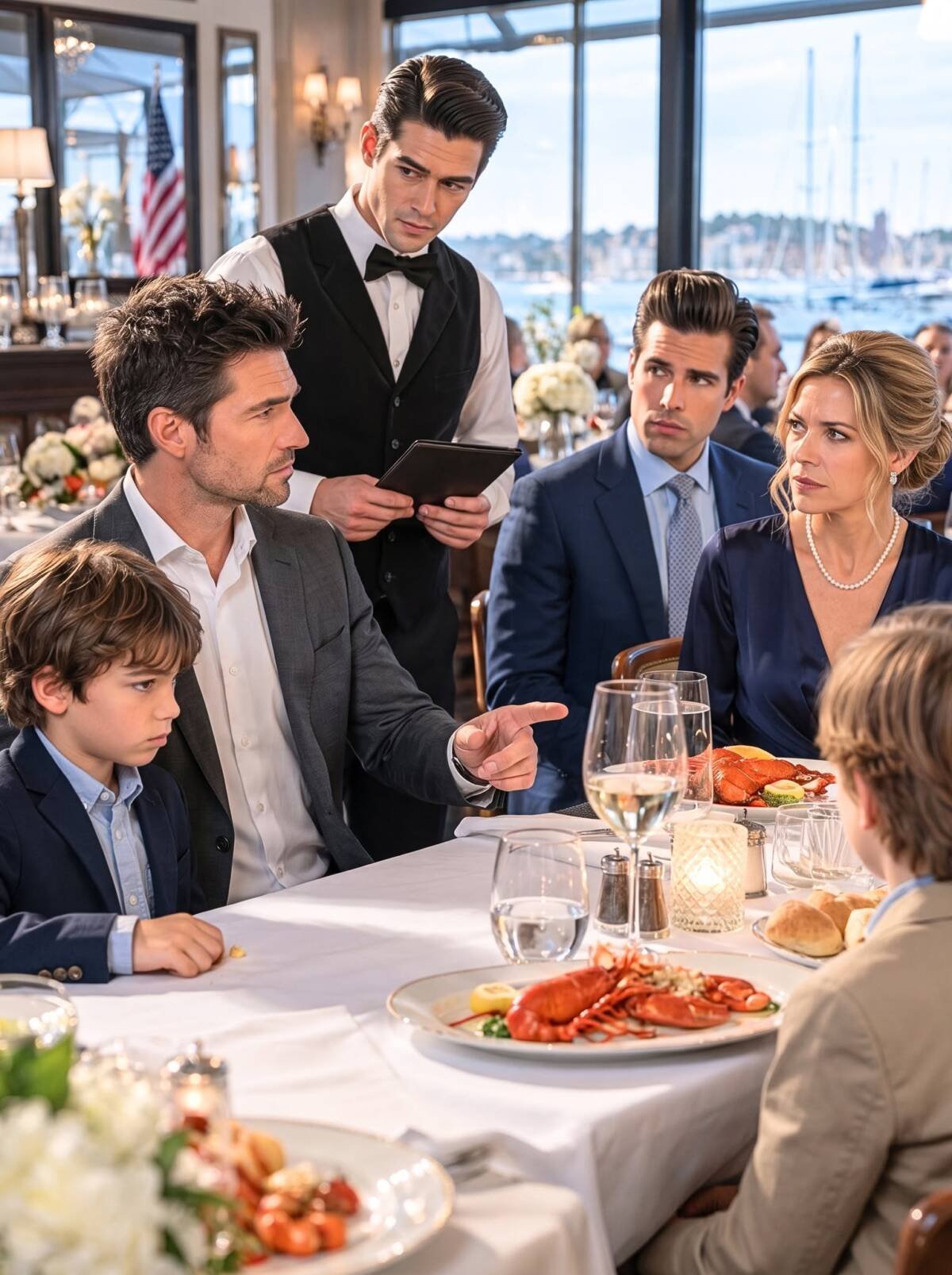
The footage showed Turner’s Family Diner, the small North Carolina restaurant her parents had built together decades earlier. Behind the counter stood her 75-year-old mother, Evelyn Turner, wearing a faded apron she had refused to replace for years.
Standing across from Evelyn was a well-dressed man in his early thirties. He appeared angry, pointing his finger inches from the elderly woman’s face as she repeatedly shook her head.
Then he struck her.
Evelyn lost her balance and fell to the floor. Her glasses slid beneath a nearby booth, and several customers turned to look.
Nobody intervened.
The man straightened his jacket, looked down at the woman lying on the floor, and walked away with the confidence of someone who expected no consequences.
“Around here, I do whatever I want,” he said.
Then the video ended.
Nicole watched it again, hoping she had misunderstood what she had seen.
She had not.
Her mother had been assaulted in the restaurant she had spent most of her life building, surrounded by people who knew her, served by employees who had worked alongside her for years, and watched by customers who apparently believed remaining silent was safer than helping.
Within minutes, Nicole requested emergency leave and began preparing to return home.
She had spent more than twenty years in the military learning to remain composed under pressure. She had faced difficult decisions, led soldiers through dangerous situations, and learned that anger could cloud judgment when clear thinking mattered most.
But this was different.
This was her mother.
And the man who had hurt her appeared to believe he was untouchable.
Nicole was determined to find out why.
What she did not yet know was that the assault would lead her toward a six-year-old mystery involving her father’s death, suspicious property transactions, and a town where fear had seemingly become part of everyday life.
PART ONE: A MOTHER WHO WAS AFRAID TO SPEAK
Nicole arrived in North Carolina with one clear priority: finding out what had happened to her mother.
At the hospital, she found Evelyn resting in a bed with one arm in a sling and bruising across her face. The older woman tried to smile when her daughter entered the room, but the expression disappeared almost immediately.
“I’m fine, honey,” Evelyn insisted. “It’s nothing we can’t handle.”
Nicole pulled a chair beside the bed and gently took her mother’s uninjured hand.
“Mom, I watched the video. I saw what happened.”
Evelyn looked away.
“Please don’t make this bigger than it needs to be.”
Those words troubled Nicole more than she expected.
Her mother was not someone who frightened easily. She had run a busy diner for decades, raised a family, managed employees, dealt with difficult customers, and continued working through hardships that would have discouraged many people.
Yet now, after being assaulted in her own establishment, she seemed more concerned about the consequences of reporting it than about the injury itself.
“Who was he?” Nicole asked.
Evelyn hesitated before answering.
“Travis Cain.”
The name meant little to Nicole at first. But the way her mother said it suggested a history that went beyond an ordinary disagreement.
“He’s Wade Cain’s son,” Evelyn added quietly.
“Who is Wade Cain?”
“A man who thinks he can buy anything he wants.”
Nicole waited for her mother to explain further, but Evelyn fell silent.
When Nicole pressed her for details, the older woman shook her head.
“Your father used to say there were people in this town you couldn’t reason with. I didn’t want to believe him.”
Her father’s name immediately changed the conversation.
Six years earlier, Richard Turner had died in a single-car crash on Route 9. The official explanation had suggested that he might have been driving too fast, become fatigued, or swerved to avoid an animal.
Nicole had accepted the explanation, even though the loss had never stopped hurting.
Now she wondered whether her father had understood something about the town that she had never been told.
That evening, she visited the diner.
The restaurant looked almost exactly as she remembered it: red vinyl booths, a long counter, framed photographs of local families, and the familiar smell of coffee drifting through the dining room.
But the atmosphere had changed.
Employees avoided eye contact. Conversations stopped when Nicole approached. The cook claimed he had been in the back when the assault occurred, while two regular customers insisted they had seen nothing.
Even the security cameras were supposedly malfunctioning.
Nicole had spent years examining problems, evaluating competing explanations, and identifying inconsistencies. She knew that fear could make people reluctant to cooperate, but the uniformity of the answers troubled her.
Everyone seemed to have reached the same conclusion before she arrived.
Nobody had seen anything.
The following morning, Nicole visited Sheriff Don Harper.
She expected him to take the video seriously, identify witnesses, preserve the available evidence, and begin an investigation.
Instead, Harper listened with a polite smile before offering an explanation that left her stunned.
“Your mother may have simply fallen.”
Nicole stared at him.
“I have a video showing a man striking her.”
“Videos don’t always tell the whole story,” Harper replied.
“Then investigate it.”
The sheriff leaned back in his chair.
“I’m sure we can look into it.”
His tone suggested that he had already decided how much attention the matter deserved.
Nicole left the office with a troubling realization: the assault was not the only problem.
Someone appeared to be working to ensure that it would never be properly investigated.
And the local sheriff did not seem interested in challenging that arrangement.
PART TWO: THE WITNESS WHO FINALLY CAME FORWARD
That night, Nicole sat at her mother’s kitchen table, reviewing the details she had collected.
She had the original video, her mother’s account, and a growing list of unanswered questions. What she lacked was a clear understanding of why the people around her seemed so afraid.
Then someone knocked on the door.
It was Kayla Moore, a young waitress who worked at the diner.
Earlier, Kayla had claimed she had seen nothing. Now she stood on the porch with her hood pulled over her head, glancing nervously toward the street.
“I need to show you something,” she said.
Inside, Kayla took out her phone.
“I recorded more than the clip that was posted. I didn’t know what to do with it. I was scared.”
The longer recording showed the confrontation from a different angle. It also revealed a tall man in an expensive gray suit standing near the pie display, watching the argument without appearing surprised.
Nicole recognized the significance of his presence immediately.
“Who is that?”
“Wade Cain,” Kayla replied.
According to Kayla, Wade Cain controlled a substantial portfolio of commercial property throughout the county. His company had purchased businesses, land, and buildings over many years.
People also whispered that he had influence over local officials.
“Including Sheriff Harper?” Nicole asked.
Kayla lowered her voice.
“Especially Sheriff Harper.”
Nicole did not treat the allegation as proof. But it gave her a new direction for her inquiries.
The next morning, she began examining public records.
She reviewed property deeds, liens, building permits, tax documents, and ownership transfers. At first, the paperwork appeared ordinary. But as she compared transactions involving Cain Realty Group, she noticed a recurring pattern.
More than thirty families had sold property to the company during the previous six years.
Several had reportedly resisted the initial offers.
Then problems began appearing.
Some property owners faced unexpected liens. Others reported suspicious fires, unexplained mechanical failures, revoked permits, or repeated inspections that threatened their ability to operate businesses.
In several cases, the owners eventually sold their properties for substantially less than their estimated market value.
Cain Realty Group subsequently acquired the properties.
Nicole could not conclude from the records alone that every incident was connected or criminal. But the repeated sequence was sufficiently concerning to warrant closer examination.
She also noticed that complaints involving the company appeared to have received little meaningful attention from local authorities.
Certain zoning requests, meanwhile, seemed to move through the approval process unusually quickly.
Names connected to the same small circle of officials appeared repeatedly.
The picture was becoming clearer, but one discovery stopped Nicole cold.
It involved her father.
PART THREE: THE WORD THAT CONNECTED TWO TRAGEDIES
Six years earlier, Wade Cain had attempted to purchase a narrow strip of land adjoining the Turner family property.
Richard Turner had rejected the offers.
The land was important to him, and he had no interest in selling it.
According to the documents Nicole found, Cain’s company had made several attempts to acquire it. Her father had refused each time.
Among the county records was a handwritten note attached to one of the files.
“Owner uncooperative. Recommend escalation.”
Someone had added a date beside the note.
Three weeks later, Richard Turner died in the Route 9 crash.
Nicole sat at the kitchen table, reading the words repeatedly.
Owner uncooperative.
For six years, she had understood her father’s death as a terrible accident. Now she was confronted with a possible connection between his refusal to sell land and the suspicious circumstances surrounding the family’s recent troubles.
The note did not prove that anyone had caused the crash. It did not establish that Wade Cain had been involved in her father’s death.
But it raised questions that had never been adequately answered.
Had her father discovered something?
Had he been threatened?
And had the original investigation overlooked evidence that might have changed its conclusions?
Nicole remembered a conversation shortly before his death.
Her father had spoken unusually seriously that evening, warning her never to use her military position to settle a personal dispute.
“Whatever happens to this family, you never use that uniform to get even with someone,” he had told her. “The uniform isn’t a weapon for revenge. It’s a promise you made to something bigger than yourself.”
At the time, she had assumed he was offering general advice.
Now she wondered whether he had been trying to prepare her for something he feared.
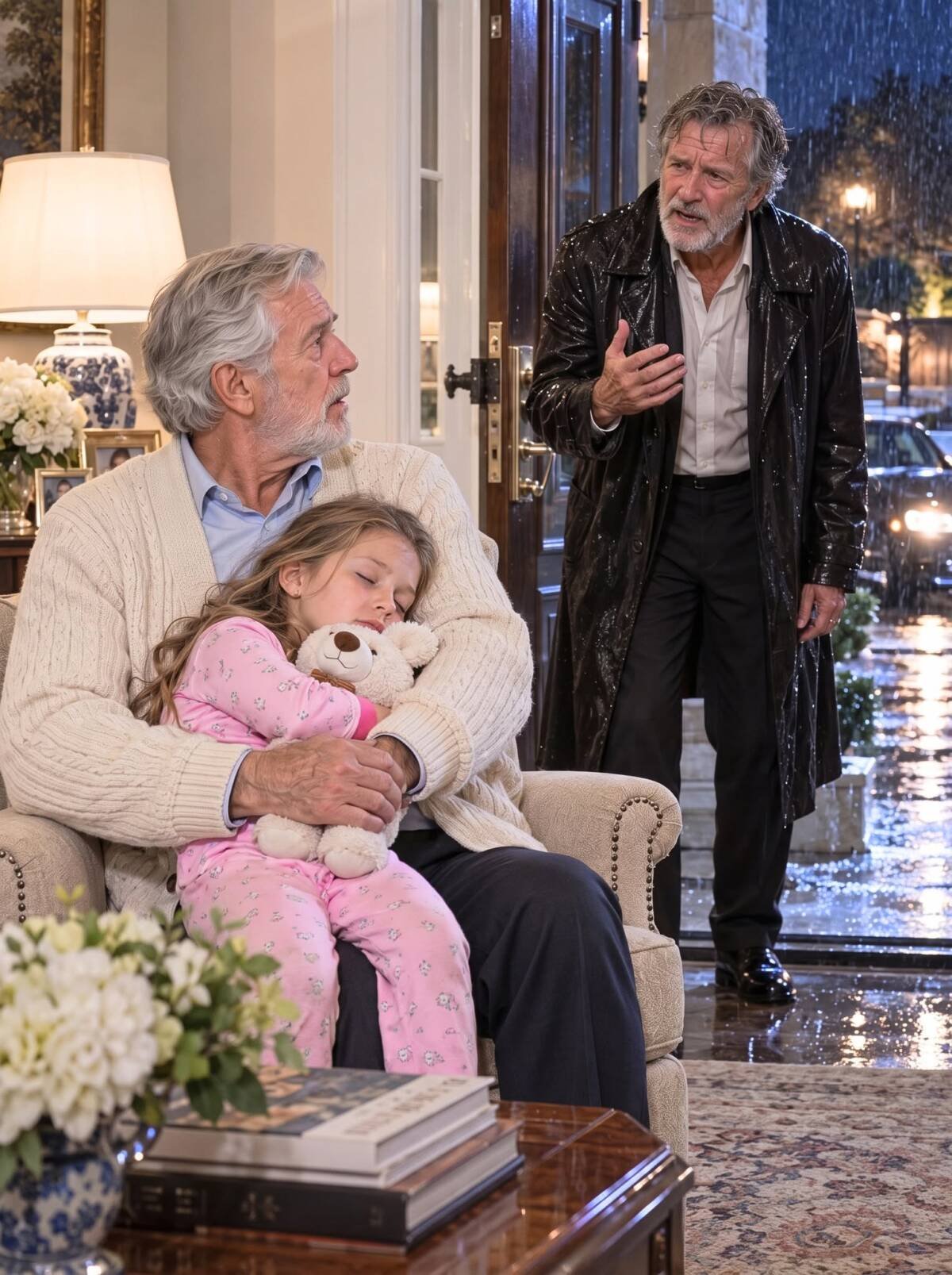
Two days later, an elderly man appeared at Evelyn’s front door.
He introduced himself as Harold Weiss, a retired attorney who had practiced law in the county for four decades.
“My father knew you?” Nicole asked.
Harold nodded.
“He came to see me about six weeks before he died.”
He carried a worn leather satchel into the kitchen and placed it on the table.
“Your father discovered something about Wade Cain’s business dealings,” he explained. “He believed property owners were being pressured into selling, and he had started collecting evidence.”
Harold opened the satchel.
Inside were documents, copies of financial records, handwritten notes, and other materials Richard had apparently gathered before his death.
“Why didn’t you come forward sooner?” Nicole asked.
Harold looked down at the papers.
“Because I was afraid. And because I wasn’t certain who I could trust.”
His admission was painful, but Nicole understood the implications.
If even an experienced attorney had been frightened into silence, ordinary business owners and diner employees might have had good reason to fear retaliation.
Harold then removed a small black digital recorder.
“Your father gave me this before he died. It contains a recording of a meeting he attended.”
Nicole looked at the device.
For six years, her family had lived with unanswered questions about Richard’s death. Now, for the first time, they possessed evidence that might help investigators understand what he had been doing in the weeks before the crash.
Harold had kept the materials in a safe-deposit box because he feared they might disappear if they were left in the wrong hands.
“Your father wanted the truth to survive,” he said.
Nicole carefully placed the recorder on the table.
She knew it would need to be authenticated, reviewed, and assessed in context. But she also understood that the investigation had entered an entirely new phase.
This was no longer simply about what had happened to her mother.
It was about finding out what her father had discovered—and whether the two events were connected.
PART FOUR: THE THREAT THAT REVEALED TOO MUCH
Nicole decided to return to the diner the following morning.
She wanted to understand how Travis Cain behaved when he believed he was speaking to someone who had no influence over the situation.
She wore faded jeans and an old university sweatshirt, hoping to avoid drawing attention to her military rank.
Her mother had returned to work despite her doctor’s advice. Nicole was sitting in a corner booth when Travis walked through the door.
He approached the counter as though he owned the place.
After ordering, he began questioning Evelyn about her daughter’s inquiries at the county records office.
“I heard your daughter has been asking questions,” he said.
“She is worried about me,” Evelyn replied.
“She should learn which questions are worth asking.”
Nicole stood and walked toward him.
“You must be Travis.”
He looked her over.
“So you’re the soldier girl.”
“My name is Nicole.”
Travis leaned back with a smirk.
“Then here’s some advice. Stop digging through matters that don’t concern you.”
Nicole remained composed.
“My mother was assaulted in her own restaurant. That concerns me.”
His expression hardened.
Then he leaned closer and lowered his voice.
“Ask your father what happens when people don’t know when to leave things alone.”
Nicole felt the words land like a blow.
“My father died six years ago.”
“That’s right,” Travis replied. “Accidents happen.”
He smiled.
“Especially to people who refuse to mind their own business.”
For a moment, the noise of the diner seemed to disappear.
Nicole now had a reason to take the threat seriously—not because it proved anything about the crash, but because Travis had deliberately invoked her father’s death while attempting to intimidate her.
She kept her hands at her sides.
“It isn’t going to end well for you,” she said quietly.
Travis laughed.
“The law is coming,” Nicole continued. “It’s simply running late.”
His smile faded.
He stood abruptly, scraped his stool across the floor, and deliberately drove his shoulder into hers as he passed.
Nicole did not retaliate.
She knew that any physical response could distract from the evidence and provide Travis with an opportunity to portray himself as the victim.
Then the diner door opened.
Sheriff Harper entered and looked around the room.
Rather than questioning Travis, the sheriff told Nicole she should leave before she caused trouble.
Evelyn stood behind the counter, visibly distressed.
The situation had become almost impossible to ignore. A woman had been assaulted, a witness had provided additional footage, a potential connection to suspicious property dealings had emerged, and the sheriff was still directing his attention toward the victim’s daughter.
Then two black government SUVs stopped outside.
A uniformed Army officer stepped from the lead vehicle and entered the diner.
Nicole recognized Colonel James Whitfield, her commanding officer.
He removed his cap and addressed her with formal military courtesy.
“Good afternoon, Colonel Turner.”
The room fell silent.
Travis stared at Nicole, apparently struggling to reconcile the woman he had dismissed as a soldier girl with a senior Army officer responsible for commanding a Ranger battalion.
Sheriff Harper’s expression tightened.
For the first time since Nicole had returned home, Travis Cain appeared uncertain.
But Nicole knew her military rank was not the solution to the problem.
Her authority applied to her professional responsibilities. It did not give her the right to direct a civilian criminal investigation or punish someone who had threatened her family.
She would not use her uniform to intimidate Travis.
She would use the proper channels to ensure that the evidence reached people who could investigate it independently.
That distinction would matter more than anyone inside the diner yet understood.
PART FIVE: TAKING THE EVIDENCE OUT OF LOCAL HANDS
Colonel Whitfield stayed only briefly.
Outside the diner, he explained that he had been attending an official meeting nearby and had learned that the family of one of his senior officers might be facing intimidation.
He also shared a story about Nicole’s father.
Years earlier, when Whitfield had been a young captain, Richard had stopped to help him when his vehicle broke down beside the highway. Richard helped repair the problem, refused payment, and later invited him to breakfast at the diner.
The memory reminded Nicole that her father had earned the respect of people who had no connection to Wade Cain’s business interests.
But Whitfield did not offer to send soldiers into town or intervene in the criminal investigation.
Instead, he encouraged Nicole to preserve the evidence and seek assistance through appropriate civilian authorities.
Nicole followed that advice.
Through an existing professional contact, she was introduced to FBI Special Agent Renata Cole.
Cole listened as Nicole described the assault, the witness footage, the sheriff’s response, the property records, the handwritten note, and the materials Harold had preserved.
When Nicole finished, the agent gave her a straightforward instruction.
“Send me everything you have.”
Nicole provided the available records, including the original video, Kayla’s longer recording, property documents, copies of contracts, and the digital recorder.
She also explained that the recording’s contents and authenticity would need to be established before anyone could draw firm conclusions from it.
Investigators began examining the available information for possible financial coercion, fraud, obstruction, and official misconduct.
The review extended beyond the local sheriff’s office.
Financial records and property transactions were examined for possible links among Cain Realty Group, public officials, and intermediaries. Investigators also began looking into whether complaints had been improperly handled or evidence had been suppressed.
For the first time, the allegations were being examined outside the network of local relationships that had made witnesses reluctant to speak.
Then something unexpected happened.
The video of Evelyn’s assault spread across social media.
A regional television station aired the footage. Other outlets followed, and the story attracted attention far beyond the county.
People who had remained silent began contacting investigators.
Dolores Fitch said her family farm had been targeted after they rejected an offer from Cain Realty Group.
Curtis Odom described a dispute involving property and unexpected financial pressure.
Members of the Henderson family also came forward with accounts of their experiences.
Their statements would need to be independently investigated, but the growing number of witnesses offered authorities new leads to examine.
For years, people had apparently believed they were facing their problems alone.
Now they were discovering that others had similar stories.
The silence that had protected the powerful was beginning to break.
PART SIX: THE SHERIFF’S OFFICE UNDER INVESTIGATION
As the investigation widened, new questions emerged about the handling of records inside the sheriff’s office.
One deputy reportedly photographed Sheriff Harper removing boxes from an evidence room late at night and loading them into his personal vehicle.
The photographs were provided to Agent Cole.
Investigators began examining whether the boxes contained materials relevant to the inquiry and whether any records had been improperly removed.
Harold Weiss had anticipated that evidence might be lost or destroyed.
He had retained copies of important documents in separate safe-deposit boxes in two states, reducing the risk that a single compromised location could eliminate the entire collection.
“Paper only disappears when you keep just one copy,” he told Nicole.
The comment stayed with her.
Evidence preservation was not dramatic. It involved careful documentation, duplicate records, secure storage, and procedures designed to establish where information came from and whether it had been altered.
But those details were essential.
Without them, the case could collapse into competing accusations.
With them, investigators had a better chance of establishing what had happened.
On a Thursday morning, federal agents arrived at the sheriff’s office with a search warrant.
They collected computers, documents, storage devices, and other materials identified in the warrant.
Nicole and Evelyn watched from across the street.
Neither celebrated.
They understood that a search was not a conviction and that the investigation still had to establish the facts.
Nevertheless, the sight of investigators examining the sheriff’s office represented a significant change.
For weeks, Nicole had been told that her mother might simply have fallen.
Now authorities were examining whether the institution responsible for investigating the assault had itself become part of a larger problem.
Evelyn quietly reached for her daughter’s hand.
“Your father would be proud of you,” she said.
Nicole looked at her mother.
“I hope so.”
She thought about the advice Richard had given her years earlier.
The uniform was not a weapon for revenge.
The work she had done so far had followed that principle. She had preserved evidence, approached investigators, and resisted the temptation to respond to intimidation with intimidation of her own.
The case would be decided by evidence, not by her rank or her anger.
That was exactly how it should be.
PART SEVEN: ARRESTS, CHARGES, AND A NEW INVESTIGATION
As the investigation progressed, authorities took enforcement action against several people connected to the allegations.
Travis Cain was taken into custody, followed by his father, Wade Cain. Sheriff Harper was also arrested, while investigators continued examining the financial records and case files they had collected.
Two county commissioners faced charges, and Mayor Linda Brooks resigned before authorities charged her as well.
The precise allegations against each individual would need to be addressed through the legal process. An arrest or charge is not, by itself, proof of guilt.
For Nicole, however, the developments meant that the allegations were finally being tested through formal proceedings rather than dismissed through informal assurances.
The digital recording preserved by Harold became a major focus of the investigation.
According to the information provided to investigators, it captured a meeting in which participants discussed payments, property transactions, and methods of pressuring landowners.
Authorities would need to authenticate the recording, establish its context, and determine what it proved about each person involved.
But its potential significance was considerable.
The materials Richard had preserved before his death were no longer hidden in a satchel or locked away in a safe-deposit box. They had become part of an investigation that could be examined by prosecutors and challenged in court.
Then Agent Cole gave Nicole another document.
It concerned the investigation into her father’s death.
Federal authorities were reopening their examination of the Route 9 crash.
Investigators had identified inconsistencies in the original report that warranted additional review. They began looking again at the circumstances surrounding the crash, including available records and potential connections to the broader allegations.
Nicole read the document twice.
For six years, she had believed that her father’s death was a tragedy without an explanation beyond an unfortunate accident.
Now investigators were asking whether the original conclusion had been correct.
She wanted answers, but she also understood that suspicion was not proof.
The property note, Travis’s threat, and her father’s recording raised serious questions. None alone established that someone had caused Richard’s death.
The reopened investigation would have to determine whether the available evidence supported a different conclusion.
Nicole could not control what investigators discovered.
She could only ensure that the information her family possessed was preserved and made available to the people responsible for examining it.
For the first time in six years, the possibility of answers seemed real.
PART EIGHT: THE MAN WHO HAD ONCE BELIEVED HE WAS UNTOUCHABLE
Travis Cain was later released on bond while the case proceeded.
Nicole encountered him outside the courthouse.
He looked much as he had inside the diner, but the confidence he had displayed during their first confrontation was noticeably diminished.
“This is all because of one slap,” he said.
Nicole studied him for a moment.
“No,” she replied. “This is about what happens when people believe the rules don’t apply to them.”
She thought about the families who had described losing property, the witnesses who had been frightened into silence, and the unanswered questions surrounding her father’s death.
She thought about Kayla, who had risked coming forward with her recording, and Harold, who had preserved the documents despite years of fear.
Most of all, she thought about Evelyn, a 75-year-old woman who had spent decades building a place where people could gather, eat, and feel welcome.
“My mother said no, and you decided her answer didn’t matter,” Nicole continued. “But this isn’t just about her. It’s about every person who believed they had no choice but to stay quiet.”
Travis did not respond.
Nicole did not threaten him or attempt to provoke him.
She walked away.
The legal proceedings would continue for months, involving hearings, interviews, financial reviews, and arguments over the evidence. Families began exploring ways to recover property and money they believed had been taken through improper pressure.
The investigation into Richard Turner’s death also continued.
Investigators reviewed the original crash report and examined additional records that might clarify the circumstances surrounding the accident.
No one promised Nicole that every question would be answered or that every person responsible for wrongdoing would be held accountable.
But the investigation was no longer confined to the small circle of people who had once controlled the local narrative.
It had become a formal process involving evidence, independent review, and the possibility of accountability.
For Nicole, that was meaningful progress.
Justice did not arrive in a single dramatic moment. It advanced through records, witness statements, legal filings, and careful examination of facts that had been ignored for too long.
PART NINE: A DINER REOPENS, AND A TOWN BEGINS TO CHANGE
Almost a year after the original twelve-second video, Turner’s Family Diner temporarily closed for renovations.
The response from the community surprised Evelyn.
Former customers sent donations. People mailed checks from across the state. A local contractor who had eaten her pancakes as a child offered to help with the repairs without charging her for his labor.
Others volunteered their time.
Some had remained silent during the assault. Some had known about the disputes surrounding Cain Realty Group. Others had simply watched events unfold without understanding the full picture.
Their support did not erase what had happened, and it did not substitute for legal accountability.
But it showed Evelyn that the diner still mattered to people.
When the restaurant finally reopened, Main Street filled with folding chairs, small flags, music, and families who had once been reluctant to speak publicly.
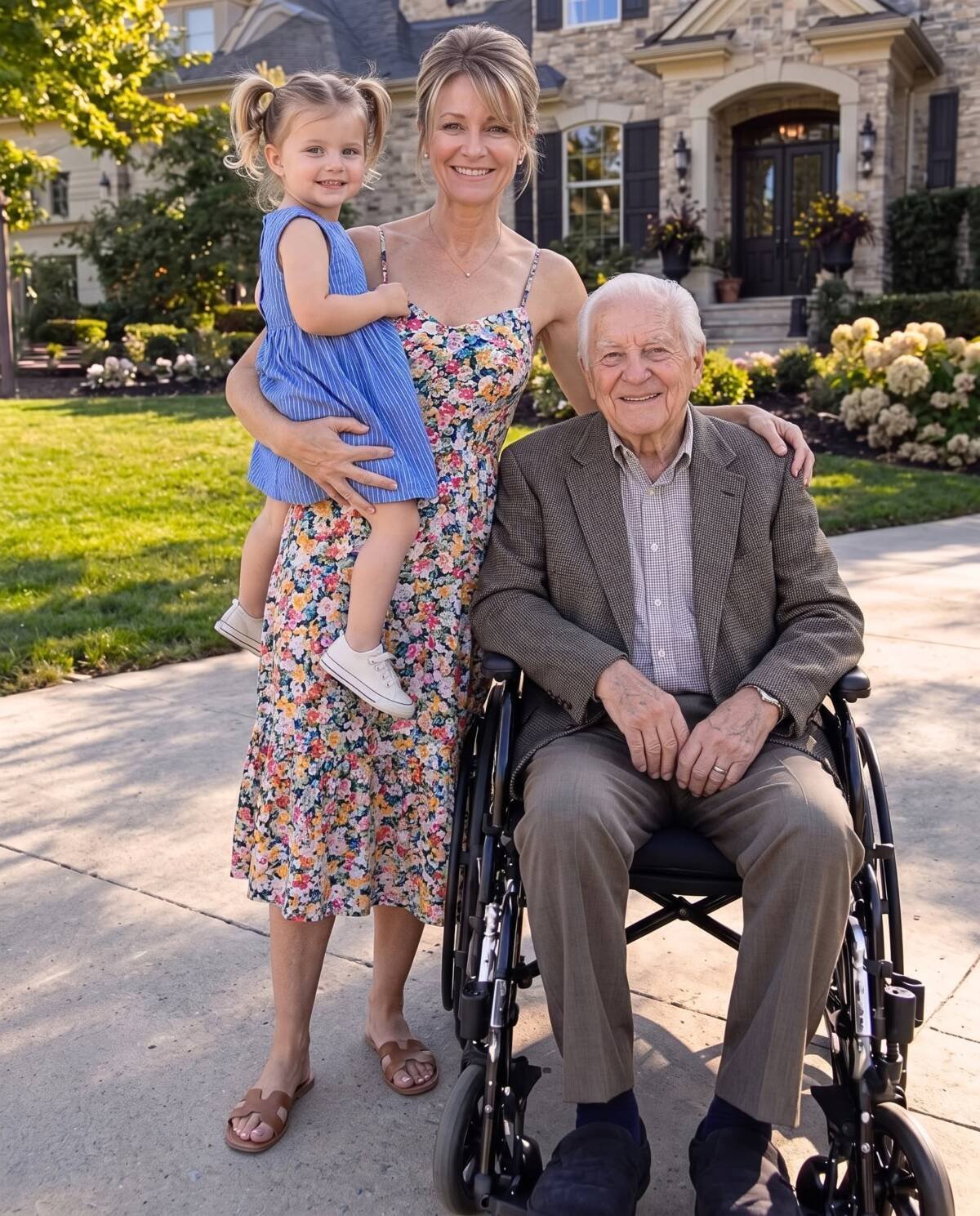
Evelyn wore a new blue dress and stood at the entrance holding a pair of ceremonial scissors.
Beside the old brass bell above the door, someone had installed a bronze plaque bearing a simple message:
“Justice begins when one person refuses to stay silent.”
Evelyn read the words several times before cutting the ribbon.
When it fell, the crowd applauded.
Inside, the familiar sounds returned: coffee cups clinking, chairs scraping against the floor, children talking, and customers greeting one another across the room.
Nicole sat in the same corner booth where she had once watched Travis Cain walk into the restaurant and behave as though the building belonged to him.
She ordered a slice of her mother’s apple pie.
Around her, people who had once avoided one another shared crowded tables. Some apologized for remaining silent. Others struggled to explain why they had been afraid.
There were no simple answers.
Fear can make people hesitate, especially when they believe the person causing harm has influence over their jobs, property, or safety. But the experience had also shown the town what happens when nobody is willing to speak.
The assault had lasted only seconds.
The consequences had reached far beyond the diner.
Nicole watched her mother greet customers and felt a sense of relief she had not experienced since receiving the video.
The diner was open again.
Her mother was standing behind the counter.
And the town was finally beginning to confront questions that had been ignored for years.
PART TEN: “I’M JUST SOMEBODY’S DAUGHTER”
Later that afternoon, a little girl wandered over to Nicole’s table.
She stared at the ribbons on Nicole’s Army uniform, then looked up at her face.
“Are you a police officer?” she asked.
“No,” Nicole replied.
“Are you a soldier?”
“I am.”
The girl studied the uniform for another moment.
“Then who are you?”
Nicole thought about her father.
She remembered his warning not to use her rank to settle personal disputes. She thought about Harold protecting the evidence, Kayla finding the courage to share her recording, and her mother returning to the diner even after being frightened and injured.
She thought about all the people whose willingness to speak had helped bring the allegations into the open.
Then she smiled at the little girl.
“I’m just somebody’s daughter.”
The child seemed satisfied with the answer and ran back to her mother.
Behind the counter hung an old photograph of Richard and Evelyn from the diner’s opening week.
Richard stood with his sleeves rolled up, while Evelyn held a coffee pot. They were smiling at the camera, apparently unaware of how much the small restaurant would eventually come to mean to their family and community.
Nicole looked at her father’s face.
For years, his death had left her with a grief she could not resolve and questions she could not answer.
Now, although the investigation was still unfolding, she felt something shift.
She had honored his advice.
She had not used force.
She had not used her military rank to intimidate anyone.
She had preserved evidence, supported witnesses, and trusted the legal process to determine what the facts established.
She had chosen accountability over retaliation.
That did not mean the road ahead would be easy. Investigations could take years, legal proceedings could produce unexpected outcomes, and some questions might remain unanswered.
But her family no longer had to face the uncertainty alone.
The bell above the diner door continued ringing as customers came and went.
People who had once lowered their eyes were beginning to look at one another again.
The town had not changed overnight. Trust would take time to rebuild, and justice would depend on the outcome of the investigations and court proceedings.
Still, something important had happened.
People had begun to understand that silence was not the only option.
CONCLUSION: THE POWER OF ONE PERSON WHO REFUSES TO STAY SILENT
Evelyn Turner never intended to become the center of a story about alleged corruption, intimidation, and a six-year-old mystery.
She had simply wanted to run her diner, serve her customers, and protect the family business she and her husband had built together.
But when she refused to give in to pressure, she became the target of a confrontation that exposed deeper questions about power and accountability in her community.
Her daughter returned home expecting to investigate an assault.
Instead, Nicole discovered a trail of suspicious property transactions, frightened witnesses, unanswered questions about her father’s death, and allegations that local officials had failed to protect the people they were meant to serve.
The evidence did not provide instant answers. Nor did it guarantee that every allegation would be proven.
What it did was give investigators something concrete to examine and give witnesses a reason to believe their voices might finally matter.
Kayla’s recording preserved a moment that others might have preferred to forget.
Harold’s documents kept questions alive long after Richard’s death.
Evelyn refused to surrender the diner that had defined much of her life.
And Nicole chose to pursue answers without turning her uniform into an instrument of personal revenge.
Their actions helped bring a hidden set of allegations into public view and placed questions of accountability where they belonged: before investigators, prosecutors, and the courts.
For years, fear had convinced people that silence was the safest choice.
But silence did not protect Evelyn from being assaulted. It did not answer the questions surrounding Richard’s death. And it did not give the families who had come forward a way to resolve their grievances.
The first step toward change came when someone decided that the truth deserved to be heard.
Nicole’s mother had once warned her not to gather a storm.
In the end, Nicole did not need to create one.
The questions were already there. The witnesses were already there. The evidence had been waiting to be examined.
Someone simply had to open the door.
And sometimes, that is where accountability begins.
WHAT DO YOU THINK?
Should people who witness an assault speak up even when they fear retaliation? Share your thoughts in the comments, and share this story with someone who believes that courage, evidence, and accountability still matter.
Editorial note: This article is presented as a dramatic narrative. The allegations and events described should not be interpreted as independently verified reporting about real individuals or actual criminal proceedings.