He died before he could hold our daughter. But before he was gone, he left behind one final message—and a warning about the woman who would eventually accuse me of betraying him.
I was eight months pregnant when my husband died, and in the hours that followed, I discovered that grief could be more than an emotion. It could become a battlefield.
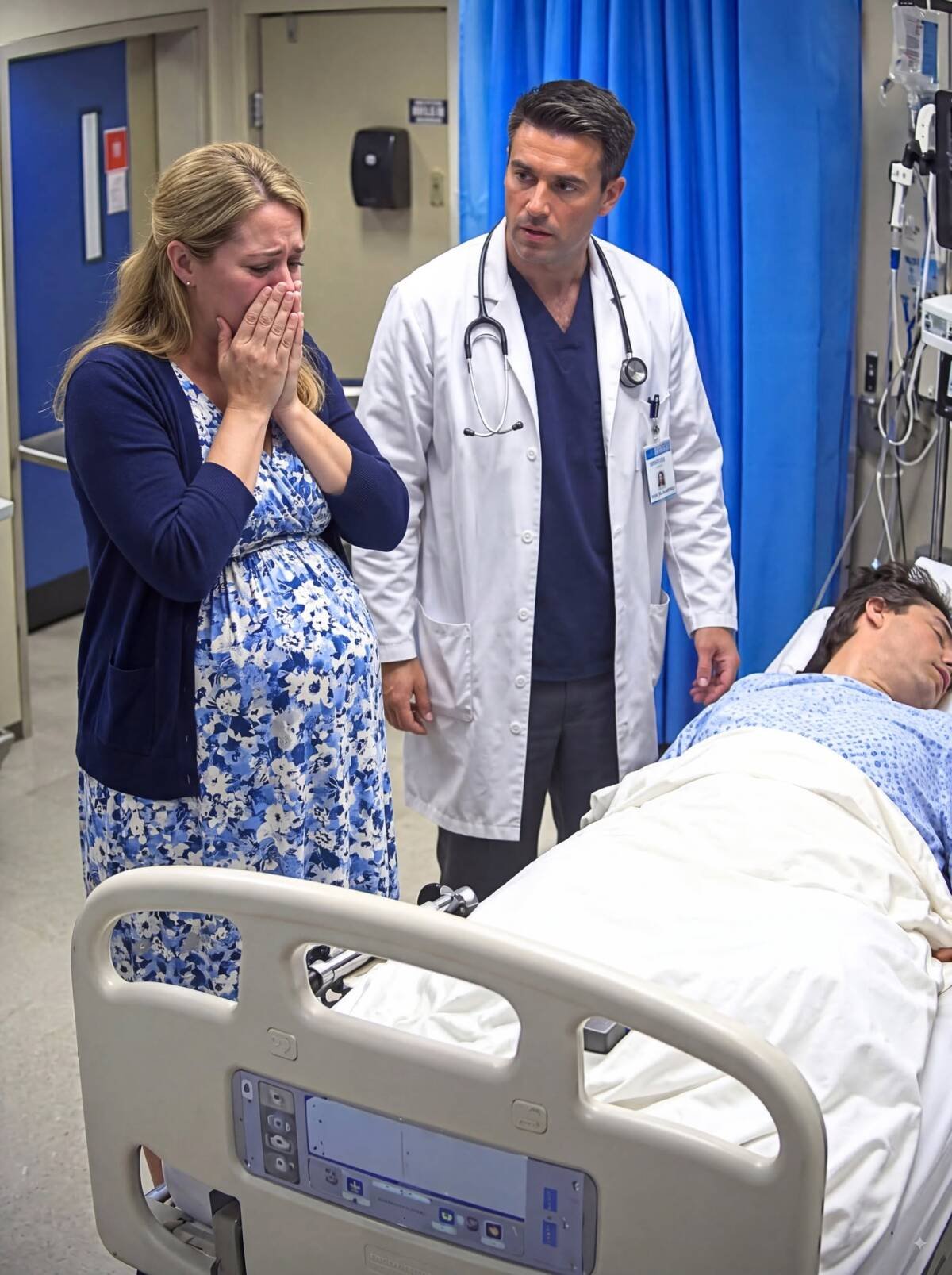
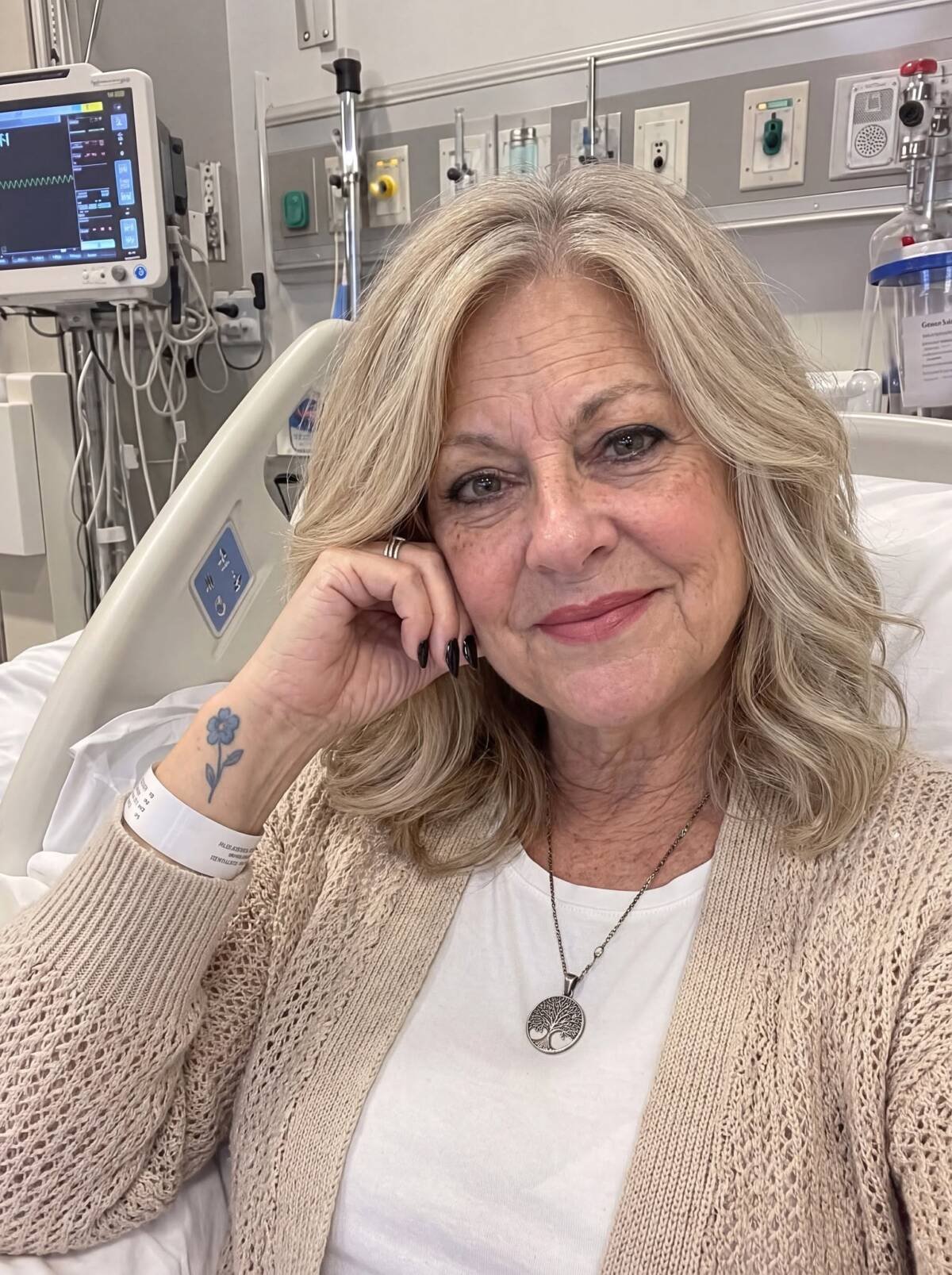
I had barely walked out of Mercy General Hospital when Dr. Barrett hurried after me, carrying a plain white envelope.
“Callie, wait.”
I stopped, though I honestly wanted to keep walking. I had spent the morning listening to doctors explain what had happened, answering questions I could barely understand, and trying to accept that the man I loved would never come home.
Now I was supposed to stop in a hospital corridor and listen to something else?
“Liam gave me this three weeks ago,” Dr. Barrett said. “He asked me to keep it until after he was gone.”
I looked down.
My name was written across the envelope in Liam’s unmistakable handwriting.
“What is it?”
Dr. Barrett hesitated.
“He said you would understand when you needed it most.”
My fingers tightened around the envelope.
“What does that mean?”
“I think he wanted you to discover that for yourself.”
I wanted to open it immediately. I wanted answers. I wanted Liam to have left something that could make the unbearable feel even slightly less impossible.
But I was afraid, too.
Because somewhere deep inside, I already knew that whatever Liam had written would be another reminder of everything I had lost.
And I had no idea that the secret inside that envelope would eventually change my relationship with his mother—and help me understand the final promise he had made to protect me.
A Marriage Built Around Ordinary Dreams
Two months earlier, our biggest arguments had been about baby names.
Liam wanted Cecily.
I preferred something shorter.
He insisted that his grandmother had once sung an old song with that name, and he wanted our daughter to carry something connected to the woman who had helped raise him.
“She would have loved her,” he said one evening, resting his palm against my stomach.
Cecily kicked.
Liam immediately smiled.
“See? She approves.”
“She kicked because you’re talking too loudly.”
“I’m counting it as approval.”
I rolled my eyes, but eventually I agreed.
We had waited years for that baby.
For a long time, becoming parents had felt like something that belonged to other people. Friends announced pregnancies. Relatives sent photographs of newborns. Every holiday seemed to include another conversation about when we were going to have children.
Then, finally, there was Cecily.
We bought a crib. We argued about paint colors. Liam spent an entire Saturday assembling a dresser and insisted he had followed the instructions perfectly, even though he had somehow installed two drawers backward.
I laughed so hard that I had to sit down.
He looked offended.
“I was testing the structural integrity.”
“You were testing my patience.”
He kissed my forehead.
Those were the moments I thought I would remember forever.
I never imagined that they would become the memories I would cling to while preparing to raise our daughter alone.
Six months into my pregnancy, Liam became seriously ill.
At first, we believed it was something manageable. A few appointments, some tests, perhaps an aggressive treatment that would eventually bring us back to normal.
Then the specialists began using words I had never wanted to hear.
The diagnosis was devastating.
The illness was aggressive, and the doctors told us Liam probably had less than three months.
I remember sitting beside him when we received the news.
He stared at the floor.
I stared at the doctor.
Neither of us seemed capable of asking the questions we should have asked.
Finally, I whispered, “There has to be something else.”
The doctor explained the options, the limitations, and the uncertainty.
I heard almost none of it.
All I could think about was the baby moving beneath my shirt.
Cecily was going to have a father.
And I was going to lose my husband.
The Conversation That Changed Everything
As Liam’s condition worsened, he began talking about what he wanted after his death.
One evening, we sat on our porch while the sky turned orange over the neighboring houses.
Cecily moved beneath my shirt.
Liam rested his hand against my stomach and smiled faintly.
“I want to donate my organs.”
I turned toward him.
“What?”
“If they’re medically suitable. Whatever they can use.”
I stared at him.
“Please don’t make dying sound noble when I’m already furious at the universe.”
He looked down.
“I’m scared too, Callie.”
That admission hurt more than anything else.
Liam had always been the person who made things feel manageable. He was the one who checked the locks, remembered appointments, and insisted that problems could be solved if we approached them one at a time.
Hearing him admit that he was afraid made the future feel suddenly real.
I squeezed his hand.
“I don’t know how I’m supposed to raise her without you.”
He looked at me for a long moment.
“You don’t have to know how yet.”
“That’s not an answer.”
“You’ll make it up as you go.”
I wanted to argue.
I wanted him to tell me that everything would somehow work out, that the doctors were wrong, and that he would be there when Cecily took her first steps.
Instead, he gave me the only honest answer he could.
And I hated him a little for it.
Not because he had done anything wrong.
Because he was leaving me with a future I had never wanted.
His Mother Could Not Accept His Decision
Liam’s mother, Brenda, had always been protective of him.
She called regularly. She remembered every birthday. She knew which foods he hated and which childhood stories embarrassed him most.
When his illness became serious, she began spending more time with us.
At first, I appreciated it.
I thought having his mother nearby would help Liam feel less alone.
But when he told her about his organ donation decision, everything changed.
Brenda was horrified.
She could not bear the thought of her son dying and parts of his body being given to strangers.
“She wants something to be angry at right now,” Liam told me.
“Then maybe I should talk to her.”
“No.”
“Why not?”
“Because she’ll actually listen to you, and I don’t want her grief becoming your burden.”
I thought he was being overly protective.
I told him that Brenda was my family, too, and that we could work through the disagreement together.
But Liam insisted that the decision was his.
He did not want me negotiating his final wishes with anyone.
He did not want his mother to believe that she could change his mind by making the decision painful enough.
And he did not want me caught between the two of them.
I understood his reasoning.
I still hated being excluded.
Especially when we had so little time left.
The Secret Meetings With His Doctor
During Liam’s final weeks, something else began happening.
He started asking Dr. Barrett to speak with him privately.
Sometimes the conversations took place after appointments.
Other times, Dr. Barrett would return to the room after Liam had already asked me to step outside.
I noticed.
Of course I noticed.
“What’s going on?”
“Just something I need to handle myself.”
“Without me?”
“Yes.”
I crossed my arms.
“Liam.”
He reached for my hand.
“I promise it’s ultimately for you.”
That answer irritated me.
We had spent our entire marriage sharing everything. Even when we disagreed, we talked.
Now he was keeping something from me.
And I had no idea whether it was related to his treatment, his medical decisions, or something else entirely.
I asked again.
He refused to explain.
Finally, I stopped pushing.
I trusted him.
I loved him.
And I believed that whatever he was doing, he had a reason.
I just never imagined that he was preparing for the possibility that someone would try to make me doubt him after he was gone.
The Day I Lost My Husband
Liam died on a rainy Tuesday morning.
I was holding his hand when his breathing changed.
The room became strangely quiet.
I remember looking at the clock.
I remember hearing someone say his name.
I remember squeezing his fingers and telling him that I loved him.
And then I remember realizing that he was gone.
I don’t remember leaving the room.
I don’t remember walking through the hospital.
I remember signing paperwork.
I remember answering questions.
And I remember repeating the same sentence whenever someone asked whether I was certain about the organ donation.
“Yes. This was his choice.”
It was.
Liam had made that decision himself.
I knew it.
I had heard him explain it. I had watched him think about it. I had seen the way he looked when he talked about helping someone else survive.
He wanted another family to have more time.
He wanted someone else to have a chance.
And I could not imagine honoring him by pretending that his final wish had never existed.
After the donation arrangements were completed, I thought the hardest part was over.
I was wrong.
Because two days later, I discovered that the envelope Liam had left behind was not simply a goodbye.
It was a warning.
The Envelope I Was Afraid to Open
That night, I sat alone at our kitchen table.
The house was quiet.
The nursery was unfinished.
Liam’s coffee mug was still sitting beside the sink.
I had not moved it.
I couldn’t.
Every object seemed to contain a piece of him, and touching anything felt like admitting that he would never come back to use it.
I finally opened the envelope.
Inside was a black USB drive and a handwritten note.
The message was short.
“Don’t watch this just because you miss my voice. Watch it if somebody makes you doubt my choices, or if they make you doubt your own strength.”
I read it twice.
Then I placed the drive in my desk drawer.
I was not ready.
I did not want to hear his voice yet.
I did not want to see his face.
I did not want another reminder that the person I loved most had known he was dying and had spent part of his remaining time preparing something I would need after he was gone.
I closed the drawer.
And for a while, I tried to pretend the envelope did not exist.
But Liam had been right about one thing.
Someone was already preparing to make me doubt myself.
And that person was his mother.
The Woman Who Made Me the Villain
Two days after I received the envelope, Brenda arrived without calling.
I found her upstairs in Cecily’s unfinished nursery.
She stood beside the crib, carefully refolding a pink baby blanket.
For a moment, I thought she had come to help.
Then she asked a question that made my stomach tighten.
“Did they end up taking everything?”
I stopped in the doorway.
“What?”
“The donation.”
I understood immediately.
“The medical team only took what could actually be donated.”
Brenda looked down at the blanket.
“And you’re completely fine with that?”
I stared at her.
“Fine?”
“Yes. You agreed to it.”
I took a breath.....