They threw me out when I needed them most. For 19 years, they never called, never apologized, and never asked whether I was alive. Then, at 35, I opened my penthouse door to find them standing there with an outrageous demand: Give us $1 million, or your perfect sister’s life will fall apart. They thought I was still the broken girl they had abandoned. They had no idea what I had discovered—or why coming back into my life would become their biggest mistake.
Introduction: The Family That Remembered Me Only When It Needed Money
The first words my mother spoke to me after 19 years of silence were not an apology.
She did not ask how I had survived, whether I was happy, or how I had managed to rebuild my life after everything she and my father had done to me.
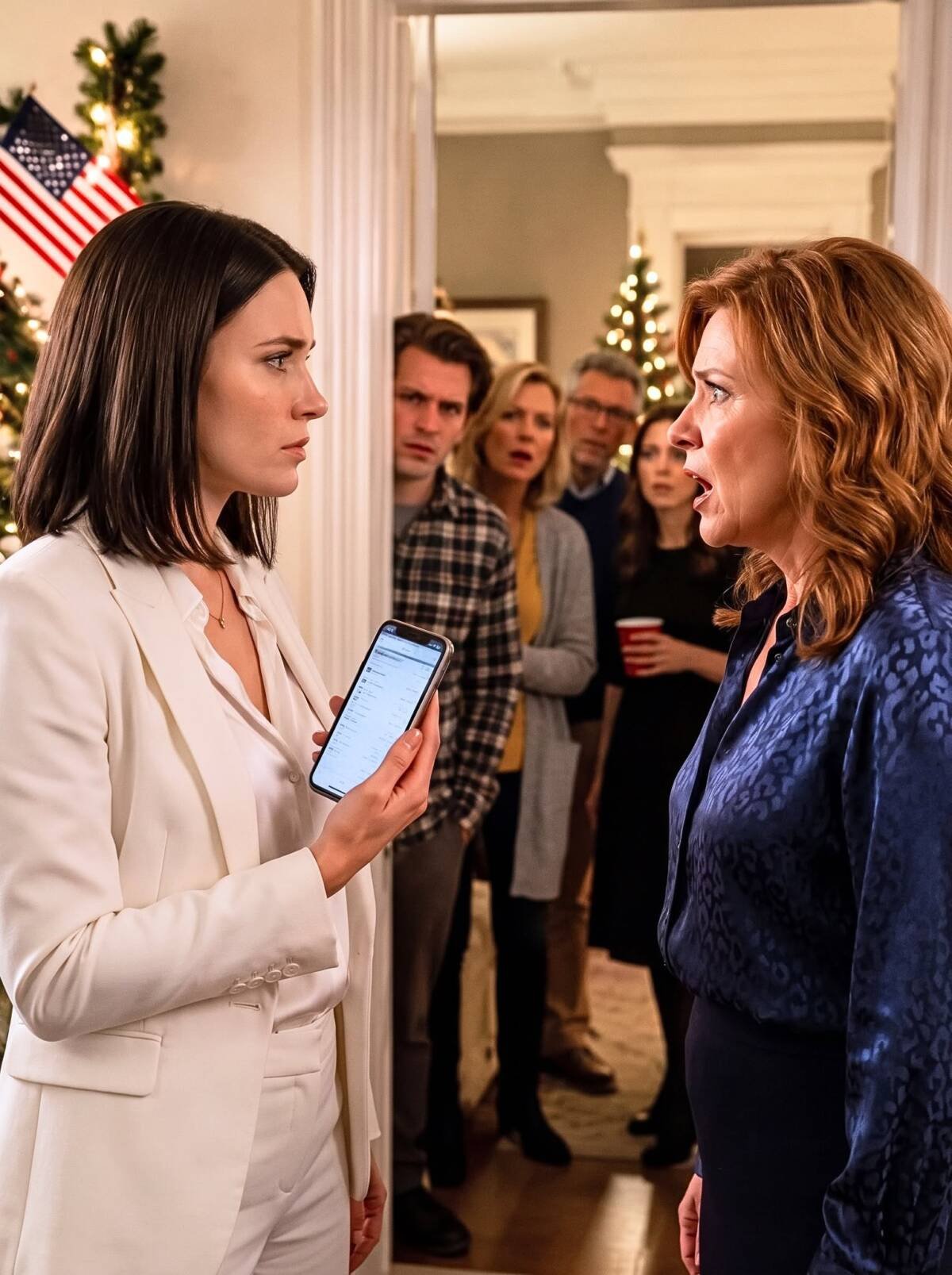
Instead, she stood in my Manhattan penthouse, looked around at the expensive furniture and floor-to-ceiling windows, and delivered a demand that made it clear she had not changed.
“We need one million dollars,” Beatrice announced. “And you’re going to give it to us because Chloe is still your sister.”
My father, Arthur, stood beside her holding a thick folder. Neither of them seemed embarrassed to be standing in front of the daughter they had thrown out of their home at 16. Neither appeared to understand how absurd it was to expect me to rescue the family that had abandoned me.
Outside, autumn rain streaked the windows, blurring the Manhattan skyline. Inside, the three of us stood together for the first time in nearly two decades.
I was 35 years old. I owned a successful commercial real estate company, had built a life on my own terms, and had long since stopped waiting for my parents to return.
Yet there they were.
My father placed the folder on the coffee table and began explaining that my younger sister, Chloe, had made a financial mistake. A serious one, apparently, but nothing that could not be resolved if the missing money were replaced before an audit scheduled for the following week.
According to him, the problem could disappear quietly.
“And why exactly would I fix it?” I asked.
My mother gave a short, bitter laugh.
“Because you owe this family.”
For a moment, I simply stared at her.
Then I looked down at the titanium prosthetic leg visible beneath my trousers.
I touched the metal lightly, remembering the little girl I had been before my parents decided that my disability made me an inconvenience.
“You think I owe you?” I asked.
My father shifted uncomfortably.
My mother folded her arms.
And in that moment, I realized something important.
They had not returned because they missed me.
They had returned because they needed something only I could provide.
What they did not know was that I had already begun uncovering the truth behind Chloe’s financial emergency. And by the time I finished investigating, their million-dollar request would look like the smallest part of a much larger scandal.
Part One: The Daughter They Decided Was No Longer Worth Keeping
I was 10 years old when doctors diagnosed me with aggressive bone cancer.
Until then, my childhood had been ordinary enough. I attended school, played with friends, and believed my parents would always be there to protect me.
Cancer changed everything.
After months of treatment, the doctors made the decision that would save my life but permanently alter it: They needed to amputate my left leg above the knee.
When I woke up in the hospital, I was frightened, confused, and desperate for my mother.
I remember asking for her repeatedly.
When Beatrice finally arrived, I expected her to sit beside me, hold my hand, and tell me everything would be all right.
Instead, she stood at the foot of my bed and stared at the space beneath the blanket where my leg had been.
Her expression was not one of compassion.
It was disappointment.
“What are we supposed to do with you now?” she asked.
I was only 10. I did not understand why those words hurt more than the surgery itself.
I would spend years trying to understand them.
Before my diagnosis, I had believed my parents loved me unconditionally. Afterward, their affection seemed to disappear almost overnight.
My younger sister, Chloe, remained the center of their world.
She received dance lessons, expensive clothing, birthday parties, vacations, and the kind of attention that made her feel as though the world had been designed for her.
I received complaints about medical expenses, criticism for needing help, and reminders that my condition made life more difficult for everyone.
When guests visited, my mother sometimes told me to remain upstairs because she did not want people asking questions about my leg.
She worried about appearances.
She worried about what people might think.
She worried about whether our family still looked perfect.
She rarely seemed worried about how I felt.
My parents also refused to spend money on a functional prosthetic that would have made daily life easier for me, dismissing it as an unnecessary expense.
I learned to move around with crutches and to hide my disappointment whenever Chloe received something I had once dreamed of having.
I tried to be patient. I tried to be grateful. Most of all, I tried to become the kind of daughter my parents might eventually want again.
Nothing worked.
By the time I turned 16, I understood that affection in our household came with conditions. Chloe could make mistakes and still be celebrated. I could struggle with something beyond my control and be treated as a burden.
Then came the afternoon that ended my childhood.
The Day My Father Told Me to Leave
Our family was preparing for a formal photo session at home. My parents wanted beautiful pictures that would reflect the success and respectability they had spent years cultivating.
I was moving across the hardwood floor with my crutches when one of them slipped.
I lost my balance and knocked a glass of wine onto an expensive white rug.
It was an accident.
I expected my father to ask whether I had hurt myself.
Instead, Arthur looked at the stained rug as though I had committed an unforgivable offense.
He began shouting about the cost of the carpet, the embarrassment I had caused, and how exhausted he was by the constant demands of having a disabled daughter.
Then he disappeared into another room and returned with a black trash bag.
“Pack whatever you can carry,” he ordered.
I stared at him, certain I had misunderstood.
“What?”
“You heard me. We’re tired of carrying you. Get your things and leave.”
I turned toward my mother.
I waited for her to intervene. I waited for her to remind him that I was his daughter, that I was 16, and that I had nowhere else to go.
Instead, Beatrice walked to the front door and opened it.
Chloe sat nearby, barely looking up from what she was doing.
I packed three changes of clothes into the trash bag. I took a few personal belongings and tried to keep my hands from shaking.
Nobody hugged me.
Nobody apologized.
Nobody asked where I would sleep that night.
My father stood in the hallway while I made my way toward the door on crutches.
“Don’t come back expecting us to solve your problems,” he said.
Those were among the last words he spoke to me for the next 19 years.
I stepped outside, and the door closed behind me.
I was 16 years old, physically disabled, and alone.
The Aunt Who Opened Her Door
I walked nearly two miles on crutches before reaching the home of my aunt Sarah, my mother’s estranged sister.
I had not spoken to Sarah in months, partly because my parents had discouraged the relationship. They considered her too independent and too willing to question their decisions.
But I remembered that she had always treated me differently.
When she opened the door and saw me standing there with a trash bag, she immediately understood that something terrible had happened.
She did not ask what I had done wrong.
She did not lecture me about respecting my parents.
She did not tell me to call home and apologize.
She simply stepped aside.
“Come inside,” she said.
Then she took my bag, helped me sit down, and made me something warm to eat.
For the first time in months, I felt safe.
Sarah gave me a place to stay and helped me return to school. She encouraged me to apply for scholarships, continue my education, and stop believing that my parents’ treatment of me reflected my worth.
She also helped me begin rebuilding the confidence I had lost.
I still had difficult days. I worried about money, my future, and whether I would ever be able to live independently. I sometimes wondered whether my parents would eventually regret what they had done.
But I never went back.
They did not contact me.
Not on my birthday.
Not during holidays.
Not when I graduated from high school.
Not when I began college.
For 19 years, their silence was absolute.
And while I was learning to survive without them, I discovered that their betrayal had begun long before the day they threw me out.
Part Two: The Secret Debt My Parents Left in My Name
At 18, I applied for a student loan to help cover my college expenses and pay for a better prosthetic leg.
I expected the process to be difficult, but I had no idea what I was about to discover.
My application triggered a review of my credit history.
The records showed more than $40,000 in unpaid debt associated with my Social Security number.
There were credit cards, personal loans, and luxury accounts I had never opened.
Some of the accounts had been created while I was still a minor.
Others were linked to purchases and expenses that I could not possibly have afforded.
I initially thought it was an administrative error.
Then I began examining the records more closely.
The accounts had been used to finance expensive clothing, travel, celebrations, and other purchases associated with Chloe and my parents’ lifestyle.
My identity had been used to borrow money without my knowledge or permission.
The people responsible were the same people who had told me I was too expensive to keep.
I had been forced out of their home because they claimed I was a financial burden, yet they had continued using my identity to support the lifestyle they wanted to maintain.
The discovery left me furious.
It also made me determined to fight back.
With Sarah’s help, I began collecting documents, contacting creditors, filing reports, and working through the legal process of challenging the fraudulent accounts.
It took years.
There were letters, phone calls, disputes, legal consultations, and setbacks that sometimes made the entire process feel impossible.
I worked while studying. I learned how credit reporting worked, how contracts were structured, and how financial institutions evaluated risk.
I became increasingly interested in business, property, and investment.
What began as a practical need to repair my financial life eventually became the foundation of my career.
I learned that knowledge could be a form of protection.
I learned that preparation could be more powerful than anger.
And I learned that nobody was going to build my future for me.
So I built it myself.
From Survival to Success
After college, I entered the commercial real estate industry.
The work was demanding. I faced long hours, complicated negotiations, skeptical investors, and people who assumed I lacked the experience or stamina to succeed.
I refused to let their assumptions define me.
I studied contracts, analyzed markets, learned to evaluate properties, and developed relationships with people who respected competence more than appearances.
Over time, I began identifying opportunities that others overlooked.
I took calculated risks, learned from mistakes, and gradually built a reputation for being disciplined, direct, and difficult to intimidate.
Eventually, I established my own commercial real estate firm.
The company grew from a modest operation into a successful business with major properties and substantial investment partnerships.
By the age of 35, I owned a Manhattan penthouse and had built a professional life that would once have seemed unimaginable to the frightened teenager who arrived at Sarah’s door carrying a trash bag.
My prosthetic leg was part of my everyday life.
It was not a symbol of failure.
It was not something I needed to hide.
It was simply one part of my story.
I had spent years learning how to walk again, how to trust myself, and how to build a future without the support of the people who should have supported me first.
I no longer needed my parents to acknowledge my success.
I had stopped waiting for their approval.
Or so I thought.
Because when they appeared at my penthouse 19 years after abandoning me, I discovered that they had not only failed to change.
They had come back expecting me to solve a new crisis.
And this time, the consequences could extend far beyond our family.
Part Three: Why My Parents Suddenly Needed $1 Million
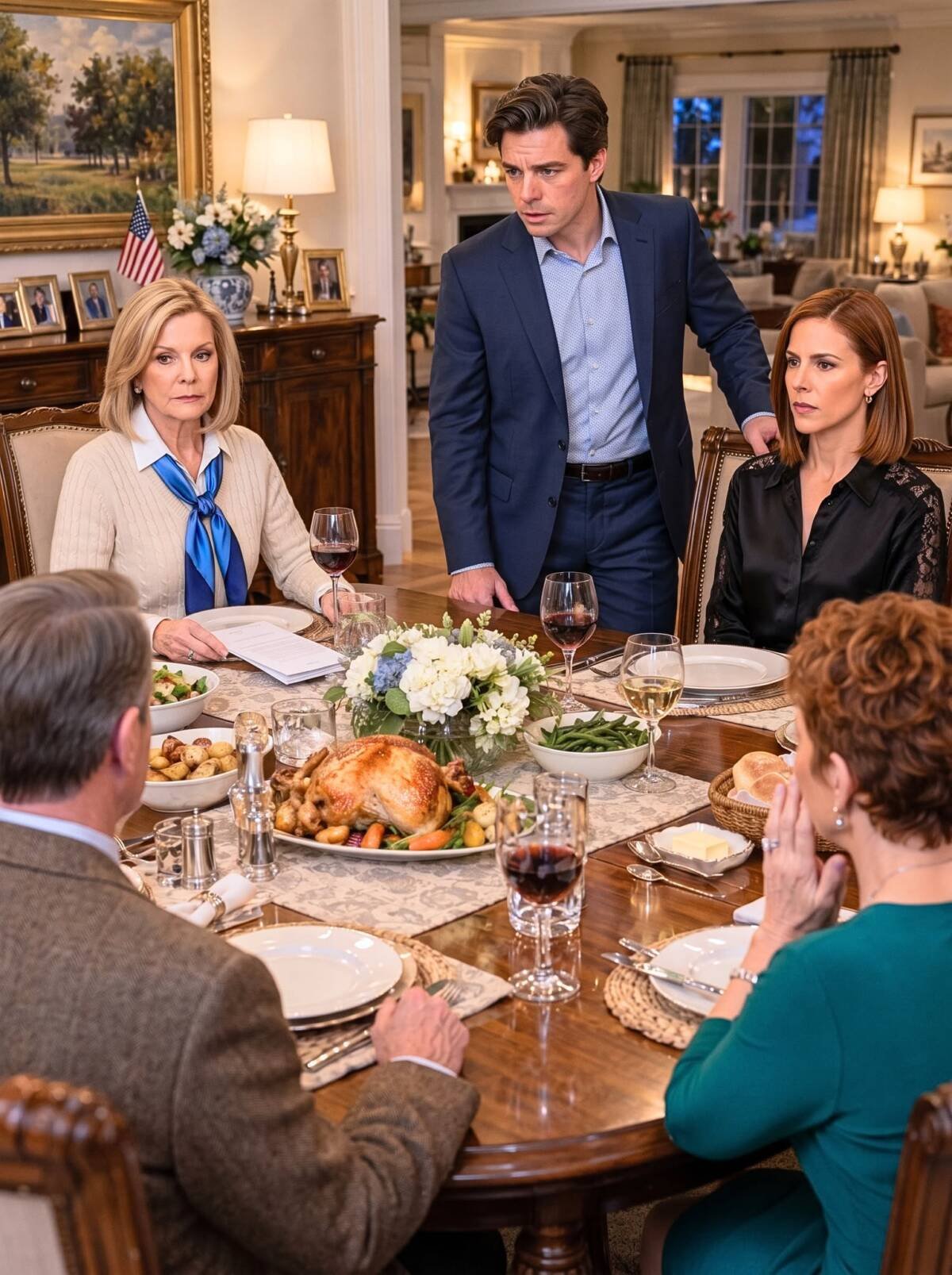
Standing in my living room, my father opened the folder he had brought and began explaining the situation.
Chloe, he said, had made a serious financial mistake connected to her work. A large sum of money was missing, and an audit was scheduled to begin soon.
The family needed to replace the money before investigators started asking questions.
My parents believed that if the missing funds were restored quickly, the matter might be resolved without becoming a public scandal.
They had apparently decided that I was the easiest solution.
I listened without interrupting.
Then I asked the obvious question.
“How much money does Chloe owe?”
My father hesitated.
“One million dollars.”
“And you expect me to pay it?”
“We expect you to help your sister.”
I almost laughed.
For 19 years, they had shown no interest in my life. They had not helped me recover from the identity theft they had caused. They had not contributed to my education or my medical needs.
They had not even asked whether I was alive.
Now, suddenly, I was family again.
My mother moved closer.
“Chloe made a mistake. Families help each other.”
“Families do,” I replied. “But you stopped treating me like family when I was 16.”
She looked irritated rather than ashamed.
“That was a long time ago.”
“Not for me.”
My father attempted to redirect the conversation toward Chloe’s future. He said she had worked hard, that she had important opportunities ahead of her, and that one financial problem should not destroy everything she had accomplished.
I asked whether the missing money belonged to her employer.
He avoided answering directly.
That was the moment I realized the story was incomplete.
If this were simply a matter of replacing money before an audit, why had my parents come to me after nearly two decades of silence? Why were they so concerned about keeping the situation quiet? And why did they seem more frightened of exposure than of the possibility that Chloe had committed a serious offense?
I stood and walked toward the private elevator.
“Get out.”
My mother’s expression changed instantly.
“If Chloe ends up in federal prison, it will be your fault.”
I turned back toward her.
“No. It will be the fault of whatever Chloe did.”
The elevator doors closed between us.
For the first time in years, I felt no need to defend myself against their accusations.
But I was not finished.
I wanted to know exactly what they were trying to hide.
The Investigator’s Report
That evening, I hired a private investigator to examine the circumstances surrounding Chloe’s financial emergency.
I gave him the information my parents had provided, along with the limited details I had been able to establish about Chloe’s employment.
I asked him to determine where the missing money had gone, who controlled the relevant accounts, and whether there was any evidence of criminal conduct.
Three days later, he arrived at my office carrying a thick dossier.
He placed it on my desk and sat down.
“This is much more serious than your parents suggested,” he said.
I opened the file.
The first pages contained information about Chloe’s work for the Montalvo Foundation, an organization associated with one of the most influential financial families in the country.
Then I saw the name of a woman I had never met.
Daniela Ruiz.
She was 24 years old, a junior accountant, and the victim of a devastating car crash.
The investigator looked directly at me.
“Your sister may be trying to hide what happened to a young woman who was seriously injured in that accident.”
I stopped turning the pages.
“What does that have to do with the missing million dollars?”
“Everything.”
The investigator explained that Chloe had allegedly been involved in a collision that left Daniela with severe spinal injuries. The circumstances surrounding the crash had raised serious questions, and the subsequent handling of the case appeared to involve attempts to suppress information.
There were also financial records that suggested money had been moved through questionable transactions.
My parents had not come to me because Chloe had made a harmless mistake.
They had come because the situation was potentially catastrophic.
And they believed money could make it disappear.
Part Four: The Accident That Changed Everything
Daniela Ruiz had been living an ordinary life before the crash.
At 24, she was building her career, paying her bills, and making plans for the future. She worked as a junior accountant and had no reason to believe that a single night on the road would alter the course of her life.
According to the investigator’s findings, Daniela was driving home along the West Side Highway on a rainy evening when a luxury SUV struck her vehicle.
The SUV had reportedly run a red light at high speed.
Daniela survived, but her injuries were devastating. Her spine was severely damaged, and doctors could not immediately determine whether she would ever regain movement below her waist.
The driver was identified in the investigative material as Chloe.
What happened afterward raised even more troubling questions.
The investigator found indications that witness statements had gone missing, photographs were unavailable, and aspects of the official record did not appear to match the information collected elsewhere.
The evidence suggested that people connected to Chloe had attempted to limit the consequences of the collision.
The Montalvo family soon became central to the story.
The Family Chloe Could Not Afford to Disappoint
Chloe was engaged to Marcus Montalvo, the son of Arthur Montalvo, a powerful financial executive whose family controlled a major hedge fund.
Arthur also chaired a foundation that supported medical programs for children with disabilities.
The engagement represented more than a romantic relationship for Chloe.
It was an entry into a world of wealth, influence, and social standing that my parents had spent years teaching her to value above almost everything else.
If Marcus’s family learned that Chloe had caused a serious collision and then attempted to avoid responsibility, the consequences could be enormous.
The engagement could end.
Her professional position could become untenable.
The foundation could face scrutiny.
And her family’s carefully maintained reputation could collapse.
According to the investigator, Daniela had been approached in the hospital and offered $50,000 in exchange for signing a confidentiality agreement.
She was also allegedly pressured to remain silent while her medical expenses continued to grow.
Daniela had been left facing an uncertain future while the people connected to the crash appeared determined to protect themselves.
Then the financial problem emerged.
The Missing Million Dollars
Chloe worked in public relations for the Montalvo Foundation and, according to the investigative findings, had access to certain administrative payment systems.
Over a period of several weeks, the records indicated that money had been redirected through questionable vendor invoices and structured wire transfers.
The total reached approximately $1 million.
The money had been allocated to pediatric medical programs.
Instead, it appeared to have been diverted as part of an effort to contain the consequences of the accident and protect Chloe from exposure.
The investigator cautioned that the full chain of responsibility would need to be established through the appropriate legal process. But the records were sufficiently concerning to explain why my parents had suddenly appeared at my door.
A federal audit was approaching.....