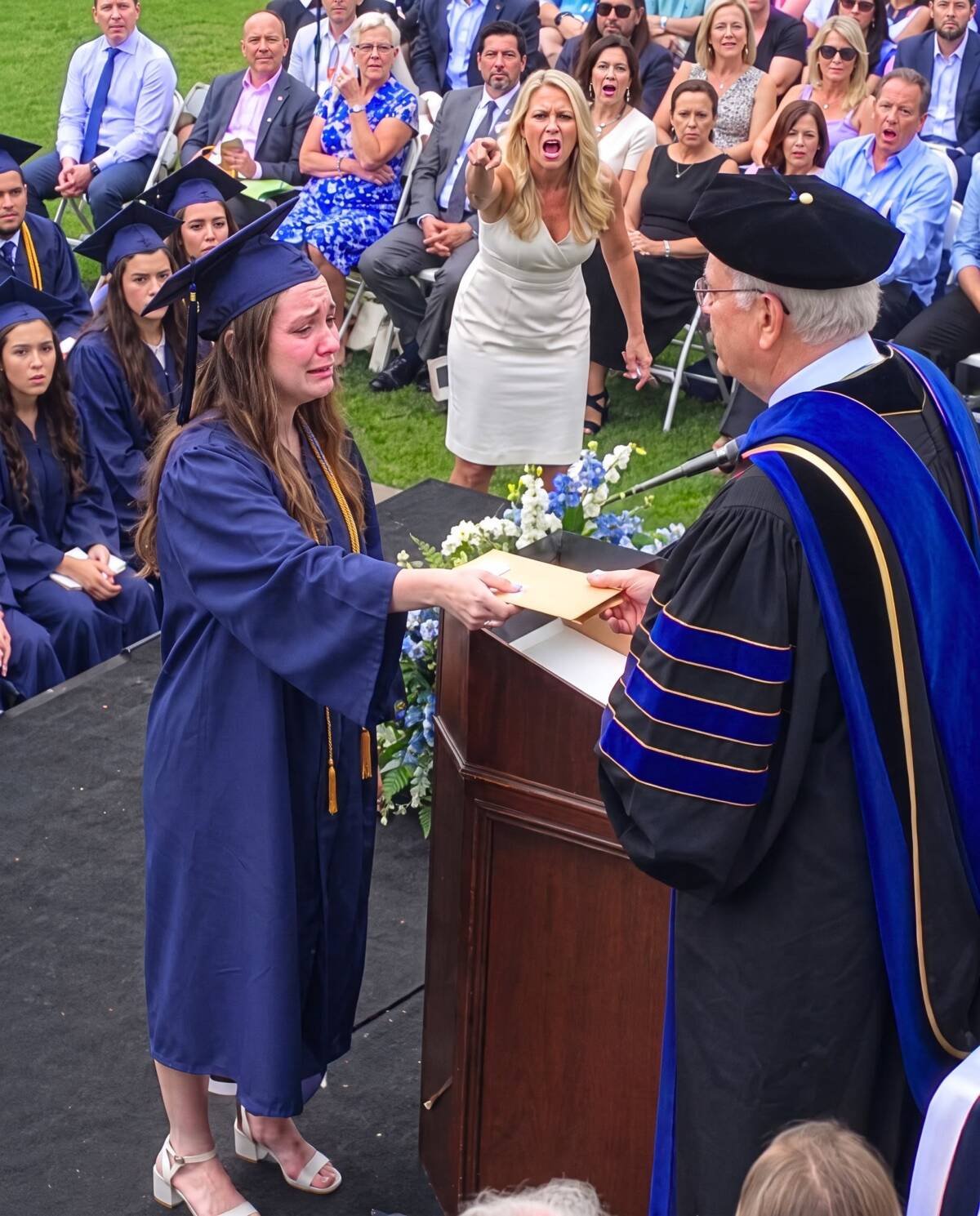
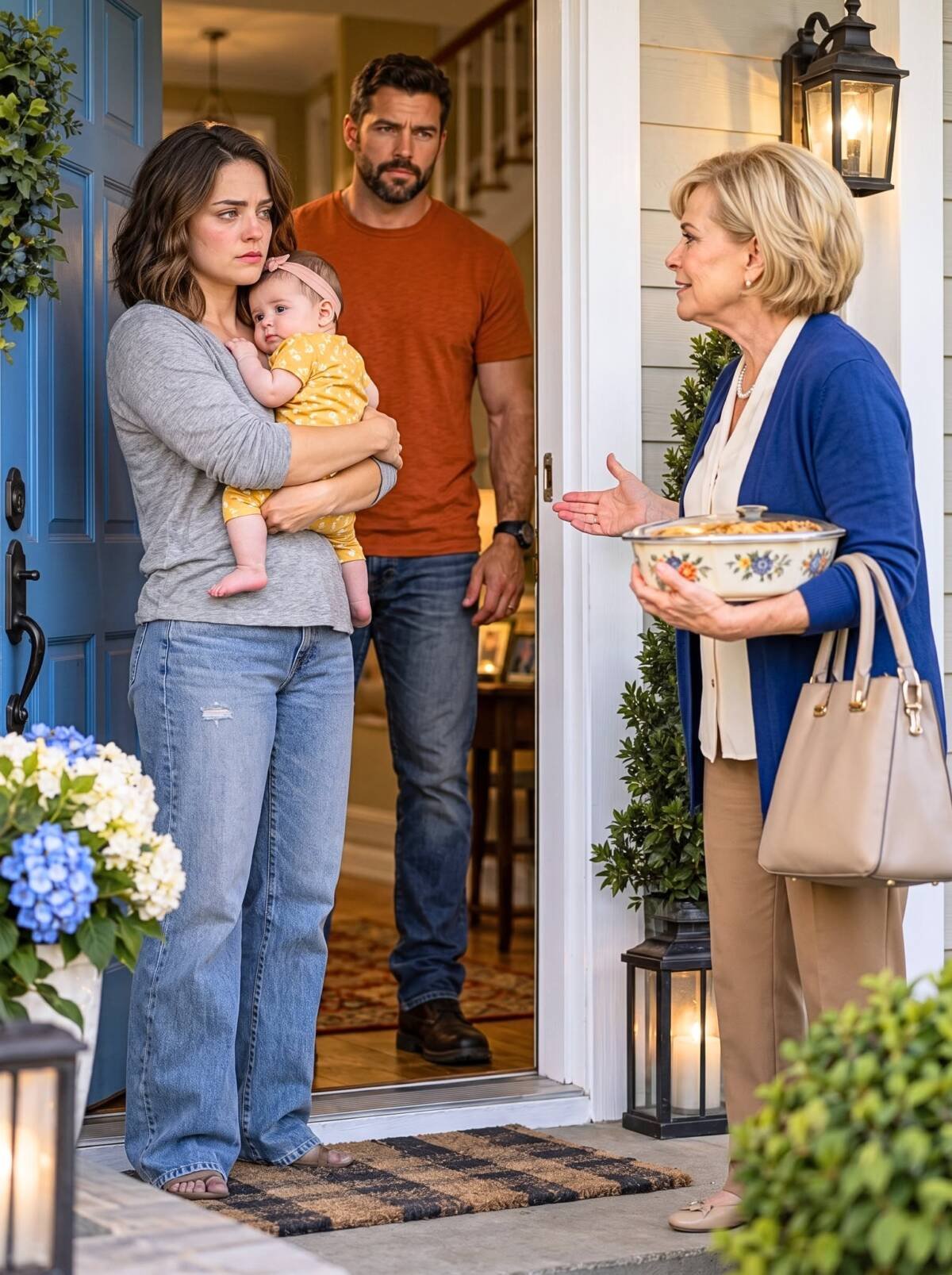
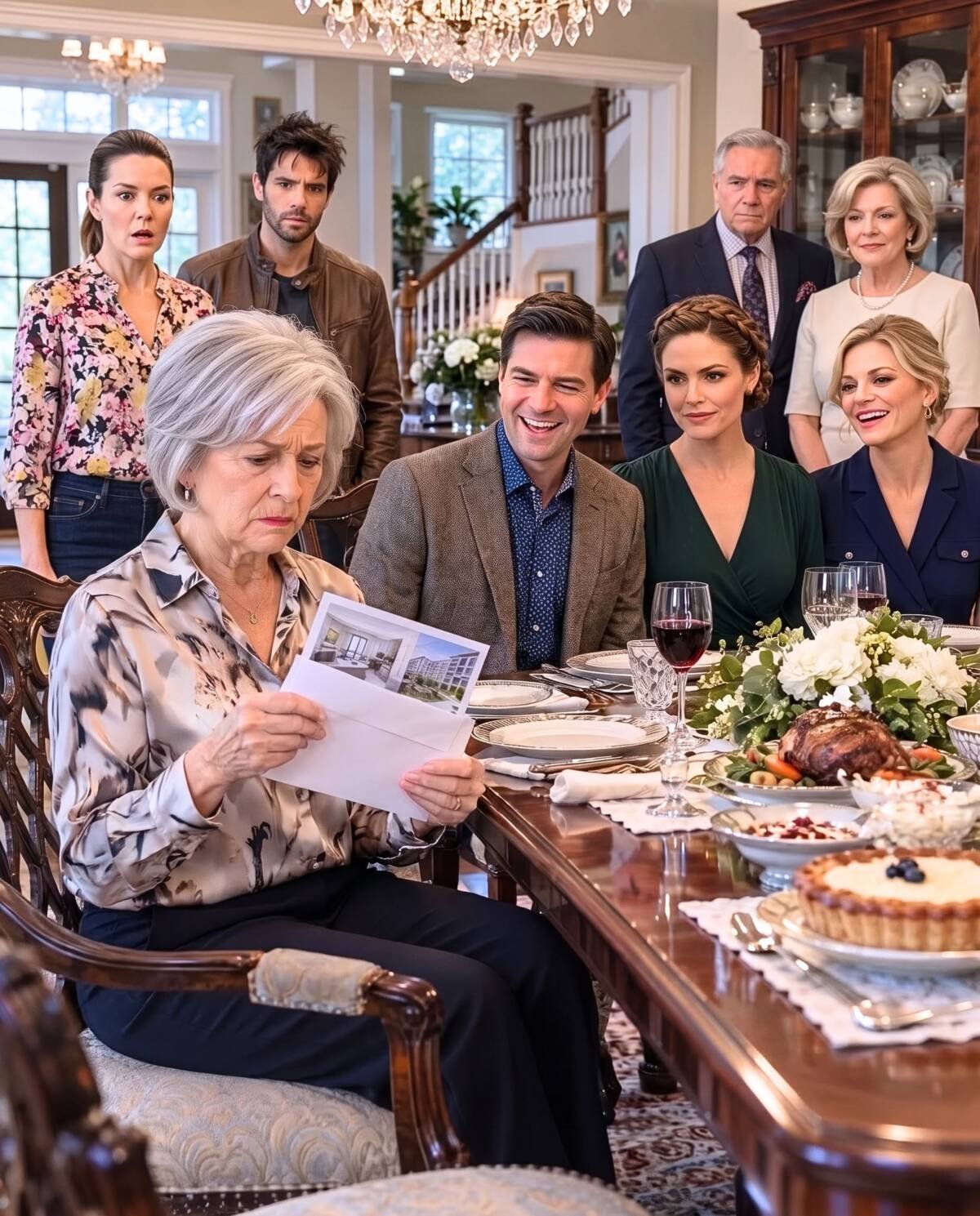
When my mother texted me, “Skip my birthday. We need a break from your kid,” I didn’t argue. I turned the car around, took my three-month-old daughter home, and stopped trying to earn a place in a family that seemed embarrassed by my life. Two weeks later, a photograph from a luxury Montana lodge exposed something I could no longer ignore: My family wasn’t upset that we had missed Thanksgiving. They were upset that I had found happiness without them.
The Birthday Text That Changed Everything
My mother’s message arrived while my three-month-old daughter, Maisie, was asleep in the back seat.
I was already halfway from Seattle to Portland, having spent hours on the road because I still believed that showing up for family mattered—even when doing so required considerable effort.
Then my phone lit up.
“Skip my birthday. We need a break from your kid.”
I pulled into the next rest stop, parked beneath a bare winter tree, and read the message again.
And again.
There was no apology, no explanation, and no attempt to soften the words. My mother had made her position perfectly clear: My daughter was not welcome at her birthday celebration.
The words that hurt the most weren’t skip my birthday.
They were your kid.
My mother wasn’t talking about her granddaughter, a three-month-old baby who had done nothing wrong. She was talking about Maisie as though she were an inconvenience attached to me, a problem the family had to tolerate whenever I wanted to participate in their lives.
I stared at the screen while trucks rumbled past on the highway. Behind me, Maisie stirred in her car seat before settling back into sleep.
I had spent years accommodating my family. I had rearranged my schedule, answered late-night calls, helped with financial emergencies, and made myself available whenever someone needed something.
Even after becoming a single mother, I continued behaving as though my place in the family depended on how useful I could be.
I was 27, and everyone knew me as the dependable daughter.
When my brother, Kyle, needed money for a business venture that never really took off, I gave him $3,000. When my sister, Brinn, needed help paying for her wedding, I covered the flowers and photographer.
The previous year, when my parents needed their roof repaired, I quietly transferred $5,000 to help cover the expense.
I never posted about those contributions online. I never demanded public recognition or reminded anyone of what I had done.
Helping my family had become so normal that I rarely questioned it.
I simply assumed that when someone you loved needed help, you showed up.
Apparently, that principle worked only when I was the person providing something.
The moment I needed my family to make a little room for me and my baby, I was suddenly asking too much.
I Finally Stopped Explaining Myself
For a few minutes, I considered calling my mother.
The old instinct was immediate.
I could explain that Maisie was still tiny, that I would keep her close, and that I wouldn’t stay long. I could promise to leave early if she cried. I could reassure everyone that I would do everything possible to make the evening comfortable.
I could apologize for bringing my daughter into a world where other people apparently considered her presence an inconvenience.
Then I realized how exhausting that sounded.
Why was I preparing to defend a three-month-old baby for existing?
Why was I about to negotiate for permission to attend a family birthday with my own child?
And why had I spent so many years believing that love was something I had to earn through favors, money, and endless accommodation?
I opened the message and typed a short reply.
“Understood. Hope you have a nice birthday.”
That was all.
No argument. No accusation. No long explanation.
I turned the car around and began the four-hour drive back to Seattle.
As the miles passed, memories surfaced that I had previously dismissed as isolated incidents.
I remembered the money I had sent when Kyle was struggling. I remembered rearranging my life to help Brinn with her wedding. I remembered transferring money for my parents’ roof without asking when they would repay me.
I remembered how quickly everyone contacted me when something went wrong—and how rarely anyone asked whether I needed help myself.
I had spent years confusing being needed with being loved.
That realization hurt more than the birthday message.
By the time I arrived home, I was emotionally exhausted. I carried Maisie inside, settled her into her familiar surroundings, and tried to convince myself that I was overreacting.
But I wasn’t.
Something fundamental had changed.
For the first time, I had chosen not to chase my family’s approval.
And I had a feeling they would notice.
The Conversation That Made Me See the Truth
That evening, my best friend, Vanessa, called.
She knew something was wrong almost immediately.
When she asked what had happened, I told her about the text, the long drive, and the moment I had pulled over to read my mother’s words.
I tried to sound composed, but my voice broke halfway through the explanation.
Vanessa listened without interrupting.
Then she said something I had been avoiding for months.
“They’re treating you differently because you’re a single mom. You know that, right?”
“I know,” I whispered.
Maisie’s father, Derek, had disappeared before she was born. He had decided that fatherhood wasn’t for him, leaving me to navigate motherhood without the partner I had once expected to have beside me.
I was learning how to care for a newborn, manage my responsibilities, and rebuild my life while dealing with the emotional weight of being abandoned by someone who had promised to be there.
Instead of supporting me, my family had grown noticeably colder.
My mother had once told me that I had “chosen this situation,” as though becoming a mother without a partner meant I deserved less compassion.
I had tried to ignore those comments. I told myself that my family needed time to adjust, that everyone was stressed, and that eventually things would return to normal.
But the birthday message made it impossible to keep pretending.
My daughter had become a symbol of a life my family disapproved of, and I had been working far too hard to convince them that we were still worthy of belonging.
That night, I stood beside Maisie’s bassinet and watched her sleep.
Her tiny fists were curled near her face, and her breathing was soft and steady. She had no idea that her grandmother had asked us to stay away.
She had no idea that I was questioning relationships I had trusted my entire life.
Looking at her, I understood something with a clarity I had never experienced before.
I could not control how my family treated me.
But I could decide what kind of treatment I was willing to accept.
I could not make them appreciate my daughter.
But I could refuse to teach her that she needed to earn affection by making herself smaller.
I could not force my family to become the people I wanted them to be.
But I could stop sacrificing my peace while waiting for them to change.
My mother’s birthday came and went without a gift, a card, or a phone call from me.
For the first time in my life, I simply did not show up.
And my family didn’t contact me either.
Nobody asked whether the drive had been difficult. Nobody checked on Maisie. Nobody asked why I had turned around or whether the message had hurt me.
Their silence was painful, but it also revealed something I had spent years refusing to acknowledge.
Perhaps they didn’t miss me as much as I had believed.
Perhaps they missed the things I did for them.
I didn’t know yet how much that realization would change my life.
Then Thanksgiving approached.
And someone outside my family offered us something I had almost forgotten how to accept.
A genuine invitation.
Two Weeks Later, I Found the Family I Didn’t Know I Needed
Thanksgiving week arrived without a single invitation from my relatives.
There was no message asking what Maisie and I were doing, no discussion about holiday plans, and no attempt to repair the damage caused by my mother’s birthday text.
I had spent years assuming that family holidays were obligations we all shared.
Now I was beginning to understand that those traditions had never guaranteed that I was truly welcome.
A week before Thanksgiving, Vanessa called while I was holding Maisie against my shoulder.
“Okay, don’t freak out,” she said.
“I haven’t even heard the news yet, and I’m already worried.”
Vanessa laughed and explained that her friend Lauren had rented a private lodge in Montana for Thanksgiving. Lauren owned a successful luxury wellness company and had arranged the trip for a small group of friends.
At the last minute, two couples had canceled.
Lauren had offered Vanessa, Maisie, and me the opportunity to join the group. She would cover the trip, including the arrangements needed to get us there.
My first reaction was to refuse.
I wasn’t accustomed to receiving generous offers without feeling that I would eventually owe someone something in return.
I had become so used to being the person who helped that accepting help felt uncomfortable.
Then Vanessa told me what Lauren had said.
“She specifically said babies are welcome.”
I sat quietly for a moment.
Babies are welcome.
It was such a simple statement, but it affected me more than I expected.
Nobody was asking me to leave Maisie behind. Nobody was suggesting that I attend alone or arrange childcare so the adults could enjoy themselves.
Nobody was treating my daughter as a problem to be solved.
She was welcome.
And so was I.
For the first time in weeks, I felt a little excitement about the holidays.
“Okay,” I finally said. “Let’s do it.”
A Thanksgiving Without Judgment
The lodge was more beautiful than anything I had imagined.
It stood beside a frozen lake surrounded by snow-covered pine trees. Warm light glowed through the windows, and the peaceful landscape looked like something from a holiday movie.
Lauren and her husband, Marcus, were there with their two-year-old son. Vanessa joined us, along with Lauren’s business partner, Simone, and Simone’s girlfriend, Beth.
The group welcomed us without making a production of it.
Lauren greeted Maisie with genuine excitement and asked whether she could hold her. Nobody rolled their eyes when the baby fussed. Nobody complained when I needed to prepare a bottle or adjust my plans around her feeding schedule.
When Maisie became restless, people offered to help.
When I needed a few quiet minutes, nobody made me feel guilty.
I had not realized how much tension I had been carrying until I found myself in a room where I didn’t need to defend my daughter’s existence.
The difference was extraordinary.
At home, I had been replaying my mother’s words and wondering how I could have handled the situation differently.
At the lodge, I began to question why I had spent so much time trying to satisfy people who seemed unwilling to meet me halfway.
I had been treating my family’s approval as something essential to my happiness.
Yet here I was, surrounded by people who had no obligation to include me, and they were treating me with more consideration than some of my closest relatives had shown.
That realization was both comforting and heartbreaking.
The Dinner That Reminded Me What Family Could Be
Thanksgiving dinner was warm, relaxed, and wonderfully ordinary.
A private chef prepared roasted turkey, mashed potatoes, vegetables, and homemade cranberry sauce. Everyone gathered around the table, talking about work, children, travel, and the small things that made the year memorable.
There were no arguments about whether Maisie was welcome.
No one complained that I had brought a baby.
No one suggested that my circumstances made me less deserving of a seat at the table.
At one point, we went around the room sharing what we were grateful for.
When it was my turn, I looked down at Maisie.
She was sleeping peacefully in her carrier beside me.
I thought about the birthday message. I thought about the long drive back to Seattle, the silence that followed, and the uncertainty I had felt about the holidays.
Then I looked at Vanessa and the people who had welcomed us.
“I’m grateful for friends who became family when I needed it most,” I said.
Vanessa reached beneath the table and squeezed my hand.
Lauren lifted her glass.
“To chosen family.”
Everyone raised their glasses.
It wasn’t a dramatic moment, but I felt something inside me begin to heal.
I was no longer the daughter trying to prove she was useful enough to deserve an invitation.
I was a mother enjoying a holiday with people who wanted us there.
For the first time since Maisie’s birth, I felt like more than a single mother trying to hold everything together.
I felt like myself.
Before we left Montana, I took a photograph of the lodge reflected against the frozen lake. The sky was painted in soft pink and gold, and the trees stood quietly along the shoreline.
I posted the picture online with one word.
Grateful.
I didn’t tag anyone. I didn’t mention the cost of the trip or explain how we had received the invitation.
I simply shared a moment that had made me happy.
I had no idea that one photograph would set off another family conflict.
The Photograph That Changed My Family’s Attitude
Two days after Thanksgiving, my phone began filling with messages.
The first came from my mother.
“Why didn’t you tell us you were going there?”
I read it twice.
Not, “How was your Thanksgiving?”
Not, “Did Maisie enjoy the trip?”
Not even, “I’m sorry we didn’t make plans with you.”
Instead, my mother wanted to know why I had not told her about the lodge.
Before I could respond, another message arrived.
Brinn accused me of spending money on a luxury vacation while other people were struggling.
Kyle said I had apparently become too good for the family.
My father complained that my mother was upset because I had kept my plans secret.
I sat on the couch, staring at the screen.
They had not invited us to Thanksgiving.
They had not asked where we would spend the holiday.
They had not made any effort to include us after my mother told me to skip her birthday.
Yet somehow, my decision to accept an invitation from friends had become a family offense.
I had not hidden a family gathering from them.
I had accepted an invitation they had never offered.
And now they were angry that I had enjoyed myself without them.
Then my mother sent another message.
“I saw that lodge online. Those places cost thousands per night. If you have that kind of money, remember your family. We could really use help with the property taxes this year.”
I felt my disbelief turn into anger.
There it was.
Not concern.
Not regret.
Not an acknowledgment of the birthday message that had sent me driving back to Seattle with my baby.
A request for money.
My mother had seen a photograph of me enjoying a holiday with friends and immediately assumed I had spent a fortune on the experience.
She hadn’t considered that someone might have invited us because they cared.
She hadn’t wondered whether I had needed the break.
She hadn’t asked whether I was doing okay.
She had simply decided that if I appeared to be enjoying something nice, I should redirect my resources toward my family.
The same family that had told me to stay away.
For years, I had given money because I wanted to help. I had never thought of those contributions as a way to purchase affection.
But the messages made me question whether my relatives had grown so accustomed to my generosity that they no longer recognized it as a choice.
They had started treating my willingness to help as an obligation.
And when I stopped providing what they expected, they treated my independence as betrayal.
That was the moment I knew I couldn’t continue pretending everything was normal.
I opened the family group chat.
This time, I was going to tell them exactly what I thought.
The Message I Had Been Afraid to Send for Years
I stared at the group chat for several minutes.
My mother was upset. Brinn was accusing me of being selfish. Kyle was questioning my loyalty. My father wanted everyone to stop arguing.
The old version of me would have tried to calm things down.
I would have explained the trip, defended my intentions, and reassured everyone that I still cared about them.
I might even have offered money to prove that I wasn’t abandoning the family.
But I had spent the past two weeks learning something important.
I didn’t have to sacrifice my peace to make other people comfortable.
I began typing.
“I didn’t pay for that trip. A friend invited me because she actually wanted Maisie and me there.”
I paused, then continued.
“You didn’t invite us to Thanksgiving. You didn’t ask what we were doing. You didn’t check on us after telling me to skip Mom’s birthday because you needed a break from my baby.”
My hands were trembling, but I kept going.
“Now you’ve seen a photograph of us somewhere beautiful, and suddenly everyone wants an explanation. The first thing Mom did was ask me for money.”
I reread the message.
For years, I had been afraid that speaking honestly would destroy my relationships with my family.
Now I wondered whether the relationships had been healthy in the first place.
I added one final paragraph.
“I’m done being your ATM. I’m done trying to earn a place in this family. Maisie and I deserve better than this.”
Then I pressed send.
The message appeared in the chat, and for a few seconds, I simply stared at it.
My heart was racing.
I expected an immediate explosion, and I wasn’t disappointed.
The notifications began arriving almost at once.
Mom accused me of disrespecting the family.
Brinn called me dramatic.
Kyle insisted I was treating them like terrible people over one misunderstanding.
Dad said Mom was crying and deserved an apology.
For a moment, I felt the familiar urge to take everything back.
I could apologize. I could soften my words. I could explain that I was emotional and hadn’t meant to hurt anyone.
I could make the tension disappear.....