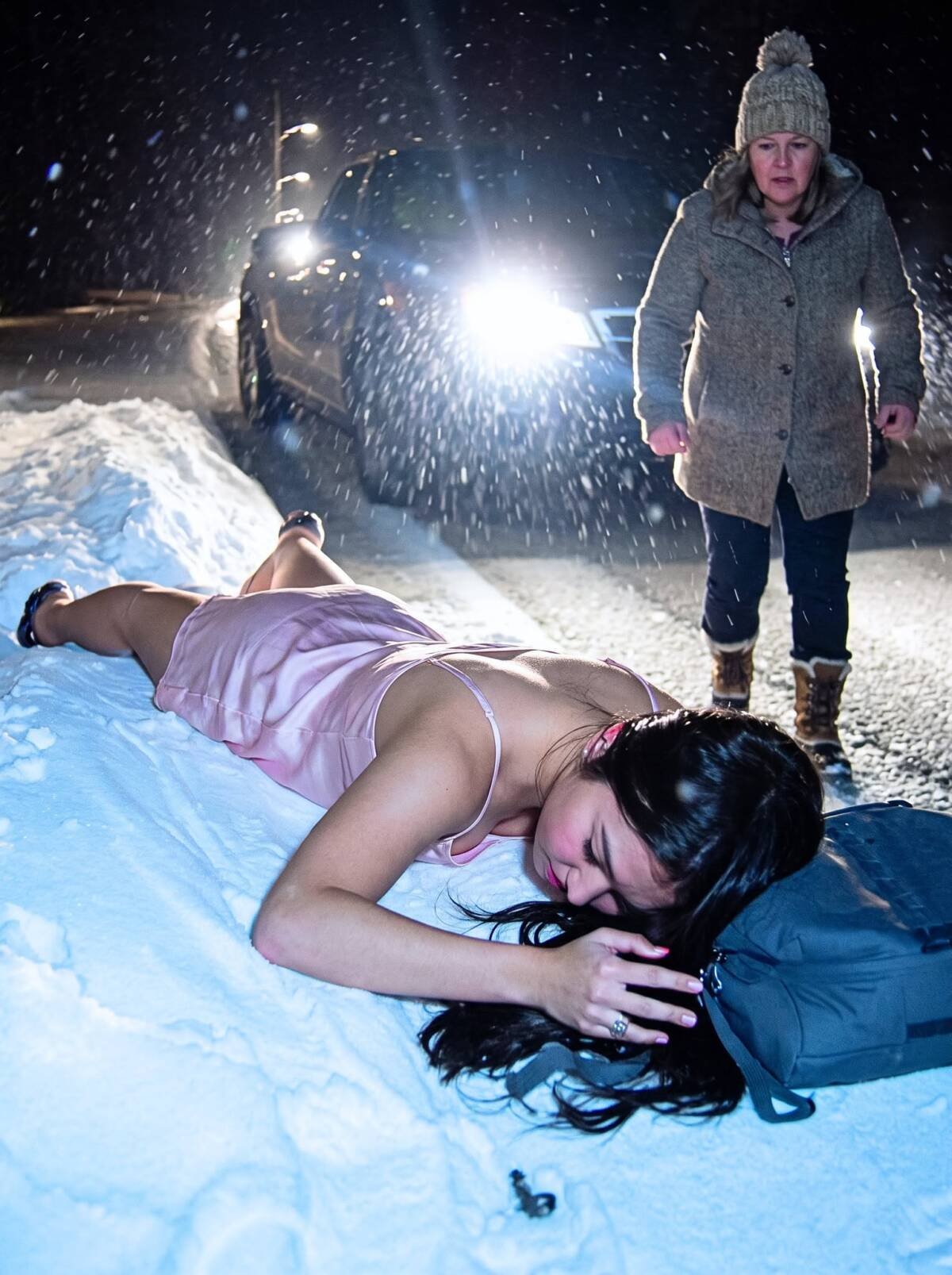
“We’re Ready to Forgive You.”
My mother stood on my porch for the first time in fifteen years, holding a casserole and smiling as though she had never watched my father throw me out into the rain.
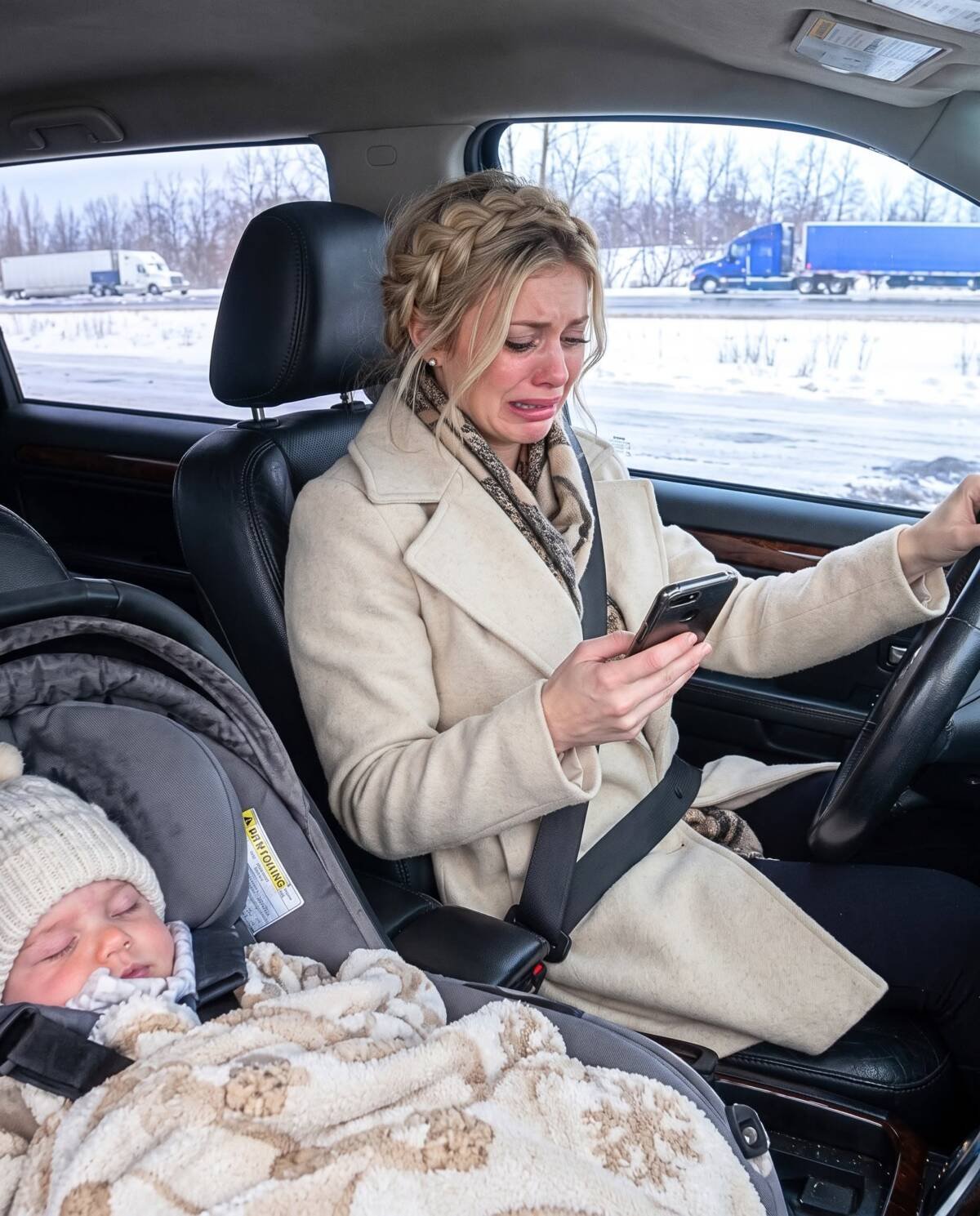
My four-week-old daughter was asleep against my chest when Mom opened her arms toward her.
“We’re ready to forgive you,” she announced.
For a moment, I honestly thought I had misheard her.
Forgive me?
She had not apologized for abandoning me. She had not acknowledged that she and Dad had spent fifteen years pretending I no longer existed. She had not even asked how I had survived after being forced to leave home at nineteen with a suitcase, a box of nursing-school textbooks, and nowhere to sleep.
Instead, she had brought dinner and expected me to welcome her into my home as though the past were nothing more than a minor misunderstanding.
“Forgive me for what?” I asked.
Her smile faltered.
“You know what I mean, Colleen. We’ve all made mistakes.”
Then she noticed the brass nameplates beside my blue front door.
SILAS CALLAHAN.
COLLEEN CALLAHAN.
The smile disappeared from her face.
That was when I understood that fifteen years had passed, but something fundamental had not changed.
My mother still could not accept the name I had chosen.
What she did not know was that the man she had once considered beneath our family had recently saved my father’s life.
And neither of my parents understood that the daughter they had discarded was about to discover she owned more of their family business than they had ever intended to admit.
They had come looking for forgiveness.
What they really needed was my signature.
And the secret behind that signature would expose a betrayal that had been building for years.
Part 1: The Night My Father Threw Me Out
I was nineteen when my father decided that marrying Silas Callahan would be the greatest humiliation our family could suffer.
Silas was twenty-one. He drove an old pickup truck, came from a working-class family, and believed that broken things deserved to be repaired rather than thrown away.
He was also the kindest person I had ever known.
None of that mattered to my father.
In the Whitfield family, appearances were everything. My father, Richard Whitfield, had built his identity around the family’s insurance agency, its commercial property, and the reputation he believed our surname commanded in the community.
He expected me to marry someone who would strengthen that reputation.
Instead, I fell in love with a man who measured success by whether he had done the right thing, even when nobody was watching.
When I told Dad that Silas and I intended to marry, he stared at me as though I had announced that I planned to destroy everything he had spent his life building.
“No daughter of mine marries trash.”
I remember how cold the room felt, even though the heat was running.
I tried to explain that Silas had never disrespected him, never asked me for money, and never pretended to be something he was not.
Dad refused to listen.
“You want to be a Callahan? Go be one.”
Then he threw my suitcase onto the lawn.
My nursing-school textbooks followed. They landed in the wet grass as rain hammered against the windows.
I looked toward the stairs, where my mother stood in her robe.
I waited for her to intervene.
I waited for her to tell Dad that I was his daughter, that he could be angry without destroying my life, that a disagreement about marriage was not a reason to send a nineteen-year-old girl into the night.
Mom said nothing.
She simply watched.
That silence hurt almost as much as Dad’s words.
I left the house with tears running down my face, trying to gather my books before the rain ruined them completely.
About twenty minutes later, Silas found me.
He had heard enough from a mutual friend to know something had happened. When he saw me standing beside my suitcase, soaked through and shaking, he did not ask what I had said to upset my father.
He took off his jacket and wrapped it around my shoulders.
“Come on,” he said gently. “We’ll figure it out.”
And we did.
For eight months, we slept on a foldout couch in his father’s duplex. I worked diner shifts while finishing nursing school, and Silas stretched every paycheck as far as it could go.
Some nights, dinner meant peanut-butter sandwiches. Other nights, we counted our money at the kitchen table and decided which bill could wait another week.
We were young, tired, and often frightened about what came next.
But I never had to wonder whether Silas would turn his back on me when life became inconvenient.
Over time, the life my father predicted would collapse became something solid.
I became a neonatal intensive care unit nurse. Silas joined the fire department and eventually became a captain. We bought a modest white-sided house with a blue front door and paid off the mortgage ahead of schedule.
We built our life without my parents’ money, influence, or approval.
There were painful years, too.
We endured one miscarriage that I mostly grieved in private. I learned how to care for critically ill newborns at work while quietly carrying the grief of the child I had lost.
Then, after years of hoping, our daughter was born.
We named her Ren.
The first time I held her, something inside me changed.
I finally understood that loving a child was not supposed to be a reward for obedience. A child did not have to choose the right career, marry the right person, or protect a parent’s reputation to deserve a place in the family.
There was nothing Ren could become that would make me erase her from my life for fifteen years.
That realization made my mother’s appearance on the porch even more disturbing.
She had missed my graduation, my wedding, my professional milestones, my pregnancy, and every birthday in between.
Now she expected to hold my newborn daughter as though biology automatically entitled her to a relationship.
“She’s my granddaughter,” Mom insisted when I stepped back to keep her from touching Ren.
“You’ve known she existed for four weeks.”
“That doesn’t change what she is.”
“No,” I replied. “But it doesn’t change what happened, either.”
Mom looked offended, as though I had broken an unspoken rule by refusing to make her feel comfortable.
Then her gaze shifted toward the nameplates beside the door.
She stared at Silas’s surname for several seconds.
I knew that expression. I had seen it on my father’s face when he threw me out.
Fifteen years later, the Callahan name still represented everything they believed I had done wrong.
Eventually, Mom explained why she had come.
Dad had suffered a serious cardiac emergency and collapsed at home. He was recovering, but the experience had forced him to think about his family.
“He’s been thinking about you,” she said.
“He had fifteen years.”
Mom did not respond.
She left the casserole and a card on the porch, then told me to call when I was ready to reconcile.
I thought that would be the end of it.
I was wrong.
Within days, relatives began sending messages about forgiveness. People from my childhood church contacted me with reminders that life was short and family should come first.
Their messages followed the same pattern: Dad was getting older, Mom was hurting, and I needed to stop holding on to the past.
According to Mom’s version of events, my parents simply wanted to meet their granddaughter, and I was refusing because I remained angry about something that had happened when I was nineteen.
Fifteen years of silence had been reduced to a disagreement.
The rain-soaked suitcase, the abandoned textbooks, and the mother who watched from the stairs had disappeared from the story.
Then Mom appeared at my hospital.
I was carrying Ren through the corridor after introducing her to several coworkers when Mom approached us with another casserole.
She reached toward my daughter in front of everyone.
When I stepped away, her expression crumpled.
“You won’t even let your own mother hold her grandchild?”
People turned to look.
That was when I understood that this was not an honest attempt at reconciliation.
Mom was using the presence of other people to pressure me into surrendering a boundary she had never respected.
She believed public embarrassment would accomplish what fifteen years of silence had not.
She still thought I was the frightened nineteen-year-old girl standing in the rain.
She had no idea who I had become.
That night, after Ren fell asleep and Silas left for an overnight shift, I opened the top drawer of my nightstand and took out the final letter my grandmother, Ruth Whitfield, had sent me before she died.
Nana Ruth had been the only member of my family who maintained a quiet connection with me after I was disowned. She sent anonymous birthday cards, occasional financial help, and flowers when I graduated from nursing school.
She never demanded that I forgive my parents.
She never insisted that I return home.
One sentence from her final letter had stayed with me for years.
“People like that don’t come back when they love you. They come back when they’ve lost everything else and need somewhere to put their hands. You don’t owe them the door.”
I had always understood those words emotionally.
That night, however, I noticed something unusual about the envelope.
One corner felt thicker than the rest.
I carefully separated the paper lining.
A small brass key fell into my palm.
I was still examining it when someone knocked downstairs.
I checked the porch camera.
My brother, Grant, was standing outside.
I had not seen him in fifteen years.
When I opened the door, he did not greet me or ask about my daughter.
He looked straight at me and said, “You shouldn’t sign anything Mom gives you.”
Part 2: The Million-Dollar Signature
Grant looked older than I remembered. His expression was tense, and he seemed more concerned with the house around him than with the fact that he was standing in front of a sister he had not seen in fifteen years.
I let him inside.
We sat at the kitchen table while Ren slept nearby.
“What are you talking about?” I asked.
Grant explained that the Whitfield Insurance Agency, the business my father had treated like a family dynasty throughout my childhood, was drowning in debt.
“The agency owes almost nine hundred thousand dollars,” he said.
I stared at him.
“How?”
“Dad made bad decisions. Then he kept borrowing money to fix the problems caused by the previous loans. The commercial building is collateral, and the house has liens against it.”
I still did not understand why my mother had suddenly remembered she had a daughter.
Then Grant looked toward the hallway.
“They need your signature.”
“Why mine?”
He removed a thick envelope from his jacket and placed it on the table.
Inside was a personal guaranty worth $1.24 million.
My full legal name appeared at the top.
At the bottom was a signature that looked almost exactly like mine.
Almost.
The spacing, the slant, and the shape of the letters were convincing enough to fool someone unfamiliar with my handwriting.
But I knew I had never signed it.
“I didn’t authorize this.”
“I know,” Grant replied.
I looked up.
“How can you be so certain?”
He hesitated.
Then he told me something I had never known.
Nana Ruth had left me fifty-one percent of the Whitfield Insurance Agency.
I initially thought he was mistaken.
“No. Dad controlled the business.”
“Not all of it.”
According to Grant, Nana and my grandfather had founded the agency. Nana retained control over a substantial portion of its original shares, and after Dad threw me out, she changed the trust governing her ownership.
She transferred a controlling interest into my name.
My father had never told me.
Years later, documents were filed claiming that I had voluntarily transferred those shares back to him.
That signature had also been forged.
Now the bank had discovered inconsistencies in the company’s records. The refinancing depended on treating the old stock transfer as legitimate, and the bank wanted my signature ratifying the transaction.
If I signed, I could effectively validate a transfer I had never approved.
“They want you to make everything look legal,” Grant explained. “Without your signature, the refinancing could fall apart.”
I stared at the document, trying to process the implications.
My mother had arrived at my house claiming that she wanted to repair our relationship.
My father was supposedly reflecting on his life after nearly dying.
Meanwhile, someone had forged my signature on a million-dollar financial obligation.
“So Mom didn’t come because Dad nearly died,” I said.
Grant lowered his eyes.
“She came because the bank froze the refinancing four days after he collapsed.”
For fifteen years, my parents had behaved as though I did not exist.
The moment my name became financially useful, they wanted reconciliation, church involvement, forgiveness, and access to my daughter.
I looked at the brass key in my hand.
“What does this open?”
Grant shook his head.
“I’ve never seen it before.”
Three mornings later, I discovered another connection between my family and the life I had built without them.
Silas was making pancakes while Ren slept nearby. I had spent much of the night reviewing public records connected to the insurance agency when I came across the report concerning Dad’s cardiac arrest.
The address was familiar.
I turned toward my husband.
“Which crew responded to the cardiac call on Sycamore Street?”
Silas stopped moving.
“That was my crew.”
I stared at him.
“You were there?”
“Yes.”
He explained that he had not recognized the address until he entered the kitchen.
Dad was unconscious. Mom was panicking, and Dad had no pulse.
Silas did not hesitate.
He performed CPR, used the defibrillator, administered medication according to protocol, and continued working until Dad’s heart started again.
The man my father had once called trash had been the one kneeling on his kitchen floor, fighting to keep him alive.
“Why didn’t you tell me?”
Silas looked toward Ren.
“You had just given birth. You were exhausted, and I didn’t want his emergency becoming another way your family entered our home.”
That answer hurt in a way I could not immediately explain.
Silas had every reason to resent my father.....