Iain Douglas-Hamilton, one of the world’s most influential wildlife conservationists and a pioneer of modern elephant research, has died at the age of 83. He passed away Monday at his home in Nairobi, his family confirmed.
A zoologist and conservation leader, Douglas-Hamilton transformed global understanding of elephants by demonstrating that they are intelligent, emotional beings capable of forming deep social bonds, grieving their dead, and making complex decisions. His findings reshaped both scientific research and public attitudes toward elephant protection.
Born in Dorset, England, in 1942, Douglas-Hamilton studied biology in Scotland and at the University of Oxford before moving to East Africa in his early 20s. While working at Lake Manyara National Park in Tanzania, he developed a groundbreaking method of identifying individual elephants by their ears, wrinkles, and behavior — a technique that became the foundation of long-term elephant studies worldwide.
His research later uncovered the devastating scale of elephant poaching across Africa. Through extensive fieldwork and pioneering aerial surveys, Douglas-Hamilton documented population declines that helped galvanize international action, including the global ivory trade ban enacted in 1989.
Tributes poured in following news of his death. Prince William described him as “a man who dedicated his life to conservation,” while Tusk founder Charles Mayhew called him “a true conservation legend whose legacy will endure.” Primatologist Jane Goodall said his work proved that elephants “are capable of feeling just like humans.”
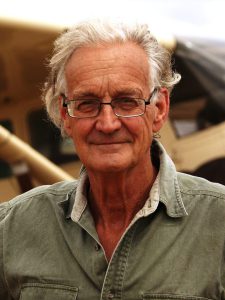
In 1993, Douglas-Hamilton founded the organization Save the Elephants, leading early adoption of GPS tracking technology and advocating globally for stronger protections against the ivory trade. His efforts contributed to major international policy commitments, including landmark ivory restrictions announced by the United States and China in 2015.
Douglas-Hamilton is survived by his wife, Oria, two daughters, and six grandchildren. His enduring legacy lives on in the elephants whose survival his life’s work helped protect.