Introduction: The Night My Husband Crossed a Line He Could Never Uncross
When I came home four hours earlier than expected from a business trip, I thought I would find my husband watching television and my mother resting comfortably in the guest bedroom.
Instead, I found my husband and his brother drinking beer, eating pizza, and watching football in the very room I had prepared for my 70-year-old mother, who was undergoing chemotherapy.
When I asked where she was, my husband barely looked up.
“I put her in the basement.”
I stood there, waiting for him to explain that he was joking.
He wasn’t.
My mother was downstairs, sleeping on an air mattress in a cold basement, with her medication bottles sitting on the floor beside her. She had been moved out of the guest room so my husband and his brother could enjoy the television without being disturbed.
And when I confronted him, he didn’t apologize.
Instead, he looked directly at me and said:
“I’m the man of this house.”
I could have screamed. I could have thrown the beer bottles across the kitchen or demanded that his brother leave immediately.
But I did something different.
I helped my mother back upstairs, made sure she had everything she needed, and quietly began making phone calls.
By the following evening, my husband would be sitting at our dining room table, looking at documents he had never expected to see.
And for the first time in nine years of marriage, he would have to confront a truth he had apparently forgotten:
He was not the only person who owned that house.
But this story was never really about a house, a guest room, or an air mattress.
It was about a 70-year-old woman who had spent her entire life apologizing for needing help—and a daughter who finally decided that her mother’s kindness would never again be mistaken for permission to mistreat her.
Part 1: The Woman Who Apologized for Being Sick
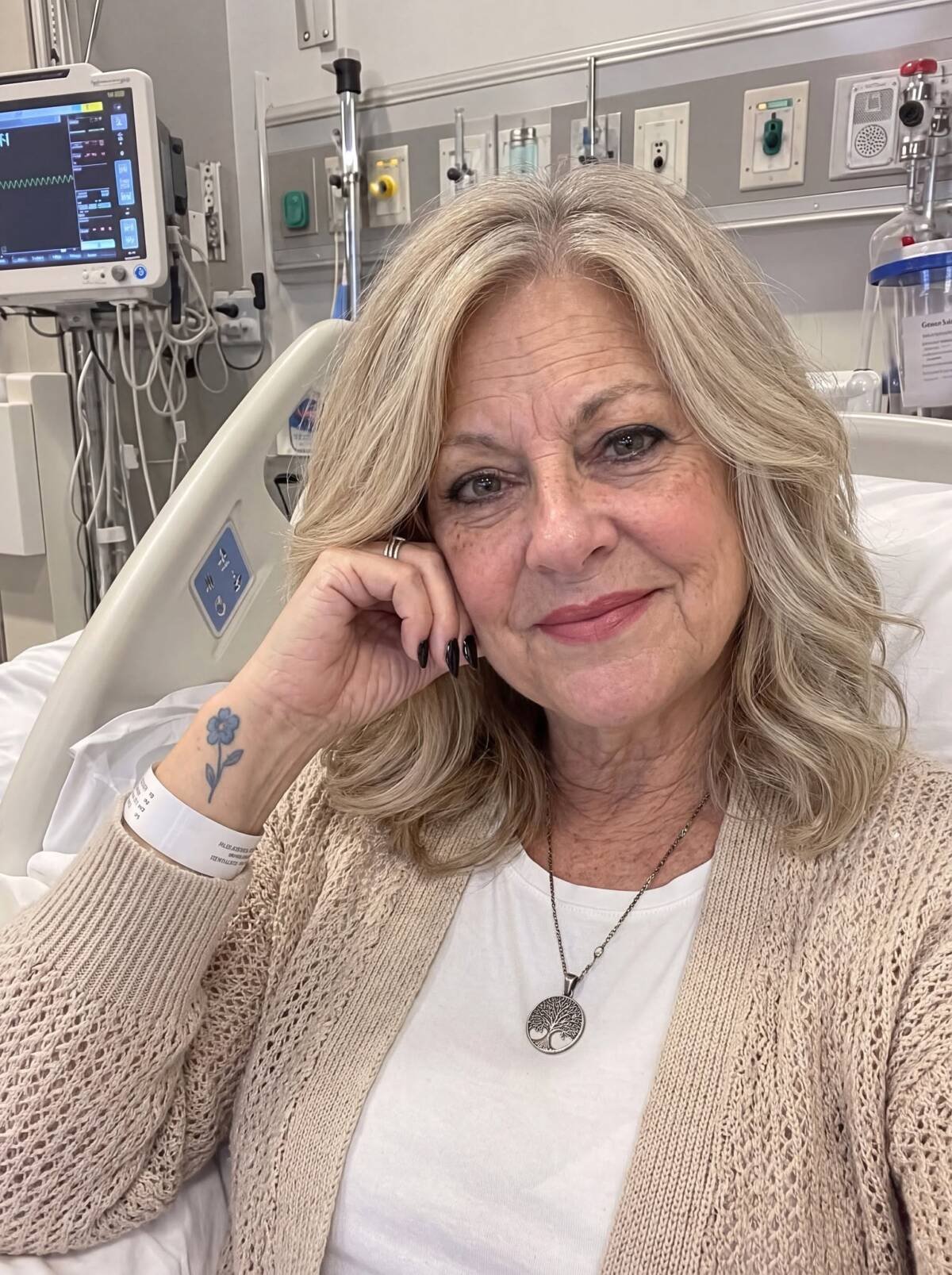
My mother, Helen Park, was the kind of woman who apologized for being ill.
At seventy years old, she had spent nearly her entire life learning how to take up as little space as possible. She apologized when she needed something, when she asked a question, when she stayed a little longer than expected, and even when someone offered to help her.
Somehow, cancer became another inconvenience she believed she needed to apologize for.
She apologized for chemotherapy.
She apologized for being tired.
She apologized for needing rides to medical appointments.
She apologized for taking up space in our home.
She even apologized for not eating enough because the treatment had destroyed her appetite.
I had spent forty years telling her she had nothing to apologize for.
She never quite believed me.
My name is Sara Choi-Bennett, and I had been married to Gabriel Bennett for nine years when my mother was diagnosed with stage three breast cancer.
The diagnosis changed everything.
At first, there were appointments, examinations, additional scans, and conversations with doctors. Then came the treatment plan.
Her oncologist, Dr. Reyes, explained that the chemotherapy would be aggressive but that the outlook was encouraging if my mother received consistent medical care and proper support throughout treatment.
I remember sitting beside her in the consultation room, holding a folder full of medical documents while she listened carefully.
When the doctor finished explaining the plan, Mom nodded.
“I’ll manage,” she said.
Dr. Reyes looked at her kindly.
“Mrs. Park, managing alone during chemotherapy is not advisable. You will need support, particularly on the days following treatment.”
Mom smiled politely.
“I’ve managed alone before.”
That was true.
She had been managing alone for nineteen years, ever since my father died.
She had built an entire life around independence. She paid her bills on time, maintained her home, cooked her own meals, and rarely asked anyone for anything.
Even when she was struggling, she insisted everything was fine.
But this time, I refused to let her turn independence into isolation.
“You’re staying with me,” I told her.
She immediately shook her head.
“Sara, no. I don’t want to inconvenience you.”
“You’re staying with us.”
“I can manage at home.”
“Mom, you’re starting chemotherapy. You’re not doing this alone.”
She looked at me for a moment before asking the question she had clearly been holding back.
“Gabriel?”
“I’ve already talked to him.”
Technically, that was true.
Gabriel had not been enthusiastic about the arrangement. He had immediately asked how long my mother would be staying and whether there was a way to establish a schedule.
“She isn’t going to be here permanently, right?” he had asked.
“Gabriel, she has cancer. I don’t know how long treatment will take.”
“I just need to know there’s an end date.”
I remember staring at him.
“She is my mother. I’m not going to put an expiration date on helping her.”
He sighed.
“All right. Fine.”
At the time, I interpreted his agreement as reluctant acceptance.
I did not yet understand that he had agreed to the arrangement without accepting what it actually meant.
The first-floor guest bedroom was the obvious choice for Mom.
It was directly across from the bathroom, so she wouldn’t have to navigate stairs when she felt weak or nauseated. It also had a large window overlooking the backyard garden she loved watching whenever she visited.
I had prepared everything before bringing her home.
Fresh sheets.
Extra blankets.
A comfortable mattress.
A bedside lamp.
A small table for her medication.
And enough room for her belongings.
When I brought her home on Monday, she arrived with one suitcase and a small bag of medications.
Naturally, she apologized for both.
“I probably packed too much.”
“Mom.”
“I’m just saying. I don’t want to take over the room.”
“You can bring as much as you want. This is your room.”
She slowly looked around.
“It’s a nice room.”
“It’s across from the bathroom. I thought that would make things easier after chemotherapy.”
She smiled.
“That’s thoughtful.”
Then she looked at me and said something I rarely heard from her without an apology attached.
“Thank you.”
For a moment, I felt that everything would be all right.
Three days later, I drove her to her first chemotherapy treatment.
I sat beside her for nearly five hours, holding her hand when the nausea began and listening to the steady sounds of the medical equipment around us.
Watching someone you love undergo treatment is a particular kind of helplessness.
You want to take their pain away.
You want to trade places.
You want to do something meaningful, but sometimes all you can do is sit beside them and remind them they are not alone.
When the treatment ended, Mom looked exhausted.
“I’m sorry,” she whispered.
I turned toward her.
“Mom, what are you apologizing for?”
“This isn’t very pleasant for you.”
I almost laughed, although there was nothing funny about the situation.
“It’s much less pleasant for you.”
She looked down at our joined hands.
“I don’t know how to let people help me.”
“I know.”
“It feels like weakness.”
I squeezed her fingers.
“It isn’t weakness.”
She didn’t answer.
At the time, I believed the hardest part of having my mother stay with us would be convincing her that she was allowed to need help.
I had no idea that the person who would make her feel most unwelcome would be my own husband.
Part 2: Four Days Away—and One Decision That Changed Everything
Two weeks into Mom’s stay, I had to leave for a four-day business trip to Seattle.
I considered postponing it, but the meetings had already been scheduled, and Mom insisted she would be fine.
Before leaving, I organized everything as carefully as possible.
Chemotherapy had made ordinary activities difficult. Even walking from one room to another could leave her exhausted.
I knew she would rather struggle silently than ask someone for assistance.
So I prepared a detailed medication schedule.
I wrote the instructions on a laminated card and placed copies in the kitchen and guest bedroom.
I stocked the refrigerator with the foods she could tolerate:
Crackers.
Ginger tea.
Rice.
Chicken broth.
Applesauce.
A few other simple foods.
I also made sure her prescriptions were organized and that the emergency contact information was easy to find.
Then I went over everything with Gabriel.
“She needs the anti-nausea medication at eight in the morning and eight in the evening.”
“I know.”
“Please check on her, even if she doesn’t ask.”
“I’ll check on her.”
“She sometimes gets dizzy when she stands up. If she needs anything, don’t make her feel like she’s bothering you.”
Gabriel looked at me.
“Sara, I’ve got it.”
I wanted to believe him.
Before leaving, I stopped by Mom’s room.
“Call me if you need anything.”
“I will.”
“Anything, Mom.”
She smiled.
“I know.”
For the next three days, she sent me short messages.
I’m fine.
I ate a little.
Everything is okay.
I called every evening, and she always sounded calm.
I asked whether Gabriel had checked on her.
She said he had.
I asked whether she had taken her medication.
She said yes.
There was no obvious reason to suspect anything was wrong.
On the fourth day, my final meeting ended almost four hours earlier than expected.
I changed my flight and headed home.
I didn’t tell Gabriel because I wanted to surprise him.
When I pulled into the driveway that evening, I noticed his brother Danny’s car parked outside.
I assumed they were spending time together.
I unlocked the front door and immediately noticed something unusual.
The kitchen was a mess.
Empty beer bottles covered part of the counter. An open pizza box sat beside the sink, and bags of chips and other snacks were scattered across the kitchen island.
The house smelled like old food and beer.
Then I heard football coming from the guest bedroom.
I walked down the hallway and opened the door.
What I saw made me stop.
Gabriel was stretched across the bed.
Danny was sitting in the chair I had placed beside the window for my mother.
The television was on, and there were beer bottles and snacks scattered around the room.
Both men looked completely comfortable.
For several seconds, nobody said anything.
Then Gabriel looked at me.
His expression changed immediately.
“Honey. I didn’t know you were coming home.”
I looked around the room.
Then I asked the only question that mattered.
“Where is my mother?”
Gabriel sat up.
“My brother came over, and we wanted to watch the game in here because there’s a TV.”
I repeated myself.
“Where is my mother?”
He hesitated.
“I put her in the basement.”
For a moment, I genuinely thought I had misunderstood him.
“What?”
“She’s comfortable down there.”
I looked at the bed.
“This is her room, Gabriel.”
His expression hardened.
“No, it’s not. It’s my room. Just like this entire house.”
I stared at him.
Then he delivered the sentence that changed something fundamental in the way I saw our marriage.
“I’m the man of this house.”
I didn’t answer.
I turned around and walked downstairs.
The basement was finished in the most basic sense, but it was not a suitable sleeping area for someone undergoing chemotherapy.
There was no bedroom.
There was no bathroom.
There was no proper sleeping arrangement.
And there was certainly no reason for my mother to be down there.
I found her asleep on an air mattress in the middle of the basement.
Her medication bottles were sitting on the floor beside her.
A thin blanket covered her body.
The room was dim, and the air felt noticeably colder than the rest of the house.
She stirred when she heard my footsteps.
“Sara?”
I immediately knelt beside her.
“Mom. It’s me.”
She slowly opened her eyes.
“You’re home early.”
“Yes.”
Then, almost automatically, she apologized.
“I’m sorry I’m down here. Gabriel said they needed the room. I didn’t want to cause trouble.”
I felt something tighten in my chest.
“You didn’t cause anything.”
“I can manage down here.”
She said it sincerely.
That was the part that hurt most.
After seventy years of making herself small for other people, my mother genuinely believed that enduring discomfort was preferable to inconveniencing someone else.
“You’re not staying down here.”
I helped her sit up.....