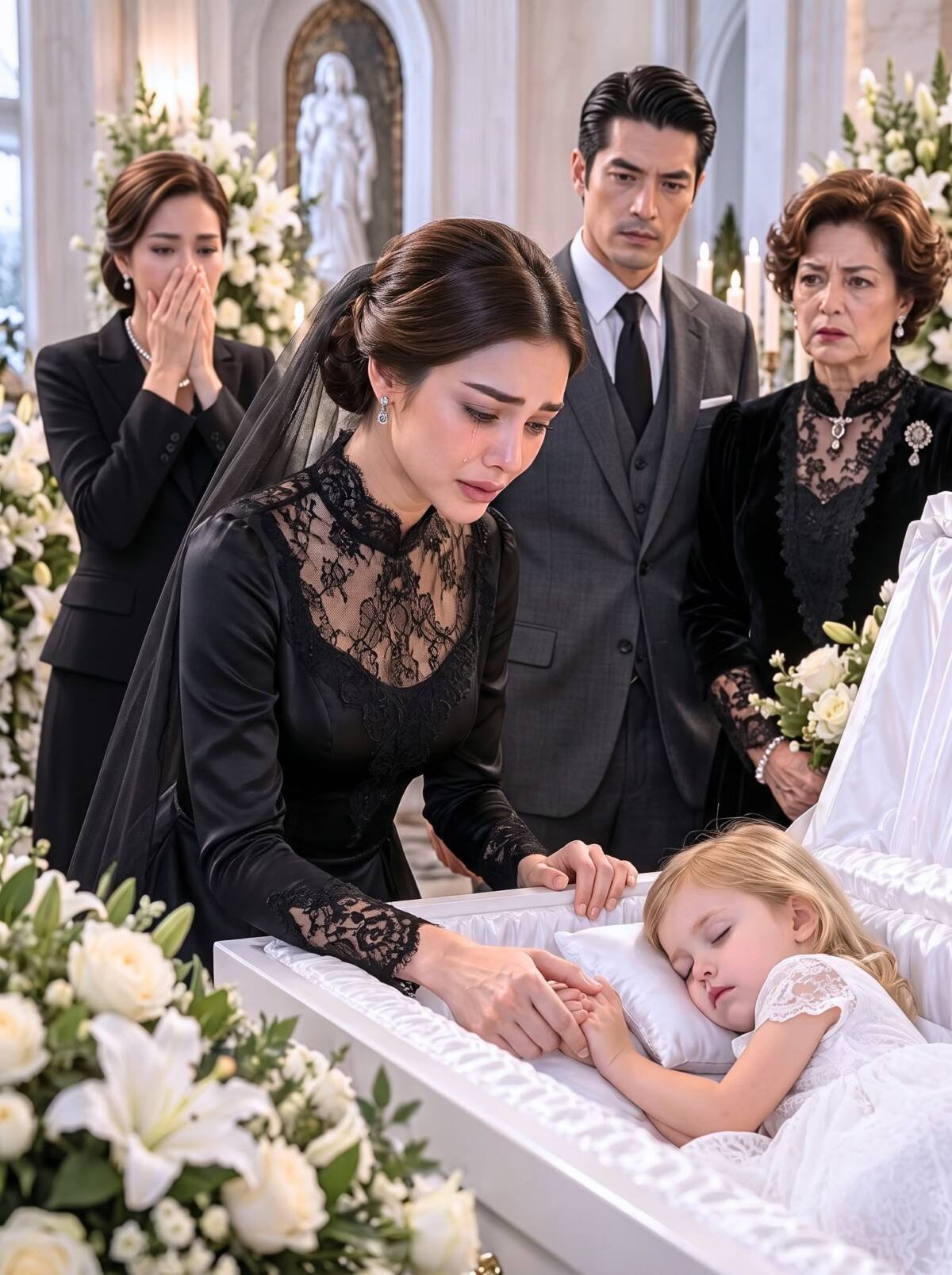
After losing both of her children, Caroline believed her home would never be filled with laughter again. Then she adopted Luke, a 16-year-old boy who had been through 10 foster placements. Everyone warned her that she was making a mistake. But just two weeks after the adoption became official, Luke sat across from her at dinner and revealed a secret that explained why he had spent years pushing every family away.
Introduction: The Boy Nobody Believed Could Find a Forever Home
“Mom, there’s something I need to tell you. And if you don’t want me anymore after you hear it… I’ll understand.”
Those words stopped Caroline in her tracks.
Two weeks earlier, she had officially adopted Luke, a 16-year-old teenager who had spent years moving between foster homes. Ten different families had already been part of his story, and every placement had ended without the permanent home he desperately needed.
Friends and relatives had warned Caroline not to take the risk.
They said Luke was too old, too complicated, and too emotionally damaged by his past. They worried that the years of instability had created problems she would not know how to handle.
But Caroline saw something different in the quiet teenager who sat alone with a book while other children played around him. She saw a boy who was careful with his words, considerate of others, and seemingly accustomed to expecting very little from the people around him.
What she did not understand was why Luke had spent so many years making it impossible for a family to keep him.
The answer would reveal a heartbreaking truth about loyalty, separation, and the lengths a child might go to protect someone he loved.
It would also teach Caroline that becoming a family does not always mean leaving the past behind. Sometimes, it means finding a way to make room for it.
The Loss That Changed Caroline’s Life Forever
Three years before meeting Luke, Caroline’s life had been shattered by a tragedy she never imagined she would survive.
She lost both of her children, Grace, 14, and Noah, 11, in a car accident on a rainy afternoon. Another vehicle crossed the median, and in a matter of moments, the family Caroline had spent years building was gone.
Their father had died two years earlier, leaving Caroline and her children to learn how to navigate life without him. They had slowly found their own rhythm, discovering ways to cope with their grief and create new memories together.
Then Caroline lost them, too.
In the months that followed, the house became almost unbearably quiet.
Grace’s bedroom remained untouched for a long time. Noah’s belongings stayed where he had left them. The ordinary objects that once made the home feel alive became painful reminders of the people who would never walk through the front door again.
Caroline continued working, shopping, paying bills, and answering questions from people who wanted to know how she was doing.
But behind the routines of everyday life, she struggled to imagine what her future was supposed to look like.
Eventually, the sharpest edges of grief softened. The pain did not disappear, but she began to understand that surviving a loss and learning to live again were two different things.
One morning, she found herself wondering whether the rest of her life had to be defined by the silence left behind.
She had spent years being a mother. She knew the work involved in raising children, the exhaustion of difficult days, the worries that never entirely disappeared, and the small moments of happiness that made everything worthwhile.
She also knew that no child could ever replace Grace or Noah.
That realization became the starting point for a decision that would change her life.
Caroline contacted a foster care agency to explore the possibility of becoming a foster parent.
During one of her early conversations, a caseworker named Denise asked a question that forced her to confront the most uncomfortable part of her decision.
“Are you trying to replace your children?”
Caroline understood why Denise needed to ask.
A new child would not erase the past, and adoption could not heal grief by itself. She would have to be honest about her motivations and prepared to love a child as an individual, rather than as a way to fill an empty space.
“No one could replace Grace or Noah,” she explained. “I’m not looking for replacements. I’m looking for someone else to love.”
The process that followed was lengthy. Caroline attended training sessions, completed interviews, underwent home inspections, and discussed the emotional realities of caring for a child who had experienced instability.
She was asked to consider the challenges that might arise, the boundaries she would need to establish, and the patience required to build trust with a young person who might not immediately believe her promises.
Caroline listened carefully.
She knew that love alone did not solve every problem. But she also believed that a child’s difficult history should not automatically determine what happened next.
She wanted to give someone the opportunity to experience a stable home, even if the road to getting there was not easy.
She had no idea that one of the children she would meet had already been given 10 chances at a permanent family—and had watched every one of them disappear.
Meeting Luke: The Teenager Everyone Warned Her About
Months into the process, Denise invited Caroline to an informal event where prospective parents could meet children in foster care.
The room was filled with activity. Younger children moved between tables, played games, and talked with adults who were trying to make them feel comfortable.
Then Caroline noticed a teenager sitting alone beside a window.
He had a paperback open across his knees and seemed content to remain unnoticed. While other children moved around him, he stayed focused on his book.
A few minutes later, a young girl accidentally knocked over a box of crayons.
Before anyone else could react, the teenager put his book down and crouched to help her. He collected the crayons scattered across the floor, reaching beneath a nearby table to retrieve the last blue one.
He returned the box to the girl, checked that she had everything, and went back to his seat without drawing attention to himself.
The small gesture caught Caroline’s attention.
She approached Denise and asked who the teenager was.
“That’s Luke,” Denise replied. “He’s 16.”
Caroline asked whether she could meet him.
Denise hesitated.
“There is something you should know first. He’s had 10 foster placements.”
The number immediately raised questions.
Caroline wanted to understand what had happened. Had Luke been violent? Had he harmed other children? Were there serious behavioral concerns that a prospective parent needed to know about?
Denise answered her questions, explaining that Luke had not been violent and had not harmed younger children.
But she remained cautious.
“Luke is complicated,” she said.
Caroline had heard adults use similar descriptions before. Sometimes, the word was an attempt to summarize a complicated history. Other times, it became a label that prevented people from looking beyond a child’s behavior.
She remembered how grief had affected Noah after his father’s death. His sadness had occasionally made him withdrawn, and adults who did not understand what he was experiencing had sometimes mistaken his silence for defiance.
She knew that behavior could communicate pain in ways children themselves struggled to explain.
“Then I would still like to meet him,” Caroline said.
Their first conversation lasted nearly an hour.
Luke was intelligent, observant, and unexpectedly funny. He asked questions, noticed details, and appeared to choose every word carefully.
He did not immediately open up about his past, and Caroline did not pressure him to do so. Instead, they talked about books, school, ordinary interests, and the things that mattered to a teenager his age.
As the conversation continued, Caroline began to sense that Luke had learned to be cautious around adults.
He seemed accustomed to the idea that a relationship could end without warning, and he was careful not to assume that one pleasant conversation meant anything permanent.
When Caroline finally stood to leave, Denise reminded her that a promising first meeting did not erase the history of 10 placements.
She was right.
But Caroline had no intention of making a decision based on a number alone.
She wanted to know Luke for herself.
And she returned.
Four Months of Small Moments That Built Trust
Over the next four months, Caroline and Luke continued meeting.
Initially, their visits took place under supervision at the agency. As the process progressed, they spent time together in libraries, diners, and parks.
The conversations became easier. Luke gradually shared more of his interests, and Caroline learned how to recognize the moments when he wanted to talk and the moments when he preferred silence.
She did not expect him to trust her immediately.
Instead, she focused on being consistent.
If she said she would arrive at a particular time, she made every effort to be there. If a plan had to change, she explained why. When Luke asked a difficult question, she answered honestly rather than offering a comforting promise she could not guarantee.
Over time, the small details began to matter.
One afternoon, Caroline mentioned that Grace had hated raisins.
It was a passing comment, connected to a memory of her daughter, and she did not think much of it afterward.
Several weeks later, Luke pushed a cookie toward her at a café.
“Don’t worry. I checked. No raisins.”
Caroline looked at him in surprise.
He had remembered a tiny detail about a girl he had never met and used it to make her smile.
It was a simple gesture, but it revealed something important about Luke. Beneath his guarded behavior was a teenager who paid attention to other people’s feelings.
Caroline began to understand that she was no longer thinking about adoption as an abstract possibility.
She was thinking about Luke as someone she wanted in her life.
Eventually, they began discussing what it would mean to become a family.
Luke approached the subject cautiously.
“You’d really want that?” he asked.
“Yes.”
“Permanent?”
“That’s usually what adoption means,” Caroline replied.
He looked down at the label on his water bottle.
“What if I mess everything up?”
“Then we deal with whatever you messed up.”
He remained quiet before asking another question.
“What if you regret adopting me?”
Caroline took a moment to consider her answer.
“Then I would be an adult having a complicated feeling, and you would still be my son.”
Luke looked unconvinced.
“You make everything sound too simple.”
“Commitment is simple, Luke. It means you stay.”
He did not respond immediately.
At the time, Caroline did not understand why the word stay affected him so deeply. She would later discover that his fear of abandonment was connected to a promise he had made years earlier—a promise involving a little girl he believed he had failed.
For now, she continued doing what she had been doing all along: showing up.
A New House, an Old Fear
When Luke moved into Caroline’s home, he behaved as though he were a guest who expected to be asked to leave.
He made his bed with unusual precision, washed dishes as soon as he finished eating, folded towels without being asked, and kept his belongings carefully arranged.
He seemed determined to cause as little inconvenience as possible.
Caroline initially appreciated his thoughtfulness, but she gradually recognized that his behavior was not simply a matter of good manners.
Luke appeared uncomfortable taking up space.
He acted as though every small mistake might become evidence that he did not belong there.
One Saturday, Caroline nearly tripped over a loose board on the porch. Luke noticed the problem and returned with a screwdriver.
He spent the afternoon repairing it.
The board had been loose for two years, and Caroline had repeatedly put off fixing it. Luke, however, approached the task with complete concentration.
He measured, adjusted, and secured the board until it no longer shifted beneath their feet.
Caroline thanked him, but Luke shrugged as though it were nothing.
Only later did she begin to appreciate the symbolism of that small act.
Luke had become skilled at fixing things because he desperately wanted something in his own life to last.
Then, one ordinary day, he accidentally called Caroline “Mom.”
He was looking for his charger when the word slipped out.
Both of them froze.
Caroline turned toward the kitchen counter, giving herself a moment to compose herself.
“It’s on the kitchen counter, beside the toaster,” she said.
Luke thanked her awkwardly.
Neither of them discussed what had happened.
But the word appeared again in the days that followed. At first, it came hesitantly. Eventually, it became part of ordinary conversation.
“Mom, where are the batteries?”
“Mom, do we need anything from the store?”
“Mom, have you seen my charger?”
Each time, Caroline felt a mixture of happiness and sadness.
She loved hearing the word, but she also wondered what it cost Luke to say it. For a teenager who had spent years moving between homes, allowing himself to feel attached to another adult might have been frightening.
Still, their relationship continued to grow.
When the adoption finally became official, Caroline believed the most difficult part of their journey might be behind them.
She was wrong.
Two weeks later, everything changed.
The Dinner Conversation That Explained Everything
It was an ordinary evening.
Caroline had prepared Luke’s favorite meatloaf, expecting the kind of relaxed dinner they had begun sharing since he moved in.
But Luke barely touched his food.
He stared down at his plate, his hands trembling slightly. Several times, he seemed about to speak, only to stop himself.
Finally, he looked up.
“Mom, I need to tell you something. And you’re probably going to wish you never adopted me.”
Caroline felt the words land heavily between them.
Every warning she had heard about Luke’s past seemed to return at once. But she pushed those fears aside and reached across the table.
“Tell me whatever you need to tell me,” she said.
Luke’s eyes filled with tears.
“I have a sister.”
Her name was Emma.
She was nine years old, and Luke had spent years believing that accepting another family might mean losing her forever.....