“Mommy, I’m Cold…”
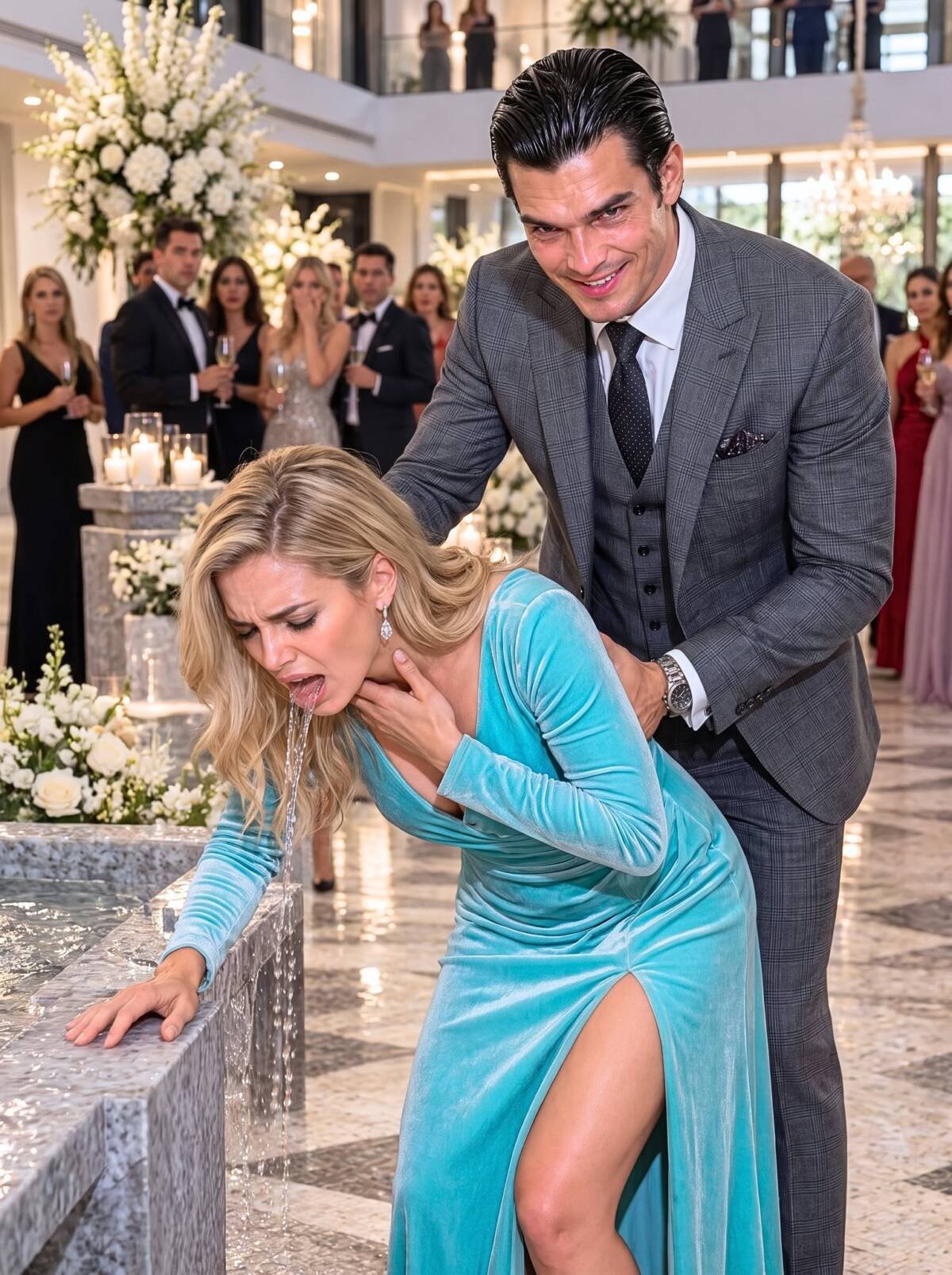
The funeral was almost over when Valerie Serrano heard a voice she thought she would never hear again.
Standing beside her six-year-old daughter’s small white casket, she had spent the morning trying to accept a loss that still made no sense. Her former husband, Fernando, had told everyone that their daughter, Sophia, had died suddenly in her sleep. The funeral had been arranged with unusual speed, and the family planned to cremate the child before Valerie could obtain the medical records she had repeatedly requested.
Then came a whisper.
“Mommy… I’m cold.”
Valerie froze.
For a moment, she wondered whether grief had finally overwhelmed her. She had spent two days barely sleeping, replaying every conversation and questioning every explanation she had been given. Perhaps her mind was inventing the one thing her heart wanted most: another chance to hold her little girl.
But the voice came again.
“Mommy… Daddy said I had to sleep.”
Valerie leaned closer to the casket.
Her daughter’s eyelids fluttered.
Suddenly, the funeral was no longer about saying goodbye.
It was about saving a life.
And what Valerie discovered beneath the white satin lining would lead police to a hidden room, a missing child, and a family secret that had been concealed for years.
Part 1: The Funeral That Was Never Supposed to End This Way
For two days, Valerie Serrano had struggled to accept that her six-year-old daughter was gone.
Fernando, her ex-husband, claimed Sophia had suffered a sudden respiratory arrest while sleeping. According to him, the child had been discovered unresponsive, and doctors had been unable to save her.
But the details never added up.
Valerie had not been permitted to see Sophia at the hospital before the funeral arrangements began. Her requests for complete medical records were repeatedly delayed, and her attempts to arrange an independent examination were met with hostility.
Fernando’s mother, Claudia, accused Valerie of turning a child’s death into another battle over custody.
“You need to stop making everything about yourself,” Claudia had told her. “Sophia is gone. Nothing you do now will bring her back.”
The words had cut deeply.
Three years earlier, Fernando had won sole custody of Sophia after portraying Valerie as an emotionally unstable mother who prioritized her military career over her family. Valerie had fought the decision, but every attempt to regain regular contact with her daughter seemed to end in another legal setback.
Visits were canceled. Video calls were postponed. Messages went unanswered.
Sometimes, Fernando claimed Sophia was sick. Other times, he insisted that the child did not want to speak to her mother.
Valerie had spent years wondering whether her daughter was being turned against her.
Now, standing beside the casket, she feared she would never know the truth.
The funeral had been organized with unsettling speed. Fernando and Claudia insisted that the arrangements proceed immediately, including the planned cremation.
Valerie had objected, but she had no evidence that anything was wrong.
Until she heard the whisper.
“Mommy… don’t let Daddy lock me up again.”
Her heart seemed to stop.
She looked around the funeral room. The mourners stood quietly, some with their heads bowed, others whispering condolences. Nobody appeared to have heard anything.
Valerie leaned over the casket.
“Sophia?” she whispered.
A tiny movement came from beneath the white lining.
Valerie pulled back the cover.
Her daughter lay inside, pale and drenched in cold sweat. Her breathing was shallow, and her skin felt alarmingly cold.
For a moment, Valerie could not move.
Then her military training took over.
She had spent years serving as a medical officer in the United States Army, where she had learned to remain focused when every second mattered. She checked Sophia’s breathing, called for emergency assistance, and carefully supported the child’s head.
Sophia was alive.
Barely.
As Valerie reached beneath her daughter to lift her from the casket, her fingers encountered something hard around the child’s wrists.
Plastic restraints.
They had been fastened beneath the satin lining, concealed from anyone looking into the casket.
Valerie’s stomach tightened.
She carefully freed her daughter’s wrists while keeping her movements gentle. Sophia stirred and struggled to open her eyes.
“Mommy,” she whispered. “I’m so cold.”
“I’m here, sweetheart. I’m right here.”
Valerie wrapped her daughter in her own uniform jacket and checked her for injuries. Along one arm, she noticed several fresh puncture marks.
“Can you tell me what happened?” she asked softly.
Sophia’s lips trembled.
“Daddy said it was sleeping medicine.”
Valerie swallowed hard.
“And who else was there?”
“Grandma held me down,” Sophia whispered. “Natalia locked the door.”
Natalia was Fernando’s longtime household assistant.
Before Valerie could ask another question, footsteps sounded in the hallway.
Fernando’s voice followed.
“What is taking so long? We need to finish this!”
Valerie looked toward the door, then back at her daughter.
She understood that she could not afford to waste another second.
Part 2: A Desperate Call to 911
Valerie carried Sophia into an adjoining room and locked the door behind them.
Her hands were shaking, but her voice remained controlled as she called emergency services.
“This is Colonel Valerie Serrano. My six-year-old daughter was declared dead approximately forty-eight hours ago. She is alive, barely breathing, and I have discovered restraints on her wrists. She may have been drugged. We need an ambulance and police officers immediately.”
The dispatcher began asking questions.
Valerie provided the funeral home’s address and explained that the child needed urgent medical attention.
Then a loud pounding struck the door.
“Valerie!” Fernando shouted. “Open this door!”
She said nothing.
Claudia’s voice rose from the hallway.
“Nobody was supposed to open that casket before the furnace!”
The dispatcher heard her.
Valerie looked down at Sophia, who was clutching her jacket with both hands.
“Mommy,” the child whispered, “Daddy said if I slept long enough, he wouldn’t have to give back Grandpa’s money.”
The words changed everything.
Valerie’s father, retired General Arturo Serrano, had established a substantial irrevocable trust for Sophia’s future. The money was intended to provide for her education, medical needs, and long-term financial security.
Fernando had been serving as the trust’s legal trustee.
If Sophia died while Fernando remained her guardian, certain provisions could give him temporary access to assets while the estate was administered. The arrangement included legal safeguards, but Valerie knew that even temporary access could become dangerous if someone intended to manipulate the process.
The possibility was horrifying.
Had her daughter been harmed for money?
Sirens sounded in the distance.
Valerie held Sophia close and continued speaking with the dispatcher until emergency personnel arrived. When officers entered the funeral home, they found Fernando demanding that Valerie surrender the child and Claudia insisting that the entire situation was a misunderstanding.
Neither explanation lasted long.
Police separated the adults for questioning. Paramedics examined Sophia and immediately transported her to a pediatric medical center.
As the ambulance doors closed, Valerie climbed inside and took her daughter’s hand.
Sophia’s eyes were barely open.
“Don’t leave me,” she whispered.
“I won’t,” Valerie promised. “Not ever again.”
For the first time in three years, she could hold her daughter without anyone telling her the visit was over.
But the relief was overshadowed by a terrible question.
What had happened to Sophia before she was placed inside that casket?
And why had someone been so determined to ensure that nobody opened it?
Part 3: What the Doctors Discovered
At the hospital, medical personnel worked urgently to stabilize Sophia.
Initial testing revealed a dangerous concentration of sedative medication in her system. Doctors suspected repeated exposure rather than a single accidental dose, although they needed additional testing to determine precisely what had been administered and when.
The puncture marks on her arm raised further concerns.
Sophia was transferred to specialized pediatric care, where doctors monitored her breathing, circulation, and neurological responses.
Valerie waited outside the treatment room, still wearing the uniform she had used to wrap her daughter.
She could not stop thinking about the restraints.
Someone had placed a living child inside a casket and concealed her beneath its lining.
Someone had expected the casket to remain closed.
And someone had arranged a funeral that would have ended with Sophia being cremated.
When a detective approached, Valerie stood immediately.
“Is my daughter going to survive?”
“The doctors are doing everything they can,” he replied. “Right now, she’s receiving the care she needs.”
He explained that investigators had secured the funeral home and were questioning Fernando, Claudia, and Natalia. Their statements were already contradicting one another.
Fernando claimed Sophia had died and that he knew nothing about the restraints.
Claudia insisted the restraints had been used for transportation.
Natalia denied ever seeing the child restrained.
The detective’s expression hardened.
“Those explanations don’t match what we found.”
Investigators had also learned that the physician who signed Sophia’s death certificate was connected to Fernando’s family. Records suggested that the certification process had not followed the expected medical procedures.
Authorities began examining the circumstances surrounding the reported death, including the doctor’s actions, the medication involved, and the arrangements made before the funeral.
A search warrant was obtained for Fernando’s residence.
Valerie’s father arrived at the hospital before dawn. General Arturo Serrano had spent decades in military service, but when he looked through the intensive care unit’s glass at his granddaughter, he appeared like any other frightened grandfather.
“What have they done to her?” he asked.
Valerie struggled to answer.
“I don’t know everything yet.”
Arturo placed a hand on her shoulder.
“Then we’ll find out.”
Neither of them knew that the search of Fernando’s house was about to uncover evidence that would transform the case from a suspected crime against one child into something much larger.
Part 4: The Hidden Room Behind the Basement Wall
Two hours after the search began, the lead detective returned with photographs from Fernando’s house.
“Colonel Serrano,” he said quietly, “you need to see this.”
The first photograph showed the basement.
At first glance, it appeared ordinary. Storage boxes lined the walls, and shelves held tools, cleaning supplies, and household equipment.
But investigators had discovered a concealed panel behind a section of wall covering.....