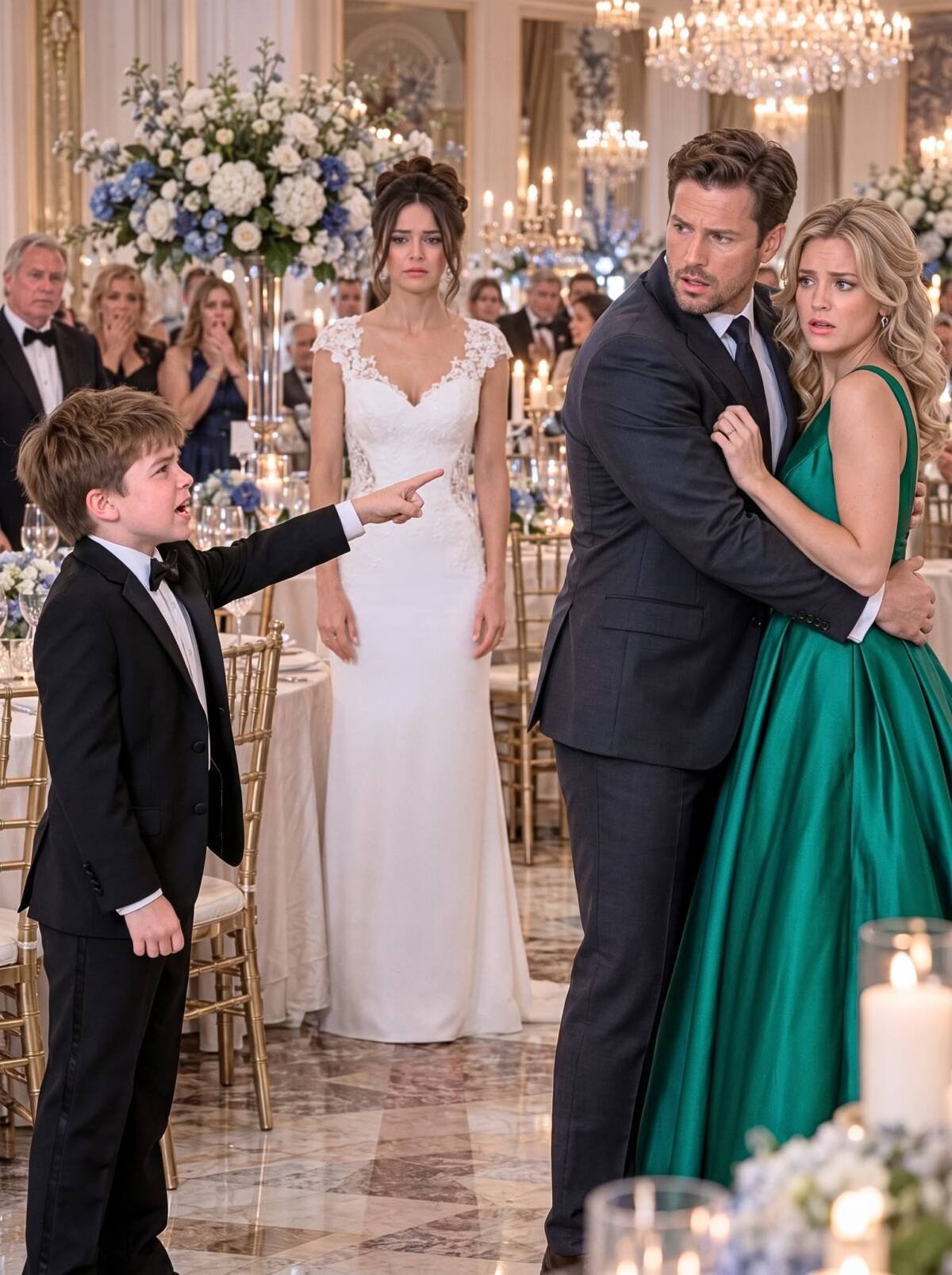
For nearly two decades, a mother believed she was protecting her daughter by keeping a devastating family secret. But on the day the young woman turned 18, her father finally decided the truth could no longer remain hidden. What he carried out of the garage would reveal a sister she never knew, a lifetime of unanswered questions, and the painful cost of a lie told in the name of love.
Introduction: The Secret That Changed Everything
For 18 years, I told myself that keeping a secret from my daughter was the right thing to do.
I convinced myself that I was protecting her. I believed that some truths were simply too painful for a child to understand, and that there would always be a better time to explain what had happened before she was old enough to remember.
But the truth was that I was not only protecting my daughter from grief. I was protecting myself from a loss I had never learned how to face.
My daughter, Hannah, had been born with a twin sister.
Her name was Rosie.
She was born just 11 minutes after Hannah. She weighed a little over six pounds, had dark hair, and a tiny crease beside her left eye that appeared whenever she cried. Even as newborns, the girls seemed different. Hannah was louder and more demanding, while Rosie was quieter.
I used to joke that one of them had been assigned enough crying for both.
For nine days, I was the mother of two daughters.
Then Rosie died.
The doctors told us that her death was consistent with Sudden Infant Death Syndrome, commonly known as SIDS. There had been no clear warning and no explanation that could make the loss easier to understand. There was no one to blame and no mistake we could identify that would give us something concrete to hold on to.
There was only grief.
My husband, David, and I were 27 years old. We had two newborn daughters, and within days, we had become parents trying to understand how one child could still be alive while the other was gone.
In the aftermath, I made a decision that would shape our family for the next 18 years.
I decided that Hannah would never know about Rosie.
At first, I told myself that she was too young to understand. As she grew older, I found new reasons to wait. When she struggled with school, I worried that the truth would overwhelm her. When she became a teenager, I feared she would wonder why she had survived when her sister had not.
Every year, I promised myself that I would find the right moment.
Every year, that moment passed.
My husband never fully agreed with me. He believed Hannah deserved to know the truth about her own life, even if the conversation would be painful.
But I was afraid.
And for nearly two decades, my fear became the rule our entire family learned to follow.
Then, on Hannah’s 18th birthday, David disappeared into the garage.
When he returned, he was carrying a handmade wooden chest.
He placed it on the table in front of our daughter, looked at her, and said the words that would change everything.
“There is something we should have told you a long time ago.”
Hannah had no idea that the biggest revelation of her life was waiting inside that box.
Neither did she know that nearly everyone she loved had helped keep it hidden.
Part 1: The Nine Days We Never Spoke About
The day Rosie died remains one of the most painful memories of my life.
I remember the quiet in the house afterward. I remember the way ordinary objects suddenly seemed unbearable. A blanket, a bottle, a tiny pair of socks—each one reminded me that a child who should have been there was no longer coming back.
David went to the funeral home while I stayed behind with Hannah.
I could barely think clearly. I was exhausted, grieving, and frightened by the responsibility of caring for a newborn while struggling to understand what had happened to her sister.
Before David returned, I had dismantled Rosie’s crib.
I carried its pieces into the garage and removed anything else that made her absence impossible to ignore.
When David came home, he looked around the room and immediately understood what I had done.
“You did this?” he asked.
“I couldn’t look at it,” I replied.
He did not argue. He did not tell me I was wrong. He simply nodded.
At the time, I interpreted his silence as agreement.
Years later, I would understand that he had been grieving in his own way and that neither of us knew how to help the other.
We were trying to raise Hannah while carrying a loss that neither of us knew how to discuss. She needed to be fed, held, and comforted, even as we struggled to function ourselves.
Some nights, I held her against my chest and watched her breathing.
Whenever I felt the reassuring movement of her tiny body, relief washed over me. Then came the guilt.
How could I feel grateful that one daughter was alive while mourning the daughter I had lost?
I knew, logically, that loving Hannah did not diminish my love for Rosie. But grief rarely follows logic, and I spent years punishing myself for emotions I did not know how to process.
Eventually, David and I began avoiding Rosie’s name altogether.
At first, the silence seemed temporary. We were simply trying to survive the earliest days of our loss.
Then the silence became a habit.
And habits, when repeated long enough, can become family rules.
The Decision We Thought Was Protection
Hannah was only a baby when Rosie died. She had no memories of her sister and no way of understanding what had happened.
I used that fact to justify our silence.
When Hannah was three, I told myself she was too young.
When she started kindergarten, I convinced myself that a child her age had enough to worry about without learning that she had once had a twin sister who died as a newborn.
By the time she was seven, David had begun asking whether we should tell her.
We were driving home from a birthday party when he first raised the subject seriously.
“Maybe we should tell her soon,” he said.
“Tell her what?” I asked, although I knew exactly what he meant.
“The truth about Rosie.”
“Why? She’s seven.”
“I’m not saying we have to tell her tonight. I’m saying we should start thinking about it.”
I stared out the window.
“Then when?”
David did not have a clear answer. Neither did I.
That conversation ended without a decision, and the same pattern repeated itself over the years.
He would bring up Rosie. I would explain why the timing was wrong. He would hesitate, and another birthday or school year would pass.
Each delay made the next conversation more difficult.
The longer we kept the secret, the more complicated it became to explain why we had kept it in the first place.
Eventually, I stopped thinking of the truth as something we had postponed and began treating it as something we could never reveal.
I told myself that Hannah was happy, that she was healthy, and that she had a loving family. I convinced myself that telling her about Rosie would introduce sadness into a life that had otherwise been untouched by it.
What I failed to understand was that the truth did not need to be a burden simply because it was painful.
Hannah had a sister.
That fact was part of her story, whether I acknowledged it or not.
A Secret the Whole Family Learned to Keep
My mother knew about Rosie. So did my sister, my father, and the relatives who had been there when the girls were born.
Over time, everyone learned which subjects to avoid around Hannah.
The hospital photograph showing me holding both babies disappeared from my mother’s wall. Family conversations were carefully redirected whenever someone came close to mentioning the girls together.
Once, my father referred to “the girls” during a family gathering.
He stopped himself almost immediately and changed the subject.
I noticed. So did everyone else.
Nobody said anything.
I had created a situation in which people who loved our family felt they had to edit their memories to protect a secret I had insisted on keeping.
At the time, I called that protection.
Looking back, I see how much it demanded from everyone.
Rosie became a name that could be spoken only when Hannah was not around. Photographs became objects that needed to be hidden. Memories that should have been shared became private burdens.
David found his own way of remembering her.
Every year after Hannah’s birthday celebration, he disappeared into the garage for about an hour.
I assumed he needed time alone. I never asked many questions because I had learned to avoid anything that might lead us back to Rosie.
I did not know that he was creating something that would eventually force all of us to confront the truth.
Part 2: Every Birthday Was Another Year of Silence
Hannah’s birthday fell on September 9.
Every year, we celebrated with cake, presents, and family gatherings. As she grew older, the parties became larger and the celebrations more elaborate.
There were childhood birthday themes, school friends, sleepovers, teenage celebrations, and photographs that filled our family albums.
Hannah grew up believing that her birthday marked the beginning of her life as an only child.
For me, every September 9 carried a second meaning.
It was the anniversary of the day I became a mother to two daughters and, nine days later, lost one of them.
I watched Hannah grow and found myself imagining the child Rosie might have become.
What would she have looked like at ten?
Would she have shared Hannah’s interests? Would she have been outgoing or shy? Would the sisters have been inseparable, or would they have developed completely different personalities?
I knew there was no way to answer those questions. Rosie had lived for only nine days.
Still, I could not stop imagining the possibilities.
At the same time, I kept telling myself that Hannah did not need to carry the weight of those unanswered questions.
When she was 12 and struggled with friendships, I decided it was not the right time to tell her.
When she was 15 and became anxious about school, I postponed the conversation again.
At 16, she experienced her first painful breakup. At 17, college applications and decisions about her future dominated our household.
Each time, my reasoning sounded sensible.
Each time, I promised myself I would tell her when life became calmer.
But life rarely becomes perfectly calm, and there is no guarantee that a difficult truth will become easier simply because someone gets older.
David continued to disagree with me.
“She has the right to know,” he said during one argument.
“And then what?” I replied. “She spends the rest of her life wondering why she survived and Rosie didn’t?”
“Maybe she won’t.”
“You don’t know that.”
“Neither do you.”
His answer frustrated me because it exposed the weakness in my reasoning.
I could not predict how Hannah would react. I could not know whether she would feel guilty, curious, angry, or sad.
I had simply decided that she would be unable to handle the truth.
And because I was her mother, I had convinced myself that my decision was automatically the loving one.
Sometimes I resented David for continuing to raise the subject. Other times, I resented him for eventually giving in when I refused to discuss it.
The truth was that neither of us had found a healthy way to deal with our grief.
We were protecting our own emotional comfort as much as we were trying to protect our daughter.
By the time Hannah approached her 18th birthday, the secret had become a part of our family structure.
Everyone knew about Rosie.
Everyone knew Hannah did not.
And everyone had grown accustomed to pretending those two facts could coexist without consequences.
They could not.
Part 3: The Birthday Party That Changed Everything
Hannah’s 18th birthday was supposed to be a happy occasion.
We invited nearly 30 relatives, neighbors, and friends to our home. My brother took charge of the grill, my sister arrived with a large bowl of potato salad, and the dining table was covered with food.
A grocery-store cake sat in the center of the table.
Bright blue frosting spelled out:
HAPPY 18TH, HANNAH!
There were balloons, wrapped presents, music, and the kind of excited conversation that fills a house when a young person reaches a milestone.
Hannah was thrilled.
Her biggest present was a used car that David and I had saved to buy for her. It was not a luxury vehicle, but it was reliable, and we knew what it would mean for her independence as she prepared for college and adulthood.
When David handed her the keys, she stared at them for a second before screaming.
“Oh my God! You actually bought it?”
“No,” he replied. “I borrowed a random car for the occasion.”
She laughed, hit his shoulder playfully, and threw her arms around him.
Everyone laughed with her.
I watched them and felt an overwhelming sense of gratitude. Hannah was happy, surrounded by people who loved her, and standing on the threshold of a new chapter in her life.
For a moment, I convinced myself that we had made the right decision by keeping the past separate from her future.
Then David stood up.
He waited until the room grew quiet and asked everyone to give us a moment.
The change in his expression was enough to make my stomach tighten.
I knew what he was about to do.
I looked directly at him.
“No,” I whispered.
He held my gaze.
“Today is the day.”
Hannah noticed the tension immediately.
“What’s going on?”
Nobody answered.
My mother began gently ushering a few guests toward the other side of the patio. My sister looked down at the table. Other relatives exchanged uneasy glances.
They all knew.
For the first time, Hannah was about to discover just how many people had been part of the secret.
David walked into the garage.
I sat frozen, listening to the conversations around me fade into an uncomfortable silence.
A few minutes later, he returned carrying a wooden chest.
I had never seen it before.
The chest was handmade, with dark wood, uneven corners, and hinges that looked as though they had been fitted by someone working carefully without professional tools.
It was not particularly large, but David carried it with both hands, as though its contents were more valuable than anything else in the house.
He placed it on the table in front of Hannah.
“Dad, what is that?” she asked.
David took a breath.
“There is something your mother and I should have told you a long time ago.”
Hannah looked at him, then at me.
I could not meet her eyes.
“You weren’t born alone,” David said.
For a moment, Hannah appeared confused.
“What?”
“You had a twin sister.”
The patio fell silent.
“Her name was Rosie.”
Hannah’s hands, which had been resting near the edge of the chest, became completely still.
David explained that Rosie had been born 11 minutes after her and had died when she was nine days old.
He spoke slowly, choosing each word with care. His voice broke as he described the sister Hannah had never known existed.
I watched my daughter try to absorb a fact that had been part of my life for nearly two decades but was entirely new to hers.
She did not cry immediately.
She did not shout.
She simply stared at David, as though she was waiting for him to explain that there had been some misunderstanding.
Then she looked around at the relatives standing nearby.
“Does everyone know?”
Nobody answered quickly enough.
Hannah’s face changed.
“Does everyone know?” she repeated.
David lowered his eyes.
“Yes.”
Part 4: The Question That Hurt More Than the Truth
Hannah began naming people.
“Grandma?”
David nodded.
“Uncle Matt?”
“Yes.”
“Aunt Lisa?”
“Yes.”
She turned toward my mother.
“You knew?”
My mother began crying.
“Sweetheart, we thought we were doing what was best.”
Hannah looked at her for a moment, then turned back to David.
“Everybody knew?”
“Yes,” he said again.
The shock on her face slowly gave way to something more painful.
She was no longer trying to understand only the existence of a twin sister who had died as a newborn. She was beginning to understand that the adults she trusted had all known about Rosie and had allowed her to grow up without that knowledge.
Then she looked at me.
“You knew, too?”
I could barely speak.
“Yes.”....