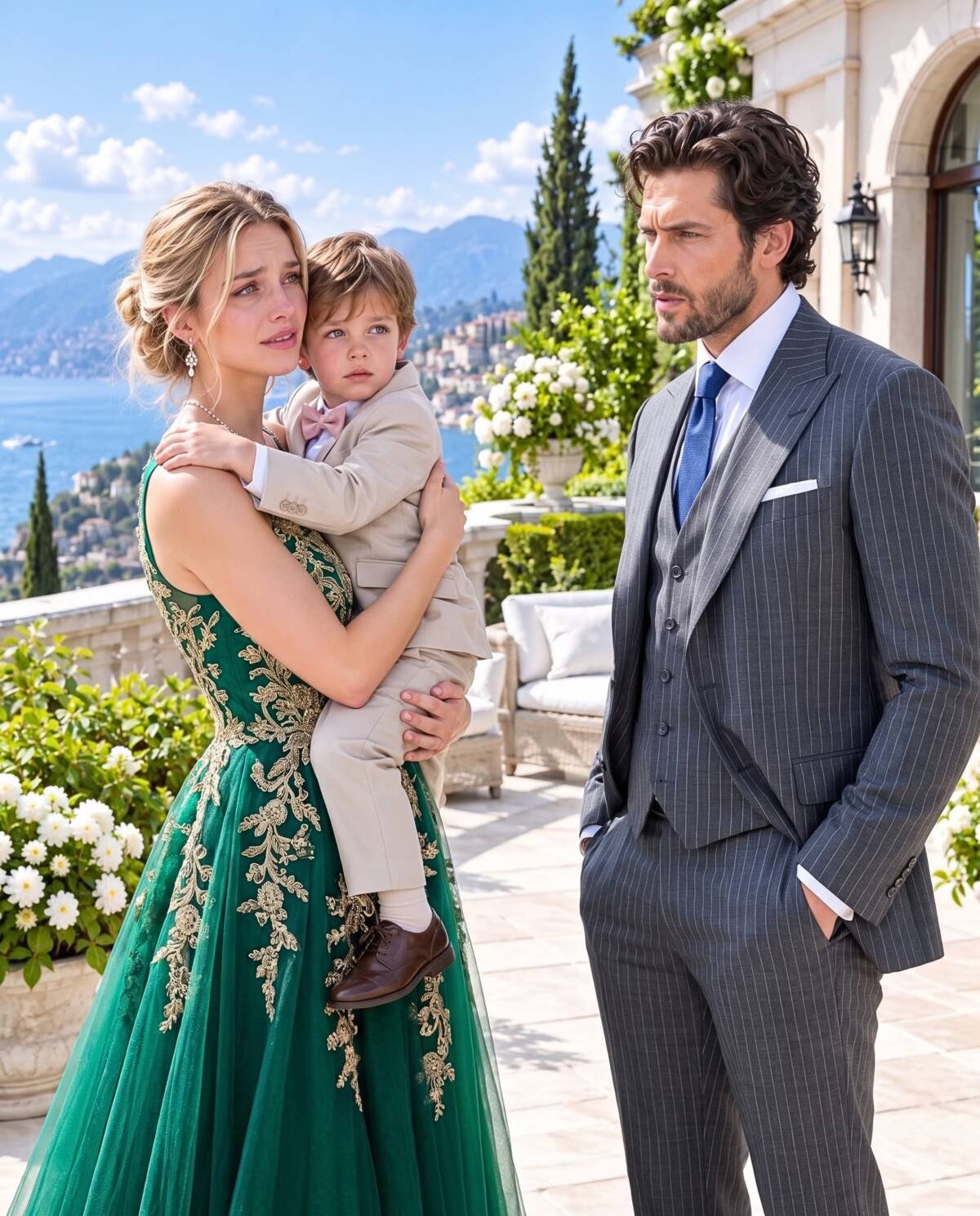
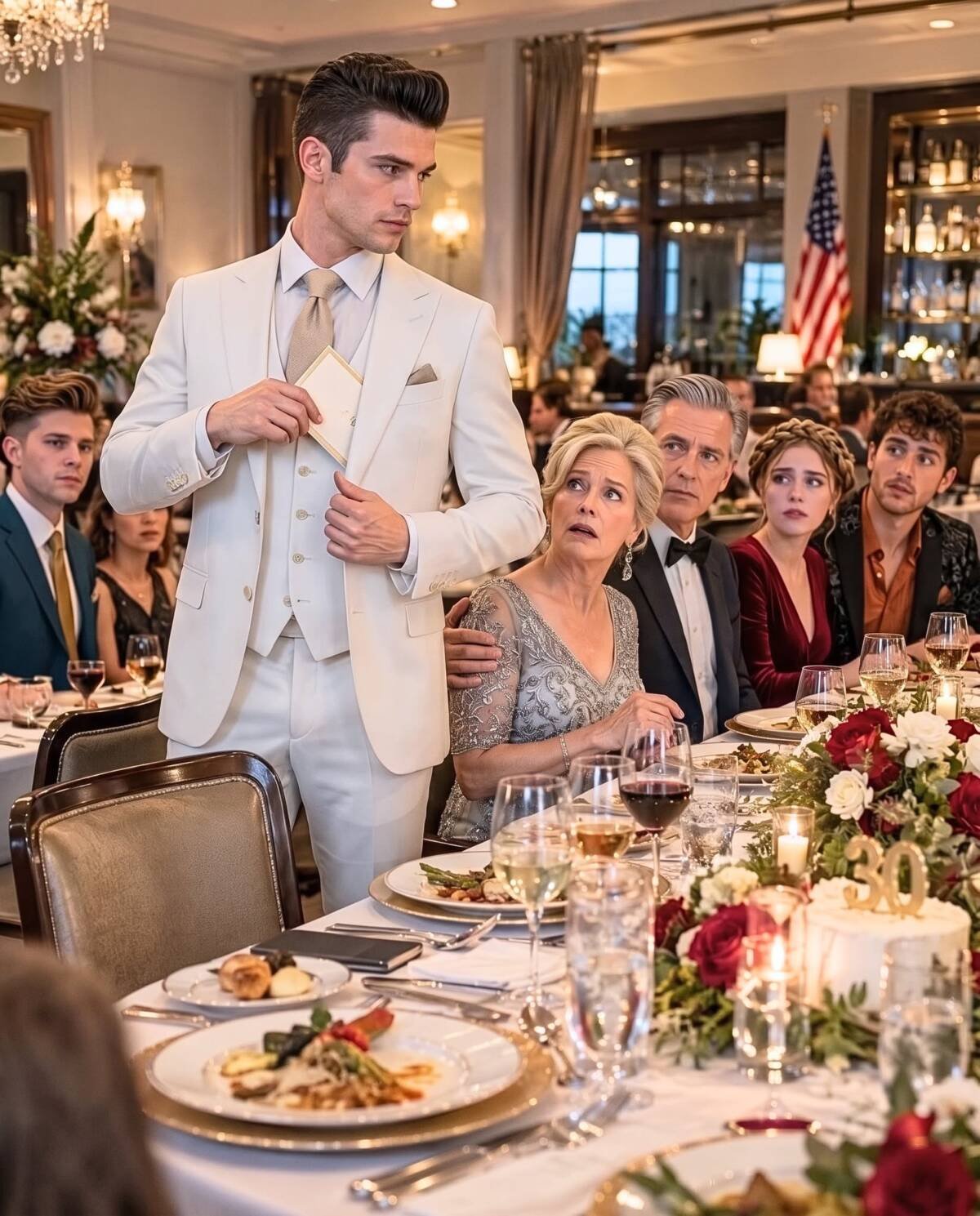
When a grieving little girl was told she no longer belonged at the center of her father’s life, her grandfather faced a choice: remain silent to preserve the wedding-day peace or speak up for the child who had already lost so much. What happened next changed the atmosphere in the reception hall—and eventually helped reshape an entire family.
Introduction: The Little Girl in the Pink Dress
The most painful moments in life do not always arrive with shouting, slammed doors, or dramatic confrontations. Sometimes, they happen in a quiet hallway, behind a partially open door, when a child hears words she is far too young to understand.
That was what happened to my five-year-old granddaughter, Margot, on the day her father remarried.
She had spent two weeks talking about the wedding. She had practiced walking in her shiny black shoes, admired her pink dress in the mirror, and told anyone willing to listen that she would be standing beside her daddy in the family photographs.
She was excited. She was proud. And she believed, without the slightest doubt, that she belonged.
Then her father’s new wife, Claire, said something that shattered that innocent confidence.
“You’re not the most important girl in your dad’s life anymore. Stay out of the family photos.”
When I heard those words, I felt anger rise inside me so quickly that I had to stop and collect myself before moving.
I was sixty-eight years old. I had buried my wife and my daughter, and I had watched my son-in-law struggle to raise a child while carrying the grief of losing his first wife. I knew what it meant to have a family changed by circumstances no one could control.
But I also knew something else.
A five-year-old child should never be made to feel that her place in her own family has disappeared simply because an adult has entered it.
I said nothing to Claire at that moment. Not because I agreed with her, and certainly not because I intended to let the matter pass.
I stayed quiet because my granddaughter needed comfort more than she needed to witness another adult losing control.
What happened at the reception later that evening would make the entire room fall silent.
And it would begin with a promise I made to a little girl in a pink dress.
1. A Granddaughter Who Carried Her Mother’s Memory
My name is Howard, and at sixty-eight, I have learned that grief does not always get smaller with time. Sometimes, you simply learn how to carry it while continuing to live for the people who remain.
My daughter, Phoebe, died three years before the wedding.
Her death left an emptiness in our family that words could never fully describe. She was a daughter, a wife, and a mother. Her absence changed the shape of every holiday, every birthday, and every ordinary day that followed.
But the person who had the hardest time understanding that absence was her daughter, Margot.
Margot had been only two years old when her mother died. She was too young to remember Phoebe clearly in the way adults remember someone they have lost. Much of what she knew about her mother came from photographs, family stories, and the little details I tried to weave into everyday conversation.
I told her about how Phoebe used to sing while cooking dinner. I told her about the way she laughed when she was embarrassed and how she could never pass a shoe store without stopping to look inside.
I wanted Margot to know that her mother had been a real person who had loved her deeply—not merely a face in an old photograph.
Emmett, Margot’s father and my former son-in-law, wanted the same thing.
He had been twenty-eight when Phoebe died. Almost overnight, he became a widower and a single father, forced to navigate his own heartbreak while helping a toddler understand a loss she could not yet comprehend.
It would have been understandable if grief had driven us apart.
Instead, we found a way to work together.
We established routines for Margot, shared responsibilities, and made sure she knew she was surrounded by people who loved her. Emmett did not try to erase Phoebe from his daughter’s life, and I never asked him to remain alone simply because my daughter was gone.
Our priority was Margot.
She deserved a childhood filled with warmth, security, and happy memories. She deserved to grow up knowing that losing her mother had not meant losing the family that remained.
For three years, we did our best to give her that stability.
Then Emmett met Claire.
2. When My Former Son-in-Law Decided to Marry Again
When Emmett first told me he was seeing someone, I listened carefully.
He described Claire as a third-grade teacher who was patient, thoughtful, and good with children. He said she made him laugh and helped him feel that life could offer something beyond grief.
I did not resent him for wanting happiness.
Phoebe had been gone for three years. Emmett was still young, and he deserved the chance to build a future. Finding love again did not mean he had stopped loving my daughter, any more than welcoming a new person into his life meant he had abandoned his responsibilities as a father.
When he eventually announced that he and Claire were getting married, I offered my congratulations sincerely.
I hoped she would become a positive presence in Margot’s life.
I knew becoming a stepparent could be complicated. Claire would be entering a family with a history she had not shared, and there would be memories, traditions, and emotions she might not immediately understand.
I was willing to give her time.
I did not expect her to replace Phoebe. No one could do that.
I did not expect her to become a perfect stepmother overnight. No one could reasonably demand that.
All I hoped was that she would understand one simple truth: Margot was not an obstacle to her new marriage. She was Emmett’s daughter, a little girl who had already experienced a devastating loss and needed the adults around her to make her feel secure.
The wedding day began with every reason to believe that hope might become reality.
Margot was thrilled.
She had spent the morning preparing for the ceremony as if she were one of its most important participants. She inspected her pink dress, tested her black shoes against the pavement, and talked excitedly about the photographs she expected to take with her father.
“These are the best ones,” she told me, tapping one shiny shoe against the ground. “They make a good sound.”
“They certainly do,” I replied.
She took another step, listening carefully.
“I’m going to be in Daddy’s pictures today.”
“You are.”
“Daddy said so.”
“Then Daddy said so.”
She smiled with complete confidence.
That confidence was what made the next moment so difficult to witness.
3. The Words I Overheard Outside the Bridal Suite
The wedding ceremony was scheduled to take place at a church, followed by a reception at a restored barn decorated with warm lights and round tables.
Shortly before the ceremony, I went looking for Margot near the bridal suite.
I expected to find her with the other family members, perhaps showing off her dress or asking when she would get to see her father.
Instead, I heard Claire’s voice coming from behind a partially open door.
Her words stopped me in my tracks.
“You’re not the most important girl in your dad’s life anymore. Stay out of the family photos.”
For a moment, I wondered whether I had misunderstood.
I stood completely still, listening to the silence that followed.
Then the door opened.
Margot stepped out.
Her eyes were wet, and tears were already running down her cheeks. She did not make a scene. She did not shout or demand an explanation.
She simply walked to a nearby window and sat down.
The little girl who had spent the morning celebrating her shoes was now staring at them as though they had somehow become part of the problem.
I felt anger, but I forced myself to approach her calmly.
“Peanut, I’ve got you.”
She leaned against me.
I sat beside her and waited until she was ready to speak.
“Did I do something wrong?” she whispered.
The question hurt more than anything Claire had said.
“No,” I answered immediately. “You did absolutely nothing wrong.”
“She said…”
“I heard her.”
Margot looked at me, searching my face for an explanation that would make sense to a five-year-old.
“And she was wrong,” I told her.
She hesitated.
“But she’s going to be Daddy’s wife. Does that mean she’s more important now?”
I took a breath before answering.
There were many things I wanted to say about Claire in that moment. I wanted to tell Margot that adults could be unkind, that people sometimes acted out of insecurity, and that no one had the right to make her feel unwanted.
But I did not want my granddaughter to leave that conversation believing she had to choose between the people she loved.
So I focused on what she needed to hear.
“Your father loves you in a way he loves nobody else. There is only one Margot, and nobody else can be his daughter.”
She looked down at her shoes again.
“What about the pictures?”
“You are going to be in them.”
“How do you know?”
“Because I’m going to make sure of it.”
She studied my face.
“Trust me?”
I held out my hand.
“Always.”
After a moment, she nodded.
Then she asked if we could go outside because she wanted to hear her shoes against the pavement.
So we went.
Margot walked across the church parking lot, testing the sound of each step. Before long, she began spinning in her pink dress, laughing as the fabric moved around her knees.
Her laughter returned, but I could not forget the tears that had preceded it.
I had made her a promise.
Now I had to make sure I kept it.
4. I Chose Not to Confront the Bride Immediately
I could have walked straight into the bridal suite and confronted Claire.
I could have demanded to know how she had justified speaking to a five-year-old that way. I could have told her exactly what I thought of anyone who believed a child’s place in her father’s life was something to be negotiated.
But I stopped myself.
The wedding was about to begin. Margot was already hurt, and a confrontation in front of her would not undo what had happened.
I also knew that an angry exchange might allow the entire situation to become a dispute between adults, distracting everyone from the person who mattered most.
My goal was not to embarrass Claire.
My goal was to protect Margot.
There is a difference between responding to cruelty and simply trying to make the person responsible feel bad. One can provide a moment of satisfaction. The other can help create a safer future.
I wanted the second.
So I waited.
I watched Margot rejoin the other family members. I made sure she had someone beside her. I reminded her that her father loved her and that she had done nothing wrong.
Then, before the reception began, I found the wedding photographer.
Her name was Sofia.
I explained that Margot was Emmett’s five-year-old daughter, that she had been promised a place in the family photographs, and that something had happened that left her worried she might be excluded.
I did not ask Sofia to take sides.
I simply asked her to make sure the child was included.
“Absolutely,” she assured me. “She’s in every shot.”
Those words gave me some relief.
When the photographs began, I watched from a short distance away.
Margot stood beside her father and held his hand. She smiled for the camera, then became restless in the way five-year-olds do when an adult asks them to stand still for too long.
At one point, she began making silly faces.
Emmett laughed and lifted her into his arms.
Sofia captured the moment.
In the photograph, Margot was laughing against her father’s shoulder, her pink dress slightly rumpled and her face bright with happiness.
It was exactly the kind of picture a family should want to preserve.
Claire stood beside them.
She smiled for the camera, too.
I could not know what she was thinking, and I had no intention of pretending that I could. But I knew that the photographs had been taken, and Margot had not been pushed out of the family moment she had been looking forward to for weeks.
One promise had been kept.
The other still remained.
I had not yet decided precisely what I would say at the reception, but I knew I could not deliver the polite toast I had prepared before the wedding.
Not after what I had heard.
5. The Reception Toast That Changed the Room
The reception took place in a restored barn filled with soft lighting, flowers, and neatly arranged tables.
Music played while guests found their seats. Glasses clinked, conversations overlapped, and people congratulated the newlyweds.
From the outside, it looked like a perfectly ordinary wedding celebration.
I had prepared a toast several weeks earlier.
It was warm, appropriate, and uncontroversial. I planned to talk about second chances, the courage required to begin again, and the hope that Emmett and Claire would build a happy life together.
After what had happened that afternoon, those words no longer felt sufficient.
I did not want to stand in front of a room full of people and pretend that nothing had happened. Doing so would have protected the appearance of a happy day at the expense of a little girl who had been made to question her place in the family.
But I also did not want to turn the reception into an attack on the bride.
So I thought carefully about the message I wanted to deliver.
I wanted Emmett to hear that I respected the father he had become.
I wanted Claire to understand the responsibility she had accepted by marrying a man with a young daughter.
And I wanted every adult in the room to remember that children should never be expected to compete for a place in the hearts of the people who love them.
After the best man, a bridesmaid, and one of Claire’s relatives had delivered their speeches, the emcee announced my name.
I stood and picked up my glass.
Margot was sitting at the children’s table nearby. When she saw me rise, she lifted her cup of apple juice toward me.
I raised my glass in return.
Then I turned toward the guests.
“When my daughter Phoebe died,” I began, “she left behind a husband who loved her and a little girl who still needed her.”
The conversations stopped.
I continued.
“Emmett, I’ve told you this before, but I want to say it again today. The father you have been to Margot over the last three years is something I deeply admire.”....