The bank teller looked at me as though she was afraid to say what she had just seen.
I had walked into that downtown Cleveland branch expecting to withdraw the last $300 my former husband had given me five years earlier.
I thought it might buy groceries.
Maybe help cover a prescription.
At the very least, I thought, it might give me enough breathing room to make it through another difficult week.
Instead, the teller printed a statement, slid it across the counter, and quietly said:
“Ma’am, there is significantly more money in this account than $300.”
I stared at the paper.
Then I saw the number.
$987,000.
For several seconds, I couldn’t breathe.
I was sixty-five years old. I had spent the previous five years believing that my husband had abandoned me at the end of a thirty-seven-year marriage and reduced our entire life together to a bank card with three hundred dollars on it.
I had hated that card.
I had kept it buried in a drawer because throwing it away felt like admitting that I had truly been discarded.
Now, nearly a million dollars was sitting behind it.
And there was one name attached to every monthly deposit.
Patrick Miller.
My former husband.
The man I had spent five years trying to forget.
The man I suddenly needed to find.
I left the bank convinced there had to be some mistake.
There wasn’t.
By the following morning, I was driving across state lines, desperate for answers.
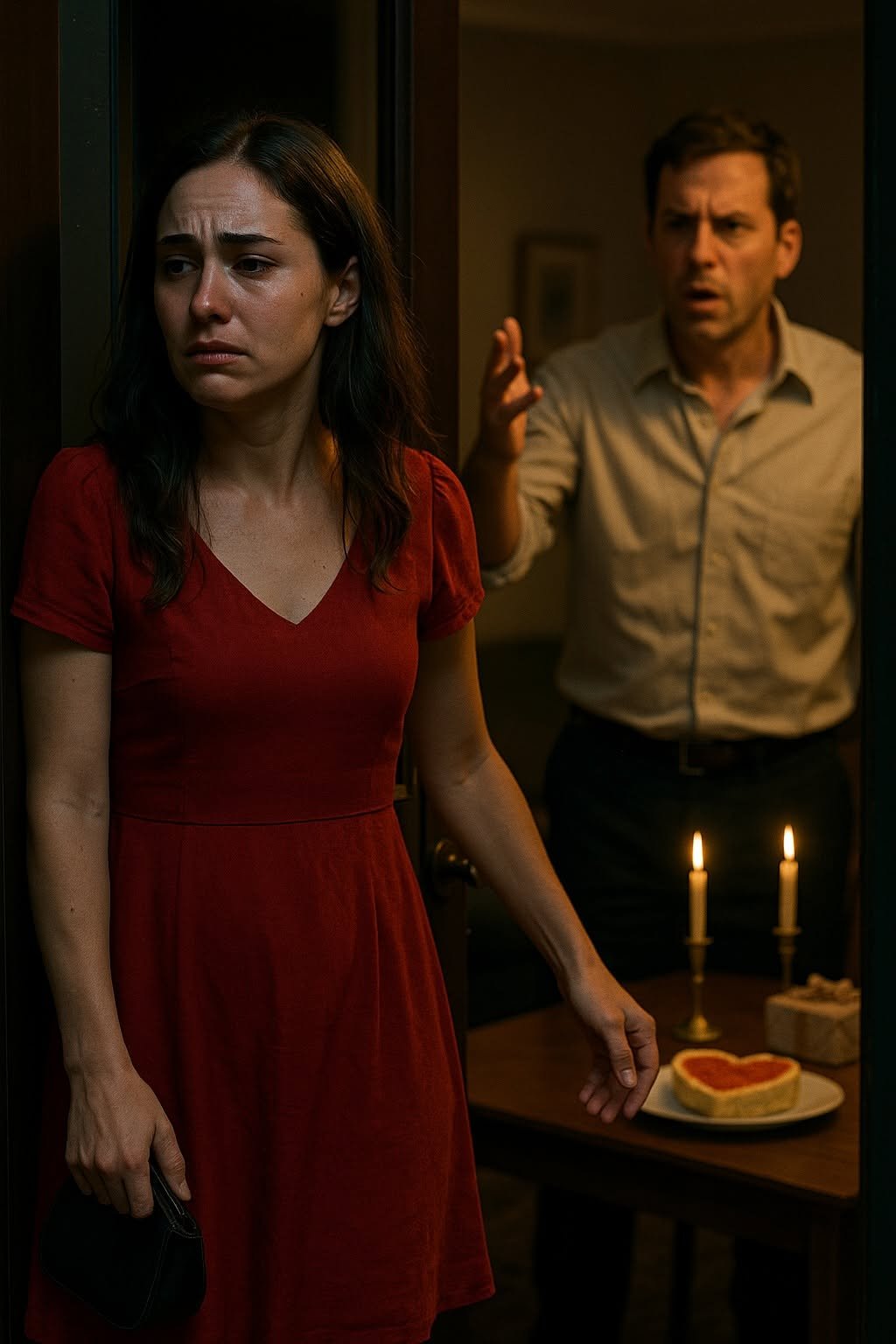
I thought I was going to confront the man who had humiliated me in a Cleveland courthouse five years earlier.
Instead, I arrived at his sister’s house.
She opened the door.
She looked at me.
And before I could ask where Patrick was, tears filled her eyes.
Then she said something that changed everything I thought I knew about my marriage.
“I was wondering when you would come.”
The Morning My Marriage Ended
I was sixty-five when I finally understood that a person can spend decades believing they know someone and still discover, too late, how much of that person’s life was hidden from them.
Patrick and I had been married for thirty-seven years.
Thirty-seven years is long enough for two people to stop counting the little things.
You don’t remember the first thousand dinners.
You don’t photograph every trip to the grocery store.
You don’t take pictures of every quiet morning when one person makes coffee while the other reads the newspaper.
A marriage becomes a collection of ordinary moments.
A coat hanging beside yours.
A familiar voice calling from another room.
Two toothbrushes in the same cup.
Arguments about money.
Arguments about the thermostat.
Bills paid on Fridays.
Birthdays celebrated with increasingly practical gifts.
Plans for retirement.
Conversations about what you might do when work was finally over.
Patrick and I had all of that.
We had built a life that wasn’t glamorous, but it was ours.
At least, I thought it was.
Then came the morning when everything ended.
The divorce itself was surprisingly quick.
There were no dramatic courtroom scenes. No screaming matches. No movie-style accusations.
Just paperwork.
Signatures.
Questions from attorneys.
A judge who had probably watched hundreds of marriages dissolve in exactly the same fluorescent-lit room.
The courthouse in Cleveland was gray that morning.
Outside, the sky looked as though it had forgotten how to become blue.
I remember sitting beside my attorney and looking at Patrick across the room.
He seemed calm.
Almost too calm.
His expression was the same one he used when discussing utility bills or insurance premiums.
There was no anger on his face.
No visible sadness.
No hesitation.
That somehow hurt more.
When the final papers were signed, Patrick reached inside his jacket.
He pulled out a plain bank card.
He walked over to me and placed it in my hand.
I looked at him.
“What is this?”
His voice was quiet.
“This should cover you for a little while.”
I turned the card over.
There was nothing remarkable about it.
He continued:
“There are three hundred dollars on it.”
Three hundred dollars.
After thirty-seven years.
I remember staring at him, trying to understand whether he was serious.
Maybe he was angry.
Maybe he was trying to insult me.
Maybe this was his final punishment.
Thirty-seven years of marriage.
And my future was apparently worth $300.
I didn’t argue.
I didn’t cry.
Not there.
I simply closed my fingers around the card.
Patrick walked away.
He didn’t turn around.
I watched him disappear through the courthouse doors.
And somehow, the sound of his footsteps stayed with me longer than anything the judge had said.
Five Years of Surviving, Not Living
After the divorce, my life became smaller.
Much smaller.
I rented a damp room behind an old grocery store on the edge of Cleveland.
It wasn’t the kind of place anyone dreamed of living in.
The walls smelled faintly of mold.
The radiator clanged throughout the night.
The window rattled when the wind picked up.
There were mornings when I woke up already exhausted.
But I had nowhere else to go.
So I stayed.
I worked whenever I could.
I cleaned offices before sunrise.
I watched parking lots during events.
I collected bottles and cans for whatever small amount they brought.
I did not tell people my story.
I learned quickly that people don’t always want to hear about someone else’s humiliation.
And I was embarrassed.
Not because I had been divorced.
Because after thirty-seven years of marriage, I had somehow ended up struggling to afford food.
There were weeks when I ate carefully because I knew exactly how much money was left.
There were evenings when I went to bed early because being asleep meant I didn’t have to think about dinner.
I became good at pretending.
When my children called, I told them I was fine.
When they visited, I smiled.
They sometimes brought groceries or slipped money into my purse.
I always tried to give it back.
They had their own bills.
Their own families.
Their own problems.
I refused to become another responsibility.
So I hid things.
I hid the dizziness.
I hid the weakness.
I hid how difficult it had become to climb stairs.
And I never told them how often I woke up during the night with hunger twisting in my stomach.
Through all of it, the bank card remained in a drawer.
The $300 card.
I never used it.
Partly because I didn’t trust Patrick.
Partly because I didn’t want anything from him.
And partly because using it felt like accepting the message I thought he had given me in that courthouse.
You are on your own now.
So the card stayed untouched.
Year after year.
The Day My Body Finally Gave Out
Five years after the divorce, I collapsed outside my apartment.
There was no warning.
One moment I was walking toward my door.
The next, the sidewalk seemed to tilt beneath me.
I remember reaching for the railing.
I missed it.
Then everything went dark.
When I opened my eyes, I was in a hospital.
Fluorescent lights buzzed overhead.
A young doctor stood near the bed, reading from a chart.
He looked serious.
But not cold.
He pulled a chair closer.
“Do you know why you fainted?”
I shook my head.
He paused.
“You’re severely malnourished.”
The words embarrassed me more than I expected.
I looked away.
He continued.
“Your body is struggling. You need treatment and observation. This isn’t something you can simply ignore.”
For years, I had convinced myself that I could survive anything.
That morning, I realized survival had limits.
For the first time, I thought about the card.
The one Patrick had given me.
Three hundred dollars.
It wasn’t much.
But it was something.
Maybe I could use it to buy food.
Maybe pay for medication.
Maybe cover the small costs that had become frighteningly large.
The next morning, I went to the bank.
“Ma’am, This Isn’t a $300 Account”
The branch was quiet.
I stood in line, holding the card between my fingers.
My hands were shaking.
When it was my turn, I approached the teller.
She looked young enough to be my granddaughter.
I handed her the card.
“I’d like to withdraw the full balance.”
She smiled politely.
“Of course.”
She inserted the card and began typing.
At first, nothing seemed unusual.
Then she stopped.
She typed again.
Her expression changed.
It wasn’t dramatic.
She didn’t gasp.
She didn’t call for a manager.
But I saw something in her face.
Confusion.
Then surprise.
Then something close to disbelief.
She looked at me.
“Ma’am?”
“Yes?”
“There seems to be an issue.”
My stomach tightened.
“What kind of issue?”
She looked at the screen again.
Then back at me.....