The morning my seven-year-old son went into surgery, I expected to be surrounded by family.
Instead, I stood alone.
Families filled the pediatric hospital waiting room that morning. Some brought coffee. Others carried overnight bags, blankets, and small gifts for children who were about to undergo procedures. Parents held hands with grandparents, siblings hugged each other, and relatives quietly reassured one another that everything would be okay.
I kept looking toward the entrance.
I had given my mother and younger sister every detail weeks earlier. They knew the hospital. They knew the surgeon. They knew what time Caleb was scheduled to be taken into the operating room.
They knew how serious his condition was.
Still, nobody came.
Then, three days after my son’s open-heart surgery, while Caleb was still recovering under constant medical supervision, my phone finally lit up with a message from my mother.
It wasn’t asking how Caleb was doing.
It wasn’t asking whether the surgery had been successful.
It wasn’t even an apology for missing it.
It was a demand.
“I need $5,000 for Vanessa’s wedding dress. Send it today.”
I stared at those words for several seconds.
Then I sent her fifty cents.
The payment memo contained three words:
“Buy a veil.”
What happened the next morning changed the way I saw my family forever.
The Morning My Son Went Into Surgery
Caleb had been preparing for heart surgery for weeks.
At seven years old, he understood enough to know that something serious was happening, but he was still a child. He asked questions that broke my heart because they were so innocent.
Would the doctors be there when he woke up?
Would it hurt?
Could he still play soccer afterward?
Would Grandma come?
That last question was the hardest.
My mother had always been part of Caleb’s life. At least, that’s what I had told myself. She had attended birthdays, holidays, and family gatherings, and I had spent years believing that our relationship meant something deeper than the financial arrangements that increasingly defined it.
So when Caleb asked whether Grandma would be at the hospital, I told him yes.
I had no reason to believe she wouldn’t come.
I had personally sent my mother the hospital address. I gave her the date and time. I explained where she could park and which floor the pediatric cardiac unit was on.
I also told my sister Vanessa.
She knew everything.
Yet as the morning progressed, the waiting area remained empty.
I checked my phone several times.
No missed calls.
No messages.
Nothing.
Eventually, a nurse came to tell me that the surgical team was ready.
Caleb squeezed my hand.
“Is Grandma lost?” he asked.
I forced a smile.
“She’s probably on her way.”
I knew even as I said it that I was lying.
But I couldn’t let my son walk into major surgery believing that nobody had come because nobody cared.
The nurses wheeled him toward the operating room.
Just before the doors closed, Caleb looked back at me.
“Tell Aunt Vanessa I wasn’t scared,” he whispered.
I nodded.
“I will.”
Then the doors closed.
And I was alone.
Six Hours of Waiting
The next six hours felt endless.
I sat in the waiting room surrounded by strangers who were experiencing versions of the same fear.
Some families talked quietly.
Some prayed.
Some walked back and forth.
Some stared at their phones.
I did all of those things at different moments.
But I did one thing more than anything else:
I waited for my mother to arrive.
She never did.
Neither did Vanessa.
I kept telling myself there had to be an explanation.
Maybe something had happened.
Maybe there was an emergency.
Maybe their phones weren’t working.
Maybe they were stuck somewhere.
But as the hours passed, those explanations became harder to believe.
My son was undergoing open-heart surgery.
If there were ever a moment when family should show up, this was it.
Eventually, the surgeon came out.
The surgery had been successful.
Caleb had made it through.
I thanked the doctor, then walked away because my legs suddenly felt weak.
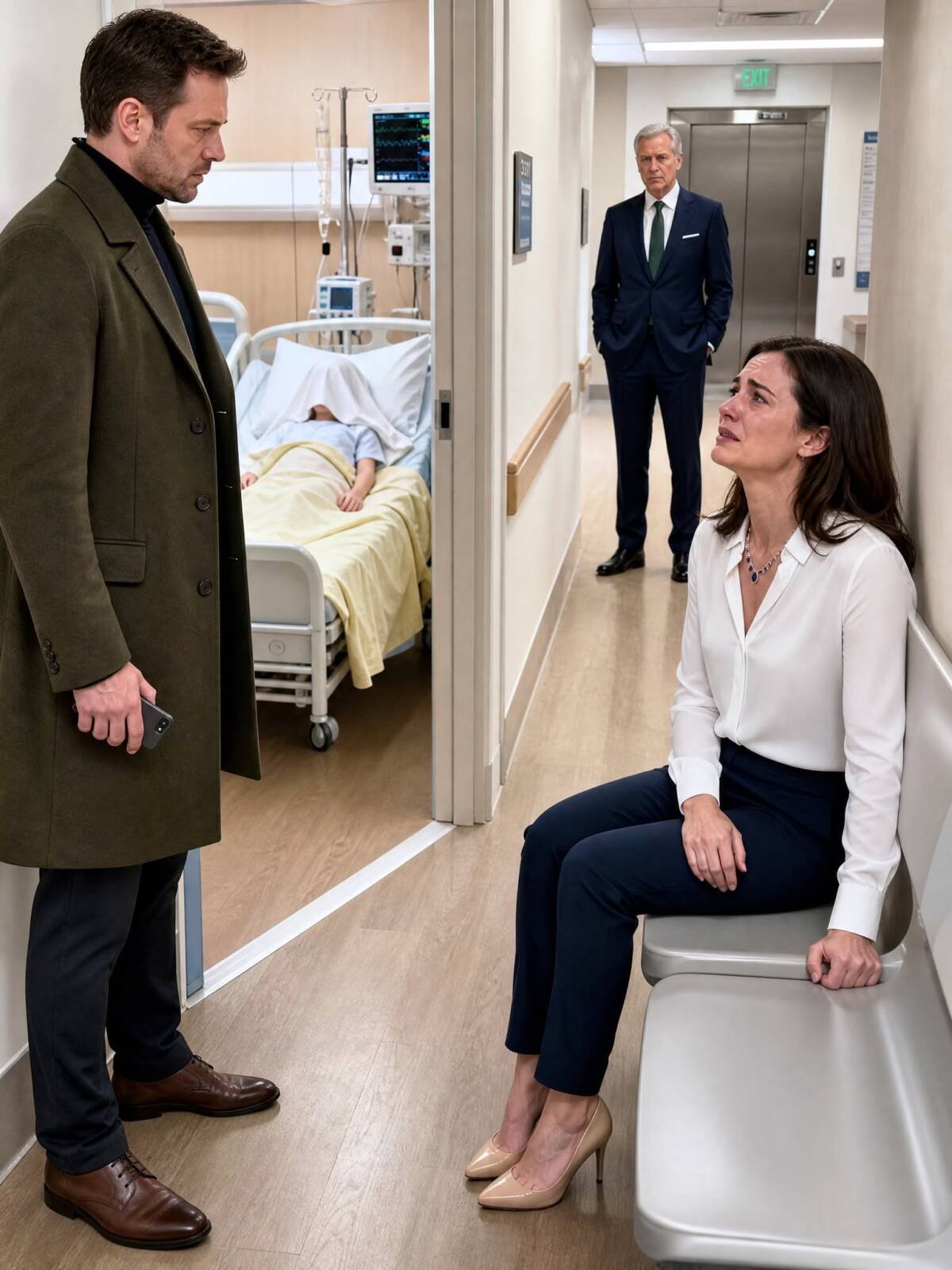
I went into the hospital bathroom, closed the door, and finally allowed myself to cry.
I cried because my son was alive.
I cried because I was terrified of what the next few days would bring.
And I cried because the people I had expected to stand beside me were nowhere to be found.
When I returned to Caleb’s room, I wiped my face and smiled.
He was still heavily sedated.
Machines surrounded him.
Tubes and monitors tracked every heartbeat and breath.
I sat beside his bed and held his hand.
For the next several days, the hospital became my entire world.
I barely left his side.
Then Came the Message
Three days after the surgery, Caleb was still recovering.
His condition was improving, but he remained under close observation.
I was exhausted.
I had barely slept.
My clothes were wrinkled, my hair was a mess, and I had forgotten what it felt like to have a normal day.
Then my phone buzzed.
I expected it to be a message from the hospital.
Instead, it was my mother.
I opened it.
“Need $5,000 for Vanessa’s wedding dress. Send today.”
That was it.
No “How is Caleb?”
No “How did the surgery go?”
No “I’m sorry I wasn’t there.”
Nothing about my son.
Nothing about me.
Just money.
I read the message again.
Then again.
For years, I had financially supported my mother and sister.
They had access to one of my accounts.
They had used my credit cards.
I had covered overdue bills.
I had paid expenses they promised to reimburse.
I had helped with emergencies.
And every time, I told myself the same thing:
They’re family.
Family helps family.
But sitting beside my son after heart surgery, something inside me finally changed.
I realized that what I had called family loyalty had gradually become an expectation.
They didn’t ask whether I could help.
They expected me to help.
And when I didn’t, they treated it as betrayal.
I looked at my mother’s message again.
Then I sent her fifty cents.
In the payment memo, I wrote:
“Buy a veil.”
After that, I froze every account they could access.
I revoked authorized users.
I canceled cards.
I changed passwords.
I updated security questions.
I contacted the bank.
I shut down every financial connection I could find.
For the first time in years, I stopped leaving doors open for people who had repeatedly walked through them without asking.
I thought that would be the end of it.
I was wrong.....