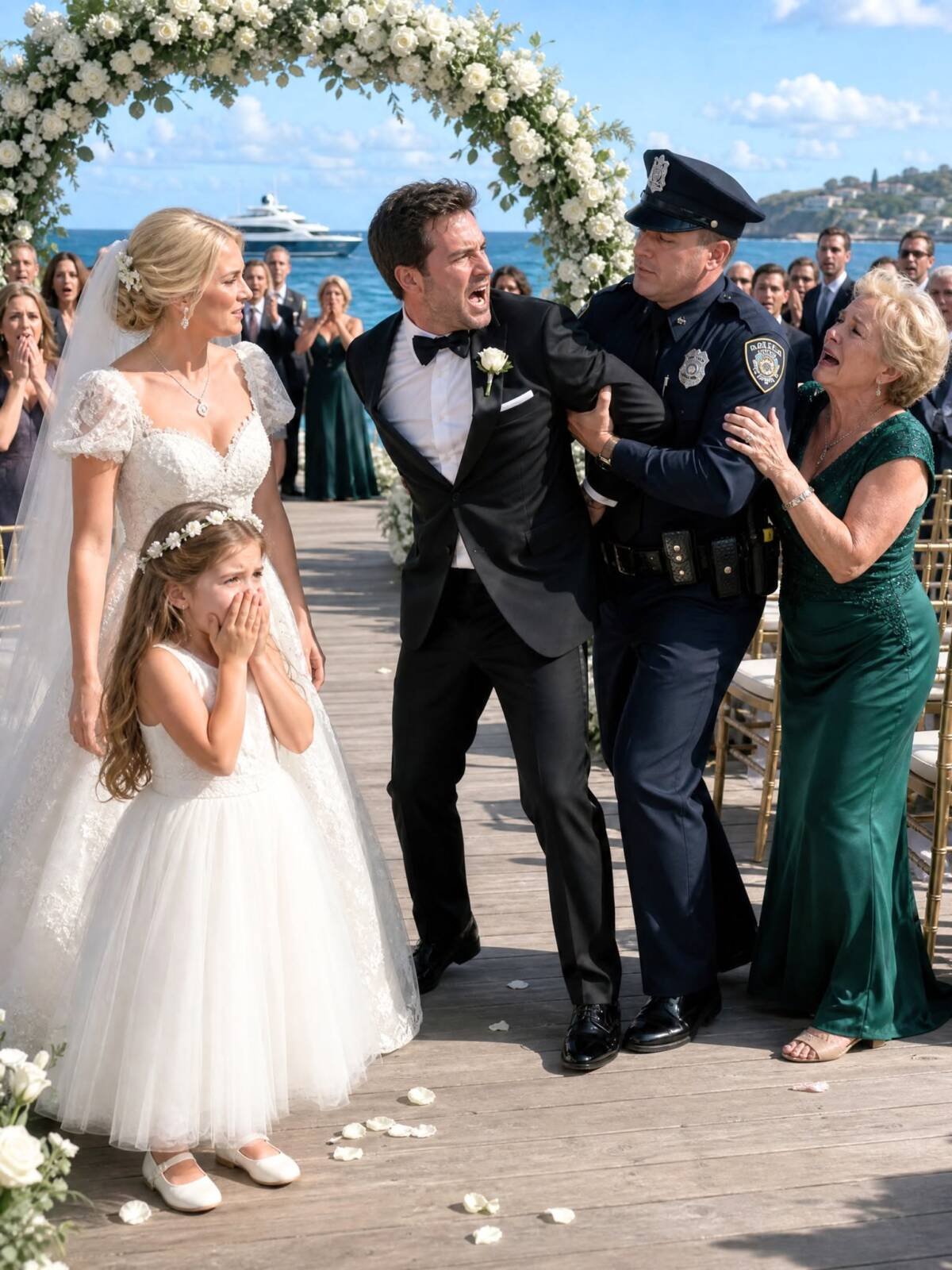
When Nora Whitaker was eight years old, her mother locked her inside a bedroom so the family could take Christmas photographs without her.
It was not an accident.
It was not a misunderstanding.
Nora had been deliberately removed from the picture because her mother considered the birthmark on her face an embarrassment.
While her sister Vivian stood beside their parents in a carefully arranged white dress, Nora was sent away. Later, she overheard her mother say something that would stay with her for decades:
“I wish I only had one child.”
Nora never forgot those words.
For years, she carried the quiet humiliation of being treated as though her existence damaged the family’s image. She learned early that affection in her mother’s house came with conditions—and that she was expected to remain invisible.
But Nora eventually built a life far beyond the walls of that house.
She joined the Army.
She earned the trust of the people who served beside her.
She rose through the ranks.
And twenty-two years after being hidden away from a family photograph, Nora returned to the Virginia home where so many painful memories had begun.
This time, she was not alone.
Thirty-four soldiers stood behind her.
And her mother had no idea why Nora had brought them there.
The Child Left Out
Nora Whitaker remembered the Christmas portrait more clearly than she remembered many of the presents she received that year.
She was eight.
Her sister, Vivian, was the daughter their mother wanted everyone to see.
Vivian’s hair was carefully curled. She wore a new white dress. Her parents positioned her perfectly between them while relatives and family friends gathered around.
Nora, meanwhile, had been sent away.
Her mother, Celeste, told her she would be staying with Aunt Mara for several weeks.
Nora did not understand why.
She only knew that adults were preparing for photographs, that Vivian was being dressed up, and that she had been given a suitcase.
She had not even packed it herself.
At Aunt Mara’s house, Nora tried to convince herself that there had been a reasonable explanation.
Children often do that.
They protect their parents in their own minds because the alternative is too painful.
Maybe her mother was busy.
Maybe there was not enough room.
Maybe the adults had simply made a mistake.
But when Nora returned home seven weeks later, there was no mistake to explain.
The family portrait was already hanging above the fireplace.
Celeste was smiling.
Grant, Nora’s stepfather, was smiling.
Vivian was smiling.
There was no sign of Nora.
No empty chair.
No space where she had been.
No indication that another daughter existed.
It was as if someone had carefully edited her out of the family’s history.
Nora stood in front of that photograph for a long time.
She did not cry.
She simply stared.
Then, one winter morning, she heard something that hurt even more.
She was standing nearby, holding a bowl of cereal, when Celeste spoke to Aunt Mara.
“I wish I only had one child.”
Nora heard every word.
She was only eight years old, but she understood enough.
Her mother wished Vivian were her only daughter.
And Nora understood what that meant.
Growing Up Invisible
The years that followed did not bring the apology Nora hoped for.
Instead, the pattern continued.
Vivian was celebrated.
Nora was corrected.
Vivian’s achievements were displayed.
Nora’s accomplishments were often minimized.
When family photographs were taken, Nora learned not to expect a place in the center.
When guests arrived, she learned to make herself smaller.
And when people asked about the family, she learned to wait and see whether her mother would mention her.
The birthmark on her face became a symbol of everything her mother believed was wrong with her.
But eventually, Nora stopped trying to win her mother’s approval.
She found another source of belonging.
The Army.
There, people cared less about appearances and more about reliability.
They cared whether you showed up.
Whether you could remain calm under pressure.
Whether you protected the people beside you.
Whether others could trust you when circumstances became difficult.
Nora discovered that she was good at those things.
Very good.
She worked.
She trained.
She endured difficult assignments and demanding responsibilities.
And gradually, the little girl who had once been locked away so her family could take a photograph became a respected military officer.
People began calling her Lieutenant Whitaker.
Thirty-four soldiers eventually served under her leadership.
They trusted her judgment.
They followed her instructions.
And, perhaps most importantly, they respected the person she had become.
Her mother knew almost none of this.
Celeste still remembered the child she had hidden.
She had no understanding of the woman that child had become.
Twenty-Two Years Later
When Nora returned to her grandmother Eleanor’s Virginia home, she wore a sharply pressed Army dress uniform.
She carried an olive-colored metal box.
She had come because Eleanor was gone.
The grandmother who had remained one of the few people who consistently treated Nora with warmth had died, leaving behind an estate, years of correspondence, family photographs, and a complicated history.
The house smelled exactly as Nora remembered.
Old carpet.
Cinnamon candles.
Burned coffee.
Aging heat.
Some memories disappear with time.
Others remain embedded in ordinary things.
Nora walked through the house and noticed that the walls were filled with photographs of Vivian.
There were photographs from birthdays, holidays, graduations and family vacations.
Then she saw her own photograph.
It was from her commissioning ceremony.
It had been placed behind a ceramic angel, covered in dust.
Nora quietly removed it.
She wiped the frame.
Then she placed it on the table beside the olive metal box.
For once, she would not allow herself to disappear from the frame.
The Estate Meeting
Vivian arrived first.
She looked nervous.
Celeste came with Grant.
Even after all those years, Celeste entered the house as though she still owned every room.
Aunt Mara arrived last.
She deliberately chose a seat away from Celeste.
Nora noticed.
So did everyone else.
Attorney Harlan opened the meeting by explaining that Eleanor’s will had become the subject of a dispute.
Celeste was claiming that Nora had abandoned her grandmother.
Grant presented the accusation with confidence.
According to him, Nora had chosen the military over her family.
She had supposedly failed to visit Eleanor.
She had ignored her illness.
And now, they suggested, she had returned because she wanted the property.
Grant even criticized Nora’s uniform and medals.
He described them as evidence of vanity rather than service.
Nora listened without interrupting.
She had learned long ago that anger did not make an argument stronger.....