My Family Humiliated Me at My Wedding—Then My Groom Stood Up and Exposed Everything
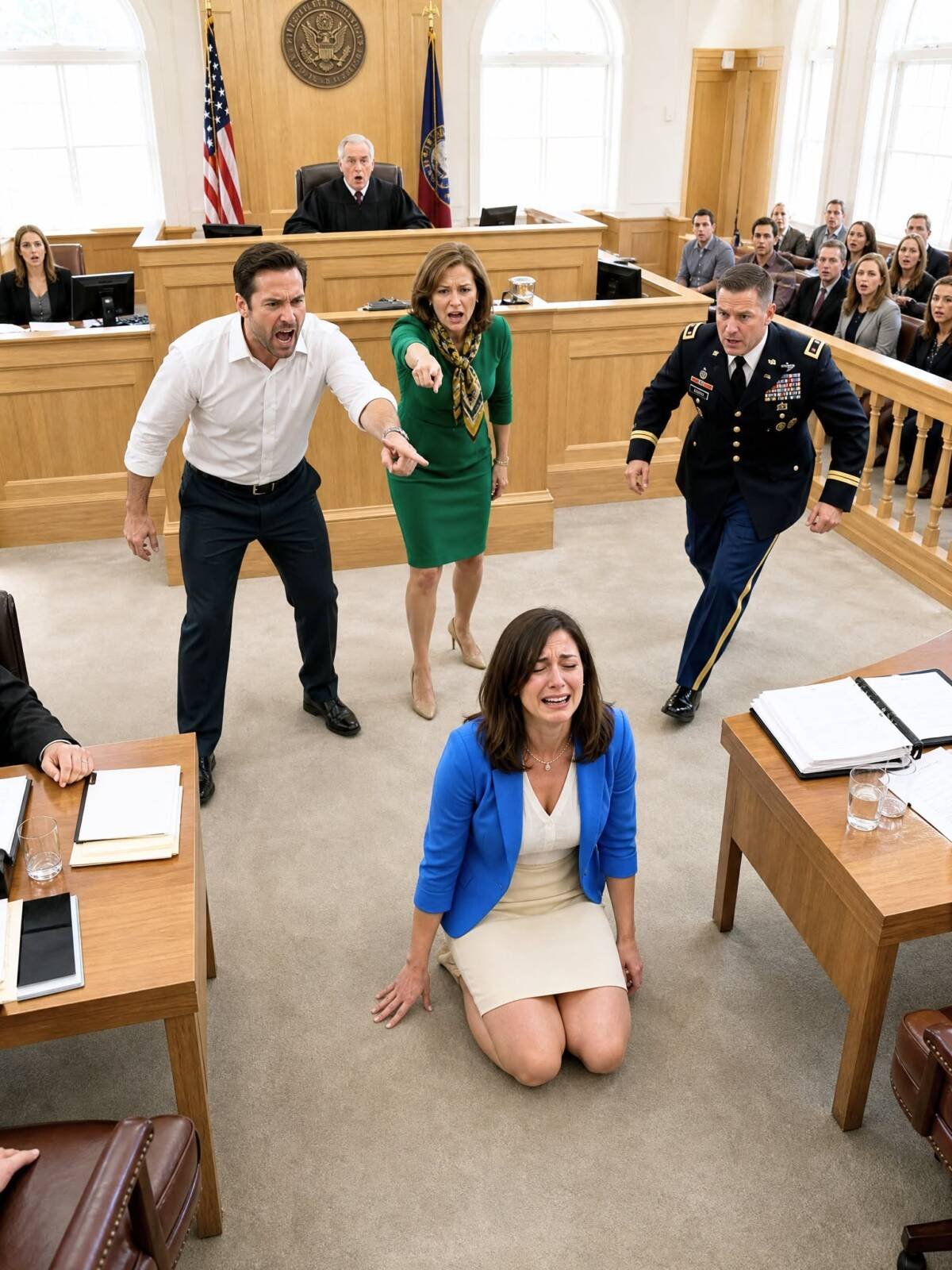
The laughter started before I had even finished saying my vows.
At first, it was only a few quiet chuckles from the front row.
Then my father raised his champagne glass.
His voice carried across the ballroom, loud enough for nearly two hundred guests to hear.
“Of course only a cripple would marry a failure like her.”
For a moment, nobody moved.
My mother covered her mouth with perfectly manicured fingers, pretending to hide a smile.
My younger sister, Vanessa, did not even bother pretending.
She laughed openly.
I stood beneath an arch covered in white roses, holding my bouquet so tightly that my fingers had begun to ache. My face burned as dozens of guests looked away, suddenly fascinated by their plates, their glasses, or the flowers on their tables.
Nobody knew what to say.
Nobody except my groom.
Adrian sat beside me in his wheelchair, completely calm.
He didn’t argue with my father.
He didn’t defend himself.
He didn’t even look offended.
One hand rested casually on the wheel lock as though nothing unusual had happened.
And somehow, that made my father even more confident.
He thought Adrian was powerless.
He thought I was powerless.
He thought the entire room belonged to him.
What he didn’t know was that by the end of that afternoon, Mercer Manufacturing would no longer belong to him either.
And the man he had just mocked in front of nearly two hundred people was about to reveal exactly who he was.
The Daughter Who Was Never Good Enough
Growing up, I learned very early that there were two daughters in my family.
There was Vanessa.
And then there was me.
Vanessa was the daughter my parents proudly introduced to everyone.
I was the daughter they expected to be useful.
Vanessa attended private schools.
She wore designer clothes.
She traveled internationally.
She knew exactly how to enter a room and make everyone look at her.
By the time she joined Mercer Manufacturing, my father’s company, everyone assumed she was destined to inherit it.
She became vice president before she was thirty.
My parents celebrated every promotion as if Vanessa had personally built the company from the ground up.
Whenever guests came to our home, my mother would tell them stories about Vanessa’s “business instincts.”
My father would proudly explain how his daughter was “the future of Mercer.”
Nobody ever asked what I did.
And if they did, my parents usually answered for me.
“Claire works with numbers.”
“She handles reports.”
“She helps with operations.”
They made it sound ordinary.
Almost insignificant.
The truth was very different.
I had spent years studying supply chains, forecasting models, inventory patterns, logistics costs, and financial risk.
I wasn’t the loudest person in the room.
I didn’t need to be.
I preferred solving problems.
That was how I eventually developed a forecasting platform that changed Mercer Manufacturing.
The software analyzed purchasing patterns, inventory levels, supplier delays, transportation costs, and market fluctuations.
It allowed the company to predict problems before they happened.
Within months, the platform was saving Mercer millions of dollars.
Orders became more efficient.
Inventory waste dropped.
Delivery schedules improved.
Profit margins increased.
But my father never gave me credit.
Instead, he told everyone Vanessa had “overseen the development.”
I tried to correct him once.
He pulled me aside after a company meeting.
“You’re making yourself look jealous,” he warned.
“I created the platform,” I said.
“You helped with it.”
“I wrote the original architecture.”
He stared at me.
Then he smiled.
“You’re an analyst, Claire. Stay in your lane.”
That sentence stayed with me.
I wish I could say that was the worst thing he ever did.
It wasn’t.
The Numbers My Father Didn’t Want Anyone to See
Three years before my wedding, I noticed something strange in Mercer’s financial records.
Certain purchase orders didn’t make sense.
Inventory numbers were being adjusted after the fact.
Several suppliers appeared to be receiving payments that didn’t match their contracts.
At first, I assumed it was an accounting error.
Then I noticed something more serious.
Mercer had been taking on larger loans while reporting inventory levels that did not appear to exist.
I spent weeks comparing internal records.
The deeper I looked, the more worried I became.
Someone was manipulating the company’s financial information.
Eventually, I brought the evidence to my father.
I expected him to listen.
Instead, he became furious.
“You don’t understand what you’re looking at.”
“I understand enough to know the company is exposed.”
“Don’t tell me how to run my business.”
“This isn’t about running the business. It’s about the loans.”
He snatched the report from my hands.
“You’re an analyst,” he repeated. “Stay in your lane.”
I refused.
“If the banks discover this, the company could collapse.”
He stared at me for several seconds.
Then he slapped the report out of my hands.
“Get out.”
I didn’t move.
He pointed toward the door.
“I said get out.”
Within weeks, Vanessa accused me of violating company procedures.
Then came a formal complaint.
Then a disciplinary hearing.
Then my dismissal.
The official reason was insubordination.
The unofficial reason was much simpler.
I knew too much.
My parents told family friends that I had become unstable after losing my job.
Vanessa told people I couldn’t handle responsibility.
Some even believed I had suffered a breakdown.
I lost my job.
I lost my reputation.
And, for a while, I lost my confidence.
But I kept one thing.
My records.
I had learned something important from my father.
Numbers don’t get embarrassed.
They don’t lie to protect a family.
And they don’t forget.
The Man I Met in a Wheelchair
Six months after leaving Mercer, I attended a charity event supporting people recovering from serious injuries.
I wasn’t looking for romance.
I certainly wasn’t looking for a husband.
I was simply trying to rebuild my life.
That’s where I met Adrian.
He was sitting near the edge of the room in a wheelchair, quietly watching the crowd.
He wasn’t trying to attract attention.
He wasn’t asking anyone for sympathy.
We started talking after I accidentally knocked a glass of water onto the table beside him.
He laughed.
I apologized.
Then we started talking.
For nearly an hour.
Eventually, the conversation moved from ordinary subjects to business.
I mentioned logistics.
He asked questions.
I mentioned supply-chain forecasting.
He asked more questions.
I explained some of the problems I had discovered at Mercer.
Instead of telling me I was overreacting, he listened.
Actually listened.
That was new to me.
When I talked about numbers, Adrian didn’t become bored.
When I talked about what had happened with my family, he didn’t tell me to forgive them.
And when I told him I was afraid I would never recover professionally, he didn’t give me some meaningless speech about believing in myself.
He simply said:
“People who steal your work don’t get to decide your worth.”
I remembered those words.
Over the following months, our friendship grew into something deeper.
Adrian told me about his accident.
He had been seriously injured in a climbing accident and was undergoing rehabilitation.
Some days he could stand.
Other days he couldn’t.
He never made his condition his identity.
He never expected people to feel sorry for him.
And he never apologized for needing a wheelchair.
Then something happened that neither of us expected.
He noticed the same things about Mercer that I had noticed.
He asked why the company’s financial performance improved dramatically while I was working there.
He asked why major innovations stopped after I left.
He asked why Vanessa suddenly became the public face of projects I had designed.
Most importantly, he asked me a question nobody else had asked.
“What if your father didn’t fire you because you failed?”
I looked at him.
“What do you mean?”
“What if he fired you because you were dangerous to him?”
For the first time, I considered the possibility.
The Proposal That Changed Everything
When Adrian proposed, I was terrified.
Not because I didn’t love him.
Because I knew exactly what my family would think.
They would see a man in a wheelchair and immediately assume he was vulnerable.
They would see his kindness as weakness.
They would assume I had finally found someone beneath their expectations.
I was right.
The moment my parents learned about Adrian, their attitude changed.
Suddenly, they were welcoming.
My father invited him to private dinners.
My mother asked questions about his financial situation.
Vanessa began flirting with him.
It was almost embarrassing to watch.
My father eventually told me that Adrian could be “very useful” to the family.
Apparently, they believed he had money.
They also believed they could manipulate him.
Neither assumption was entirely wrong.
Adrian did have money.....