By the time I arrived at the emergency room, every breath sent pain through my left side.
I could barely sit upright in the wheelchair. The waiting area smelled of disinfectant, stale coffee, and rain that patients had tracked in from the parking lot. My clothes were torn, my ribs felt as though they were on fire, and every time I tried to move, another wave of pain shot through my body.
But the physical pain wasn’t the only thing I was struggling with.
My husband, Graham, stood beside me with a look of panic on his face.
Not because I had been seriously injured.
Because he was afraid I was going to tell the truth.
“He didn’t mean for any of this to happen, Nora,” he whispered. “Please. Let’s handle this within the family.”
I stared at him in disbelief.
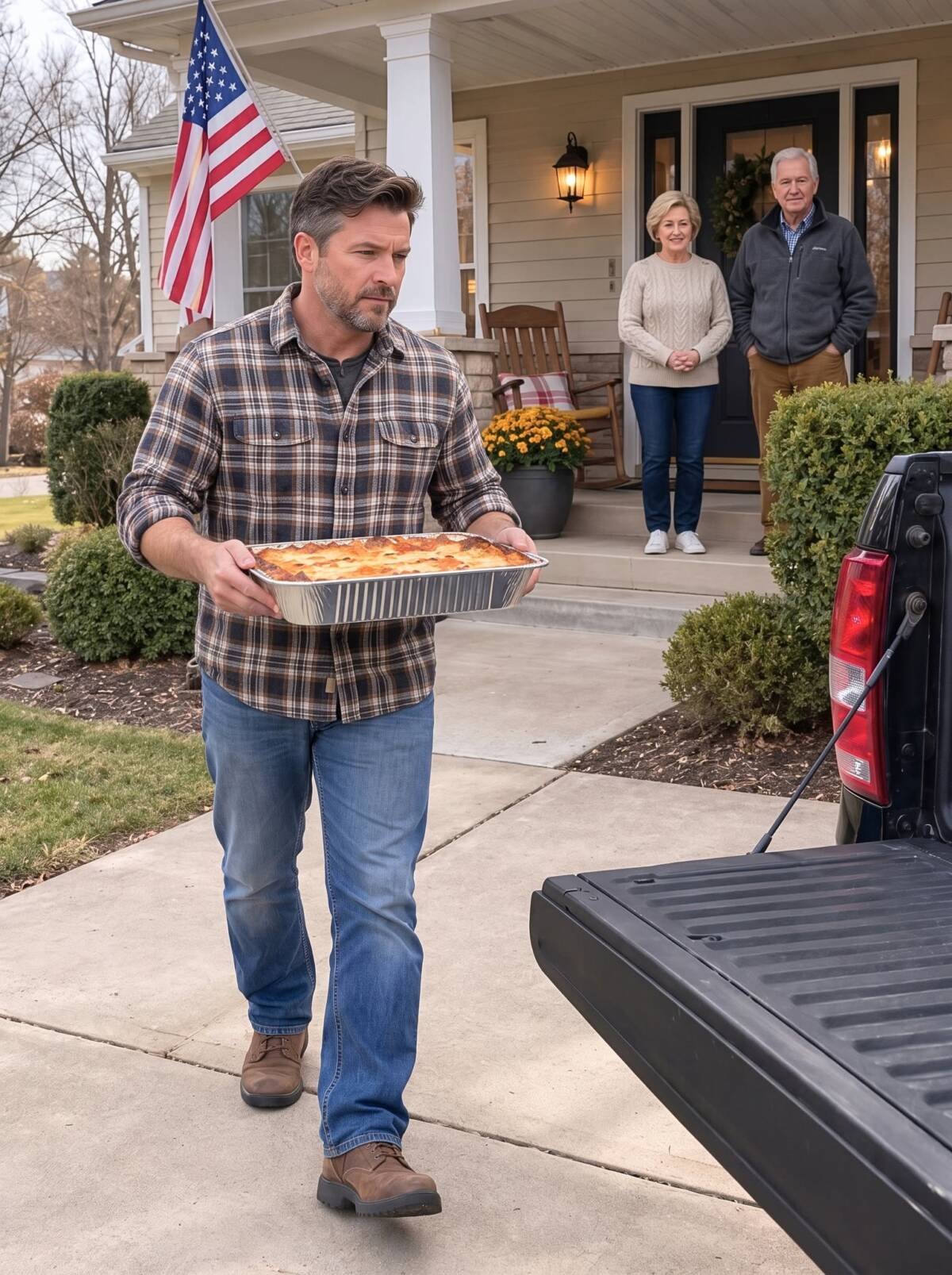
Only a few hours earlier, I had been standing in his mother’s house, preparing to carry a casserole downstairs during Sunday dinner.
Then everything changed.
His mother, Judith, followed me toward the basement.
There had been an argument.
There had been anger.
And then there had been one violent push.
One push that sent me tumbling down a flight of stairs and changed everything I thought I knew about my marriage, my family, and the people I had spent years trying to keep peace with.
My husband wanted silence.
His mother wanted everyone to believe it was an accident.
But the doctors saw something in the X-rays that could not be explained away.
And when the truth finally entered my medical record, the story my husband’s family had carefully built around that staircase began to collapse.
A Sunday Dinner That Turned Into a Nightmare
Sunday dinners at Judith’s house had always required a certain amount of emotional preparation.
From the outside, everything looked perfect.
The table was always carefully arranged. The food was prepared hours in advance. Judith made sure the house looked spotless whenever guests arrived.
To anyone who didn’t know her, she appeared warm, organized, and generous.
But behind closed doors, things were different.
For years, I had learned how to recognize the warning signs.
A sharp change in her voice.
A smile that disappeared the moment no one else was watching.
A quiet insult disguised as advice.
A comment designed to make me feel guilty for loving her son.
Judith had never accepted that Graham and I had our own life.
Every disagreement between them somehow became my fault.
Every decision Graham made that she didn’t approve of was evidence that I was “changing him.”
And on that particular Sunday, the tension had been building since the moment we arrived.
I tried to ignore it.
I told myself the evening would pass like all the others.
Eat dinner. Make polite conversation. Go home.
But Judith wasn’t interested in letting the evening remain peaceful.
Later, as people prepared the food, I picked up a casserole dish and headed toward the basement.
I heard footsteps behind me.
Judith.
I turned slightly, still holding the dish.
She stepped closer.
Close enough that I could smell her perfume.
Then she lowered her voice.
“Maybe if you stopped turning my son against me,” she said, “this family would finally have some peace.”
I froze.
I had heard variations of that accusation before.
But something about the way she said it this time was different.
There was no attempt to hide her anger.
I barely had time to respond.
The next instant, I felt a powerful force strike me from behind.
Her hand drove into my upper back.
My foot missed the next step.
The casserole slipped from my hands.
And then I was falling.
The Fall Down the Basement Stairs
Everything happened in seconds.
The sound of glass breaking.
My body striking the stairs.
The sharp impact of my ribs.
The concrete floor rushing toward me.
Then silence.
For a moment, I couldn’t move.
I opened my eyes and stared upward.
My entire body hurt, but the pain along my left side was the worst. Every attempt to breathe felt as though something inside me had shifted.
Above me, people gathered near the basement doorway.
Someone said my name.
Someone asked if I was conscious.
And Judith stood near the top of the stairs.
Her expression had already changed.
The anger was gone.
In its place was concern.
Perfect concern.
The kind of expression she seemed to produce effortlessly whenever other people were watching.
Then Graham rushed toward me.
For one brief moment, I thought he was going to ask me what had happened.
Instead, he looked down at me and said something that changed the way I saw him.
“Can you sit up?”
Not:
“Did someone hurt you?”
Not:
“What happened?”
Not even:
“Are you okay?”
He wanted to know whether I could move.
And I understood why.
If I could sit up, maybe everyone could call it an accident.
If I could walk, perhaps the dinner could continue.
If I stayed quiet, the family wouldn’t have to face what had happened.
That was the moment I realized something painful.
The fall down the stairs was not the only thing I had to survive that night.
I was also going to have to survive the people who wanted me to pretend it had never happened.
At the Emergency Room, the Story Began to Change
By the time we reached the hospital, I could barely breathe without pain.
The triage nurse approached and asked the standard question.
“What happened?”
Before I could answer, Graham spoke.
“She slipped,” he said. “She fell down the basement stairs during a family dinner.”
I turned toward him.
The movement sent pain through my ribs.
“No,” I said.
Graham immediately looked at me.
I could see the warning in his face.
But this time, I refused to remain silent.
“She pushed me.”
The nurse stopped writing.
She looked directly at me.
“Who pushed you?”
“My mother-in-law.”
The atmosphere immediately changed.
The nurse began asking me additional questions.
Who was present?
Did I feel safe?
Was the person who pushed me still nearby?
Was my husband supportive?
Did I feel pressured to describe the incident differently?
Graham stood beside the wheelchair, rubbing his hands across his face.
He looked frustrated.....