Former President Donald Trump is drawing renewed attention following remarks he made about White House Press Secretary Karoline Leavitt during a campaign rally last month, prompting widespread discussion across social media.
Speaking at an event on December 9 in Mount Pocono, Pennsylvania, Trump praised Leavitt, 28, calling her a “superstar” and commending her performance as press secretary. “Isn’t Karoline great?” he asked the crowd, before commenting on her confidence during media appearances.
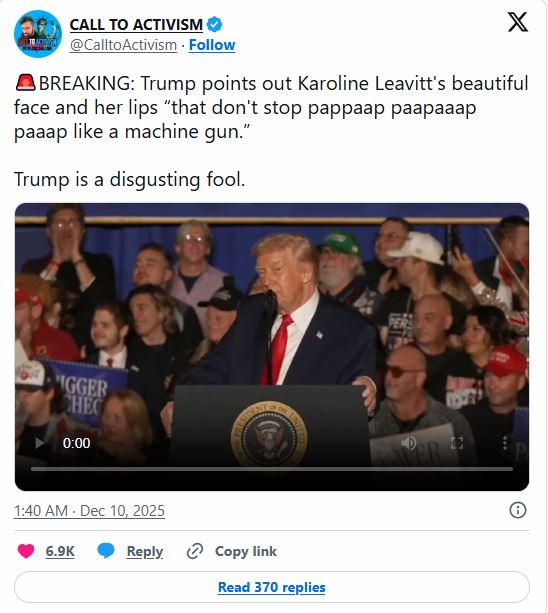
Trump went on to reference Leavitt’s appearance, describing her as having “a beautiful face,” and made additional remarks about her speaking style, saying her lips “don’t stop-op-op-op, like a little machine gun.” He suggested that her role was made easier because she frequently promotes and defends his policies.
The comments quickly circulated online and drew mixed reactions. Critics argued that focusing on a female official’s appearance rather than her professional qualifications was inappropriate, with some calling the remarks outdated and unprofessional. Several social media users said such comments would be uncomfortable or unacceptable in a typical workplace setting.
Supporters, however, defended Trump’s remarks as complimentary and consistent with his long-standing speaking style, arguing that he intended to praise Leavitt rather than diminish her role.
The comments followed other recent controversies involving Trump’s language toward journalists. In separate incidents, he used derogatory terms to describe female reporters, reigniting broader conversations about tone, gender, and professionalism in political discourse.
that way.
Leavitt has not directly addressed the criticism surrounding Trump’s remarks. However, she shared photos and posts from the Mount Pocono rally on social media, highlighting the event and her participation.
In recent interviews unrelated to the rally, Leavitt has spoken openly about her personal life, including her marriage to a man who is 32 years older than her. She has said the age difference reflects shared values and maturity rather than convention.
As reactions continue online, the episode underscores how public commentary—especially when it involves appearance and gender—remains a sensitive and closely scrutinized aspect of modern political life.