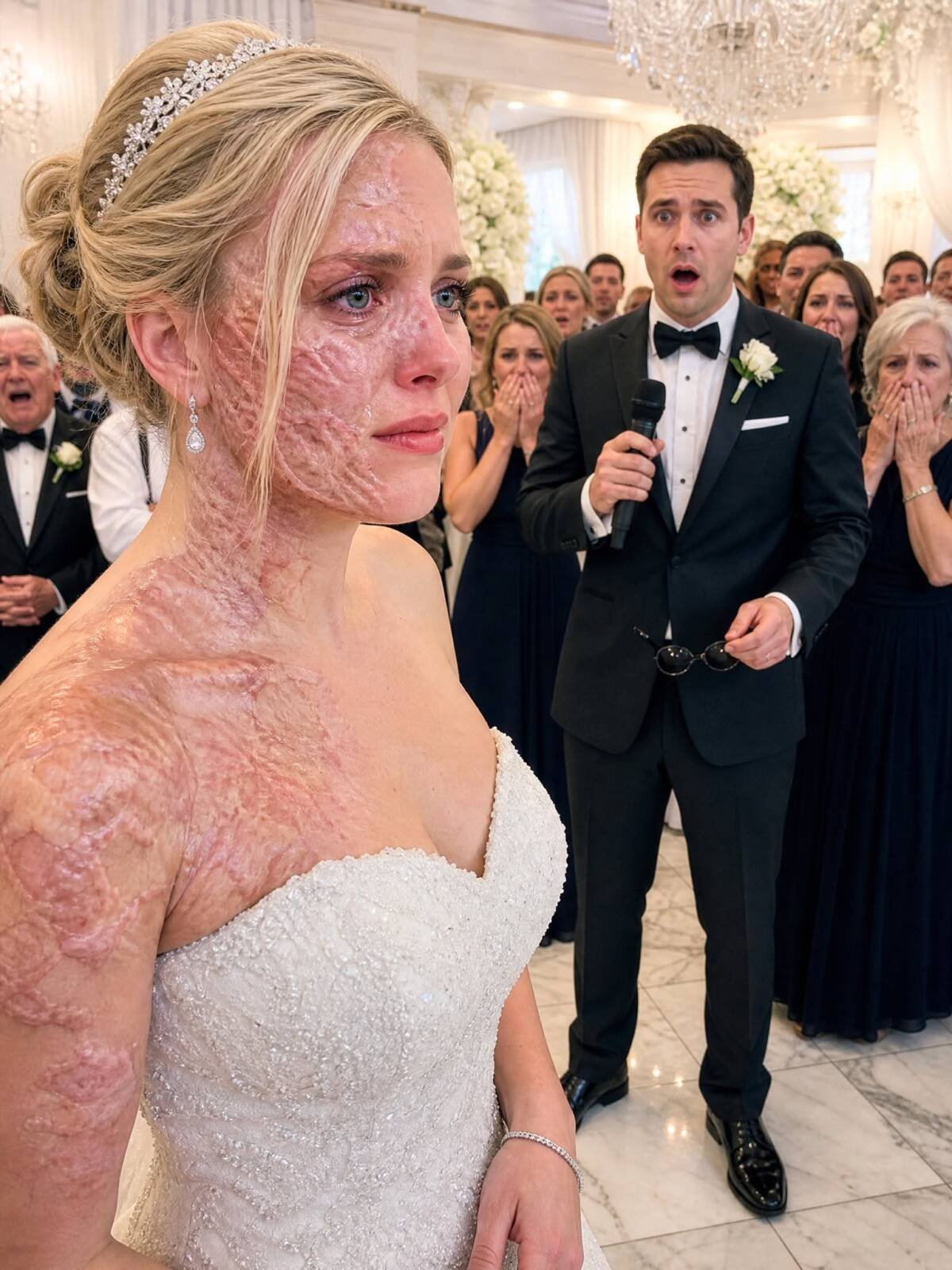
My daughter, Lily, has walked with a limp ever since an accident years ago. It’s part of her, something she’s learned to live with, something she’s finally grown confident about again. So when my fiancée Rachel’s family invited us over for dinner, I pulled Rachel aside and asked her—just one thing—please make sure no one comments on Lily’s walk.
She promised she would.
For the first half of the evening, everything seemed normal. Lily was laughing, answering questions, actually enjoying herself. Then, out of nowhere, Rachel’s father, Franklin, leaned back in his chair, gave this smug grin, and said:
“You’re not walking like that at the wedding… right?”
Lily froze.
I felt my chest tighten.
Rachel kept her eyes glued to her napkin.
I leaned toward Lily and quietly asked if she wanted to leave. Instead, she rose from her chair, stood tall, looked Franklin dead in the eye, and said:
“I’ll walk however I want… and I’ll still be better than you.”
The entire table fell silent.
Franklin’s face darkened. Rather than apologize, he doubled down and muttered something about “attitude” and “proper behavior.”
Rachel stayed quiet. Completely quiet.
That silence told me more than any apology ever could.
After one more round of excuses from her family, I grabbed Lily’s hand and we left. In the car, she looked at me—eyes brave, but unsure—and asked:
“Dad… do you still want to marry her?”
And for the first time, I didn’t have an answer.
Over the next few days, Rachel apologized over and over. She said she was caught off-guard, didn’t know what to say, didn’t want to make a scene. But I kept coming back to one truth I couldn’t shake:
Love doesn’t disappear when things get uncomfortable.
And I couldn’t marry someone who wouldn’t defend my daughter when she needed it most.
Ending the engagement hurt. But watching Lily slowly regain her peace reminded me I’d made the right choice. She joined the art club, made new friends, and her confidence bloomed stronger than ever.
Months later, I met Renata—a woman whose kindness didn’t need to be explained or rehearsed. She had a son with a visible difference of his own, and from day one she defended both kids without hesitation. Something Rachel never could.
Over time, we fell in love.
A year later, at our wedding, Lily walked down the aisle—limp and all—with her head high and her smile steady. She wasn’t hiding. She wasn’t apologizing.
She was proud.
And in that moment, watching her shine, I knew—with absolute certainty—
we were finally exactly where we belonged.